Tiny bones stored since 1997 reveal a new amphibian that lived alongside Spain's last dinosaurs
A team from the University of Zaragoza, NOVA University Lisbon, the Spanish Geological Survey (IGME-CSIC) and IPHES-CERCA has described Synorerpeton ribagorzana, a small amphibian from about 66 million years ago, from more than 80 tiny bones found in 1997 at the Blasi site in Arén, north-east Spain. It lived half a million years before the asteroid that wiped out the dinosaurs. The study is published in Cretaceous Research. It is basic science: it helps explain what European ecosystems looked like just before the mass extinction.
In 1997, a palaeontological dig at the Blasi site near Arén, in the Spanish province of Huesca, recovered more than 80 tiny bones: pieces of skull, vertebrae and other parts of the skeleton. Almost three decades later, those remains, kept at the University of Zaragoza’s Natural Science Museum, have a name of their own: Synorerpeton ribagorzana, an amphibian species nobody knew about.
Five centimetres long, with a chameleon’s tongue
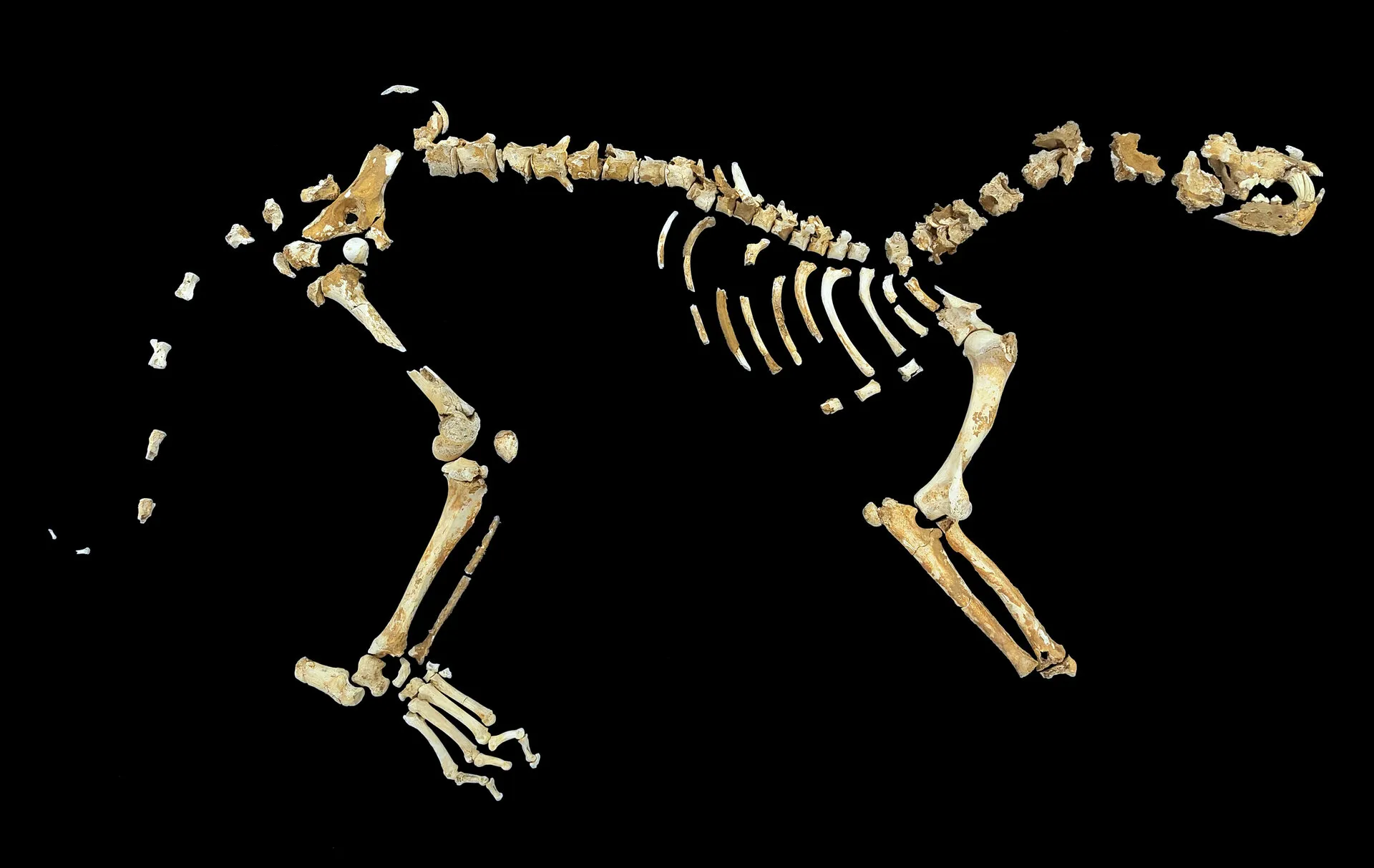
The new species belongs to the albanerpetontids, an extinct group of amphibians that, according to the University of Zaragoza, looked like small salamanders but had features all their own: less than five centimetres long, dry scaly skin, claws, eyelids and a fast-shooting tongue for catching prey, like today’s chameleons. Their bones are so small and fragile that they are very hard to find and study.
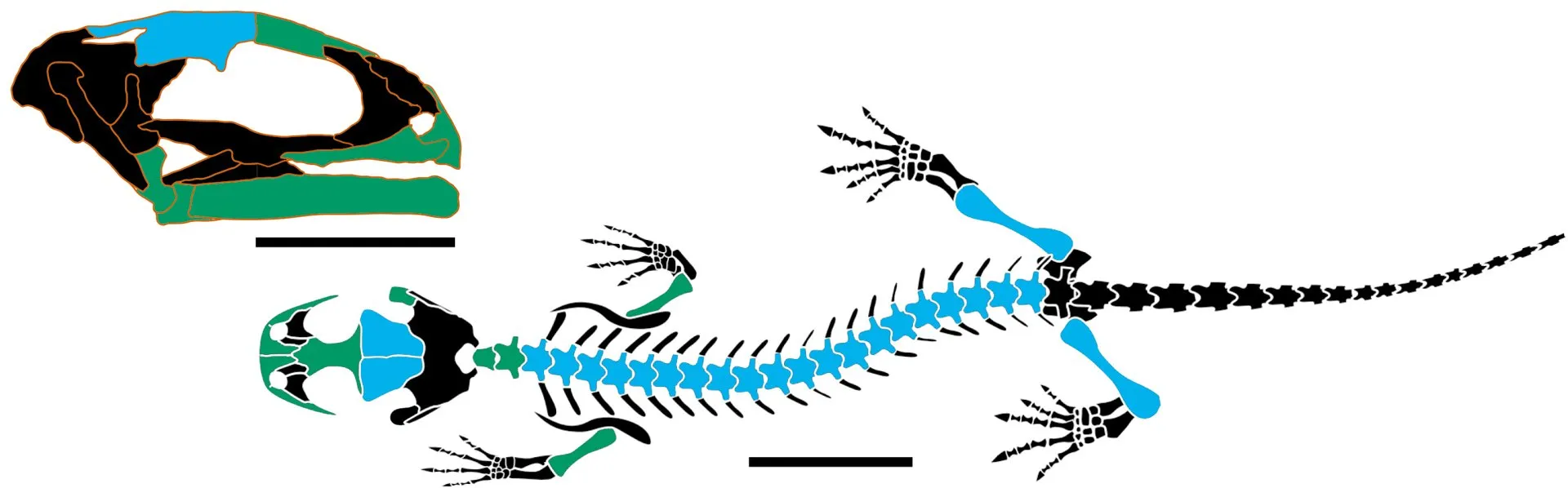 Skeleton outline of an albanerpetontid showing the Synorerpeton ribagorzana bones found at Blasi (the skeleton scale bar is 1 cm, the skull bar 5 mm). Image: Guillaume et al. / University of Zaragoza.
The study was led by Alexandre R. D. Guillaume of NOVA University Lisbon, supervised by Miguel Moreno-Azanza (University of Zaragoza, Aragosaurus-IUCA group) and Eduardo Puértolas-Pascual (IGME-CSIC), with Hugues-Alexandre Blain (IPHES-CERCA). “We knew there were undescribed, unidentified specimens,” says Moreno-Azanza. Guillaume was already working on similar Jurassic fossils from Portugal: “He was the best candidate to find something new.”
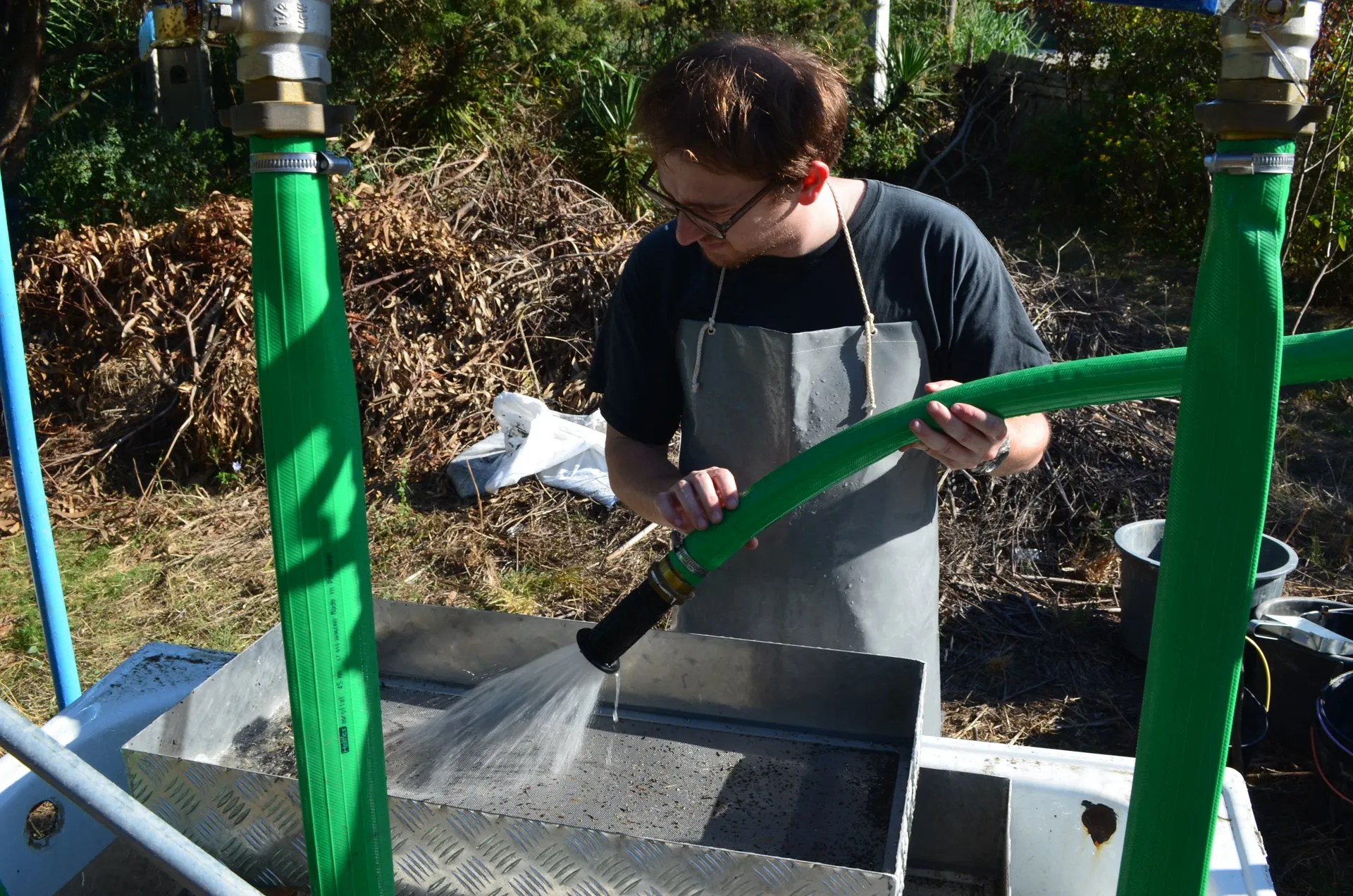 Alexandre R. D. Guillaume washing sediment in search of microvertebrates during his PhD. Photo: University of Zaragoza.
A window half a million years before the asteroid
The Blasi sediments were laid down about 500,000 years before the impact that ended the Cretaceous, some 66 million years ago. That makes the site a way to study Europe’s ecosystems just before one of the largest extinctions in Earth’s history. “This area has been very productive, with two new species of dinosaurs and two of crocodiles described in recent years,” says Puértolas-Pascual.
The name is a nod to the place, too. Synorerpeton comes from ancient Greek and means “the creeper at the border”, for its closeness to the Cretaceous–Paleogene boundary and to the border between Aragon and Catalonia. Ribagorzana honours the Ribagorza district and the Noguera Ribagorzana river.
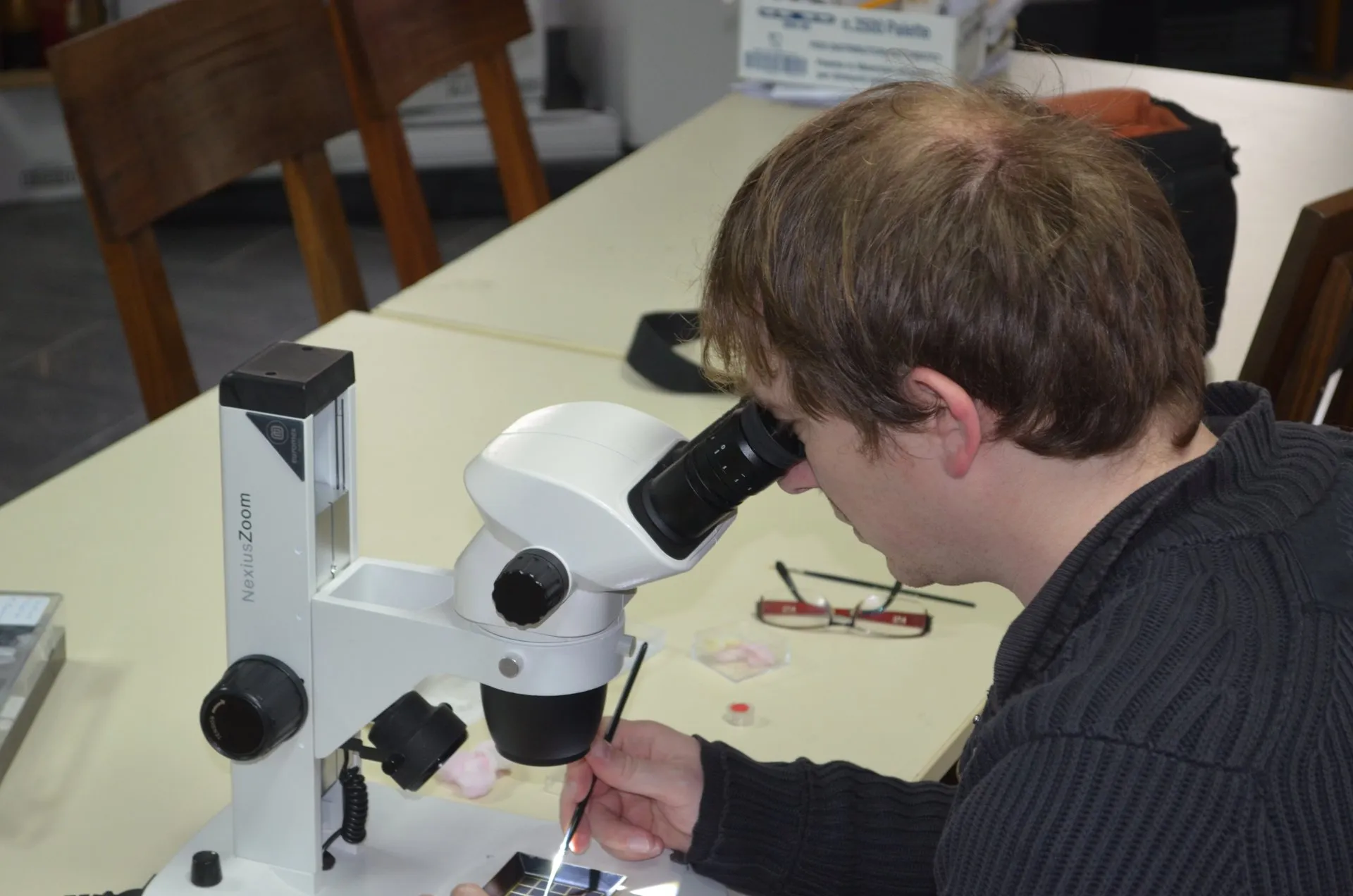
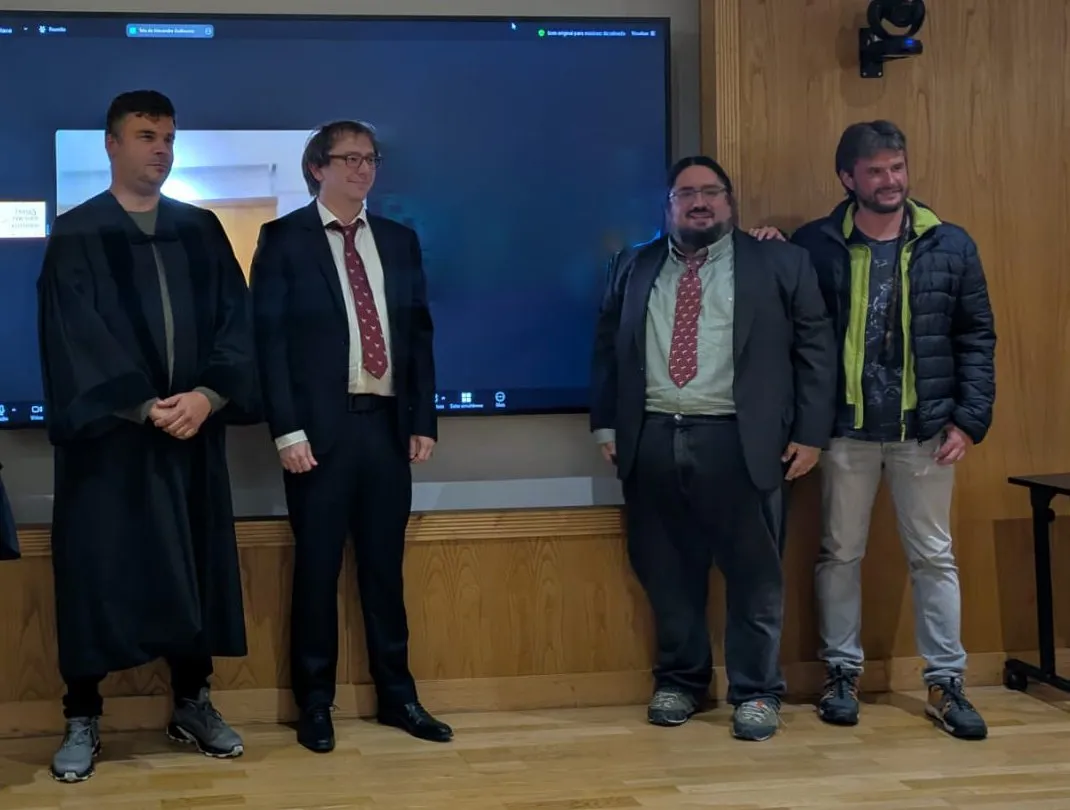 The team behind the study. From left: Hugues-Alexandre Blain (IPHES-CERCA), Alexandre R. D. Guillaume (NOVA), Miguel Moreno-Azanza (University of Zaragoza) and Eduardo Puértolas-Pascual (University of Zaragoza, IGME-CSIC). Photo: University of Zaragoza.
Two lineages at once
The team also found signs that two different albanerpetontid lineages lived in Europe at the end of the Cretaceous: western populations may be related to those in North America, and eastern ones to Asia or to older European populations. The researchers present these as hypotheses that open new lines of work on how small vertebrates spread during the age of dinosaurs.