Basque cavers recover Iberia's only complete skeleton of a young cave lion
Cavers from the Burumendi group found it in 2023 in a new gallery of the Ormola cave in Mendaro, in Spain's Basque Country: a male cave lion that died aged 2 or 3, about 31,500 years ago. The Provincial Council of Gipuzkoa, which unveiled it on 3 November, says it is the first complete skeleton of a subadult of the species found on the Iberian Peninsula. The research is still under way, including a DNA study.
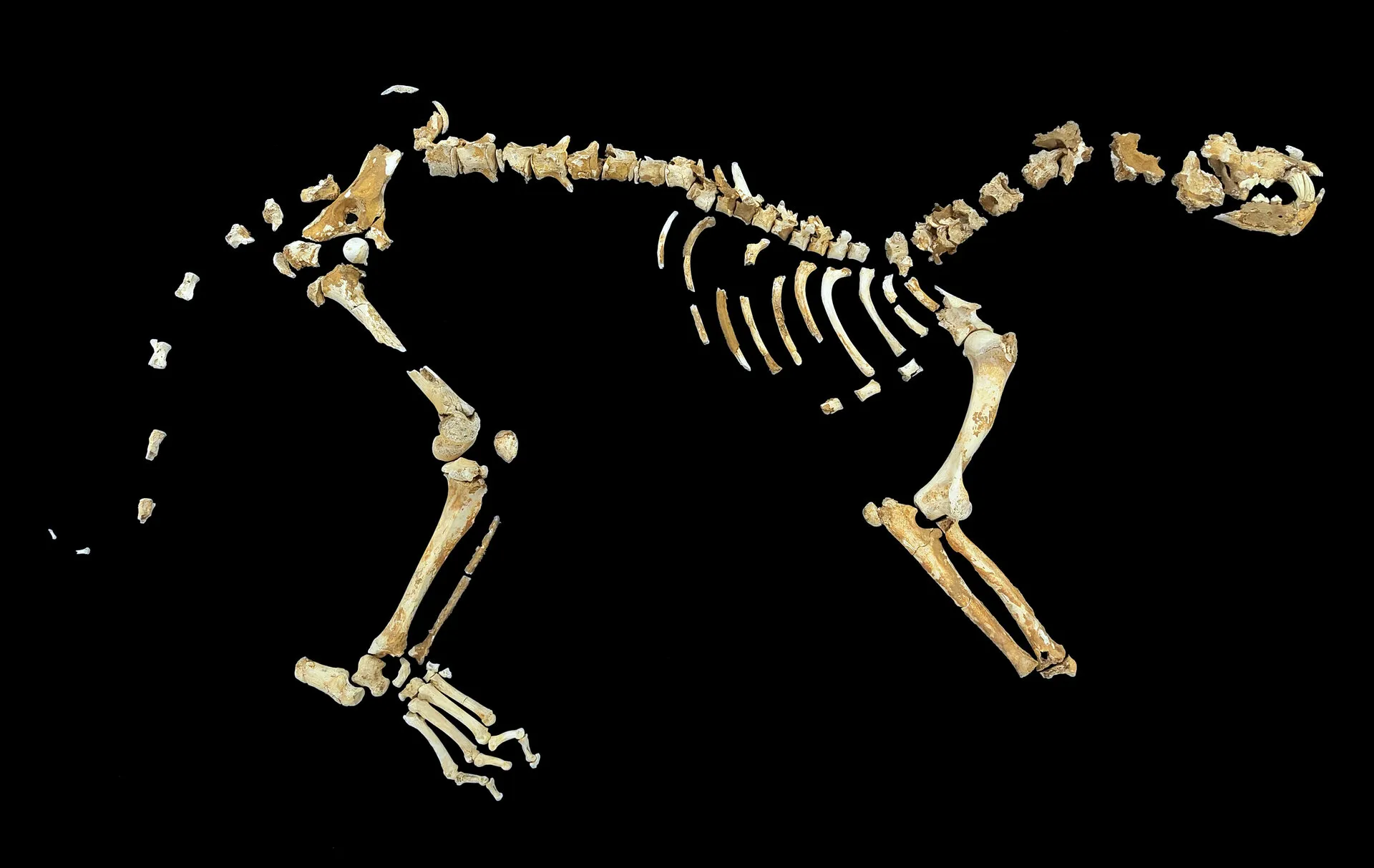
In March 2023, cavers from Burumendi Espeleologia Taldea, a club from the Basque town of Mutriku, broke into an unexplored gallery of the Ormola Bide Ondoko Leizea cave in the Arno massif, near Mendaro. On the floor lay the skeleton of a cave lion (Panthera spelaea), many of its bones still where the animal had died.
According to the press release from the Provincial Council of Gipuzkoa, the width of the canines points to a male, and the fusion of its bones shows it died aged between 2 and 3: the age at which male lions today reach maturity and start leaving the pride. Radiocarbon dating puts its death about 31,500 years ago. The council says it is the first complete skeleton of a subadult cave lion found on the Iberian Peninsula.
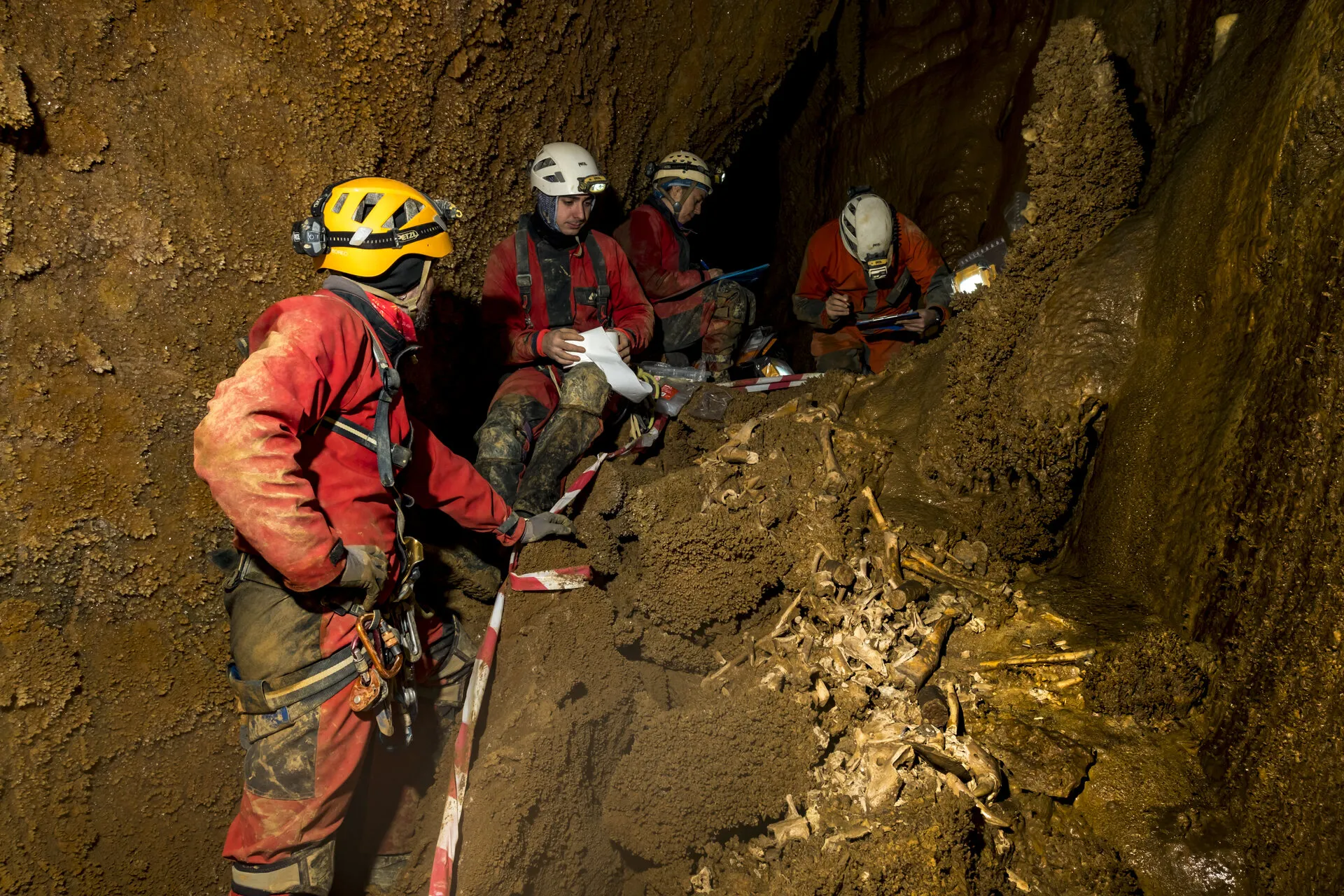
Recovering the Ormola lion fossils with Burumendi Espeleologia Taldea. Photo: Burumendi Espeleologia Taldea.
Ten trips out, bones hanging from a rope
Getting it out was hard work. The remains covered an area of just over two metres by one in a narrow, steep gallery. The dig, led by palaeontologist Asier Gómez Olivencia (University of the Basque Country and the Aranzadi Science Society), ran from 2 December 2023 to 10 March 2024. The Burumendi cavers rigged a cave-rescue line so bags of fossils could be hauled up alongside the ropes without touching the walls. It took 14 trips to explore and document the site and another 10 to dig and remove the bones, with teams of up to 15 people.
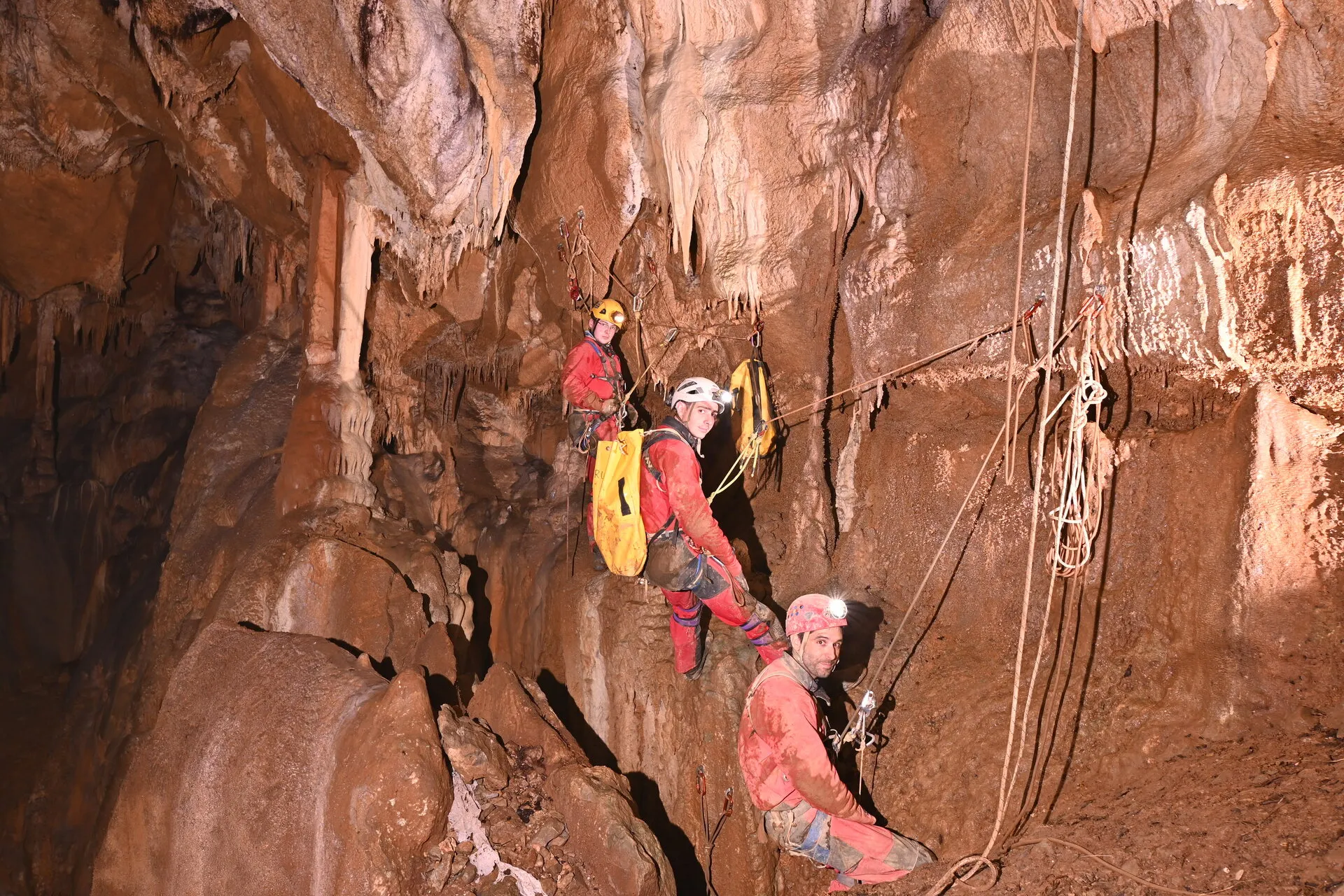
The cave-rescue rigging used to bring the fossils out. Photo: Burumendi Espeleologia Taldea.
Some bones had been broken by falling rocks or coated in mineral crusts, so they were restored at Gordailua, the council’s heritage collections centre in Irun, where the skeleton was unveiled on 3 November. Goizane Álvarez, the council’s head of culture, said the find helps people “better understand what our land was like thousands of years ago”.
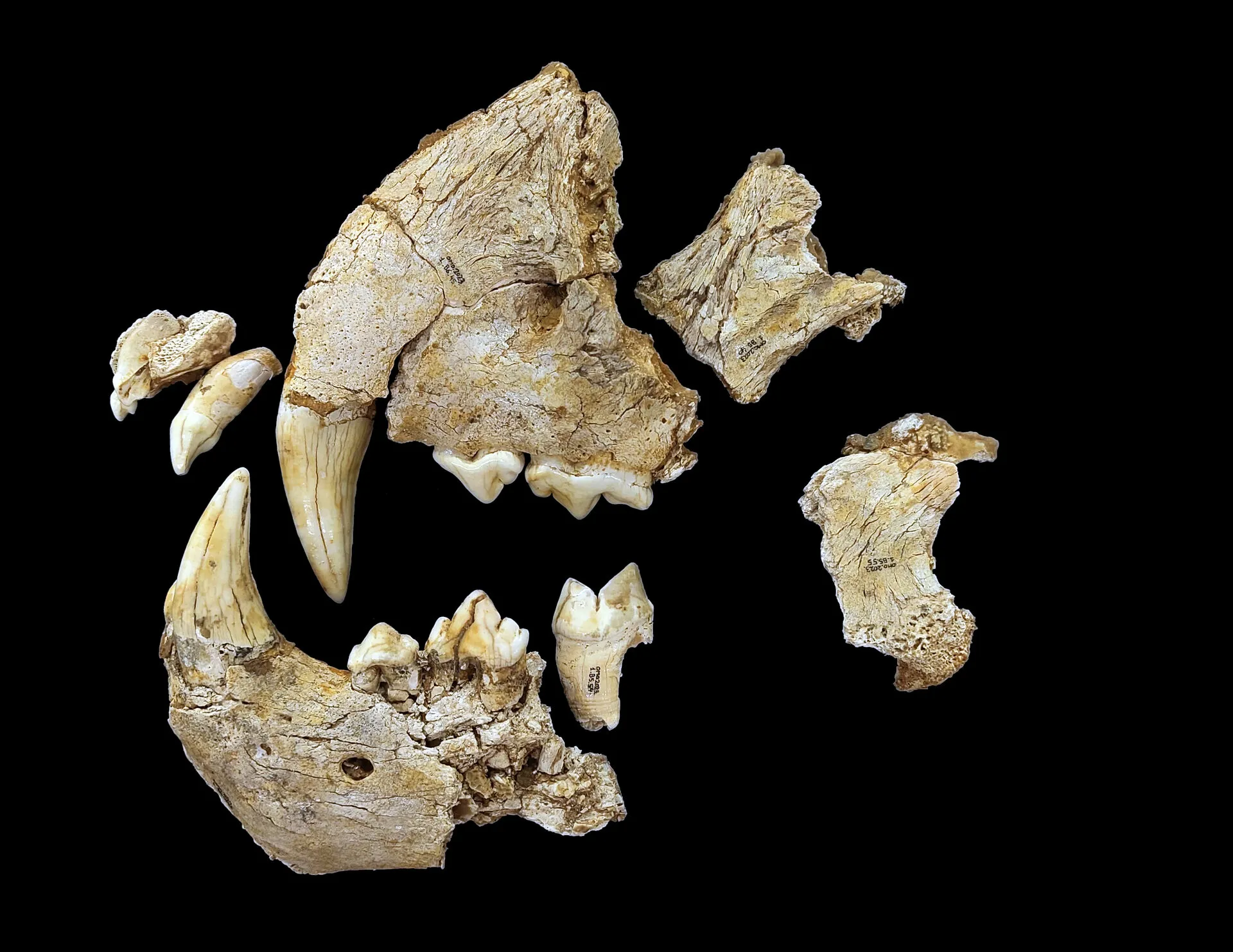
Left side of the skull and left jaw of the Ormola lion. Photo: Asier Gómez Olivencia / Alvar Manjón García.
What scientists still want to learn
Cave lions roamed Eurasia for almost a million years before dying out between 14,000 and 12,000 years ago. As top predators they were never common, and neither are their fossils.
The research isn’t finished. The Ormola lion’s measurements will be compared with other European finds, and a team at the University of Vienna will analyse its DNA. The work is part of Alvar Manjón’s PhD on the big cats of the western Pyrenees in the Pleistocene, funded mainly by the Gipuzkoa council with support from the Basque government.
Sources
- Provincial Council of Gipuzkoa · Press release on the subadult cave lion skeleton from the Arno massif, Mendaro (3 Nov 2026, in Spanish and Basque)
- EITB / Orain · Hallado en Mendaro un esqueleto completo de león de las cavernas de hace 31.500 años (3 Nov 2026, in Spanish)
- Donostitik · Un león de las cavernas de hace 31.500 años aparece en una cueva de Mendaro (3 Nov 2026, in Spanish)