Roman jar that carried Andalusian olive oil to Scotland goes on show in Edinburgh
Made nearly 1,900 years ago in what is now Lora del Río, near Seville, the amphora is on display for the first time at the National Museum of Scotland. It was dug up between 1996 and 2000: what is new is its restoration and the reading of a worn stamp that traced its workshop.
An old photograph and two boxes of fragments. That was the starting point for Fraser Hunter, principal curator of prehistoric and Roman archaeology at National Museums Scotland, in recovering a Roman amphora. The pieces were excavated between 1996 and 2000 beside the Roman fort at Inveresk, near Edinburgh, ahead of a housing development.
After months of work, and with help from specialists in Barcelona, the jar has been on public display for the first time since 14 November at the National Museum of Scotland.
Five worn letters on the handle
The key was a badly worn stamp reading “SANRP”. Cèsar Carreras Monfort, professor of archaeology at the Autonomous University of Barcelona, interpreted it as an abbreviation of Sextus Annius Rufus de Portus. That reading placed the workshop at La Catria, a major pottery centre in the Roman province of Baetica, in what is now Lora del Río, in the province of Seville, on the banks of the Guadalquivir.
Hunter told the Spanish news agency EFE that the stamps on the handles made it possible to establish exactly where the jar came from.
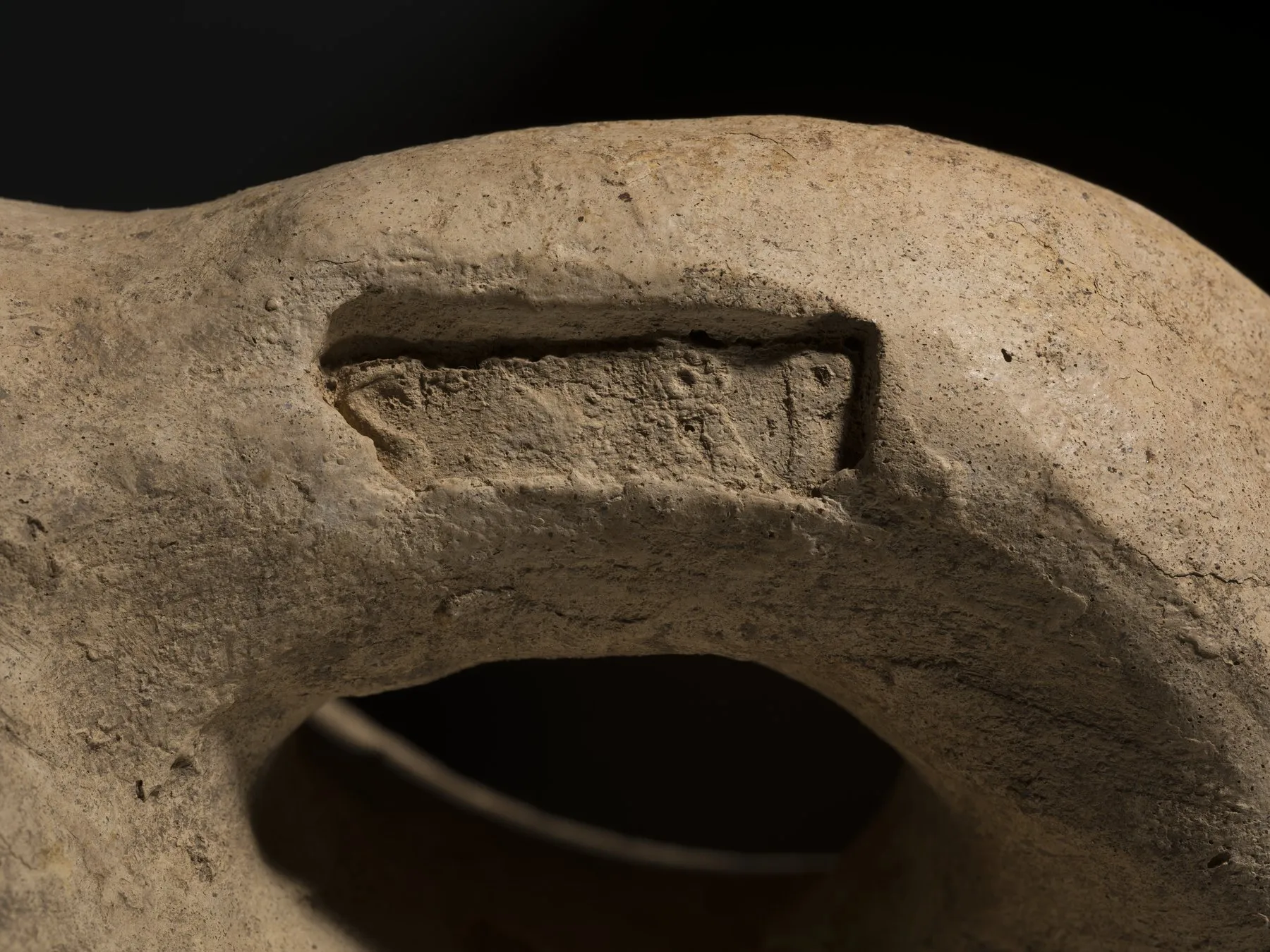 The stamp on the handle, the key to tracing the workshop. Image: © National Museums Scotland.
Seventy litres, heading north
The amphora is dated to between AD 142 and 165 and held about 70 litres of oil. According to EFE, it travelled down the Guadalquivir to the Atlantic, along the western coast of Europe, through the English Channel and into the Firth of Forth in eastern Scotland.
The oil was used for cooking, for lighting and in the baths, where it was rubbed into the skin and scraped off. Hunter told EFE that goods from Spain were vital to keeping the Roman army supplied, with large quantities of oil, wine and fish sauce reaching the frontiers of Britain and Germany from Hispania.
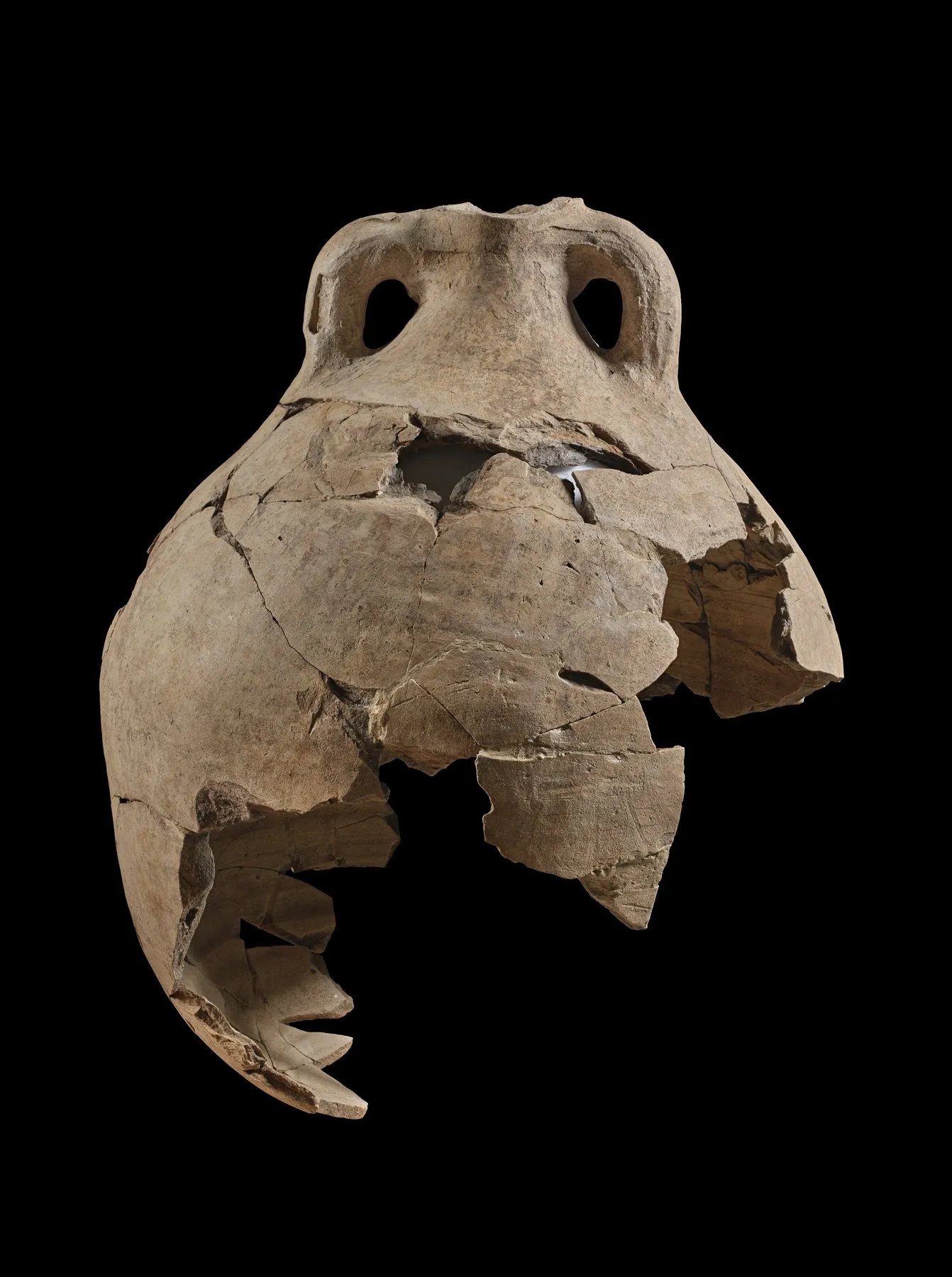 The amphora, with the sections that have not survived. Image: © National Museums Scotland.
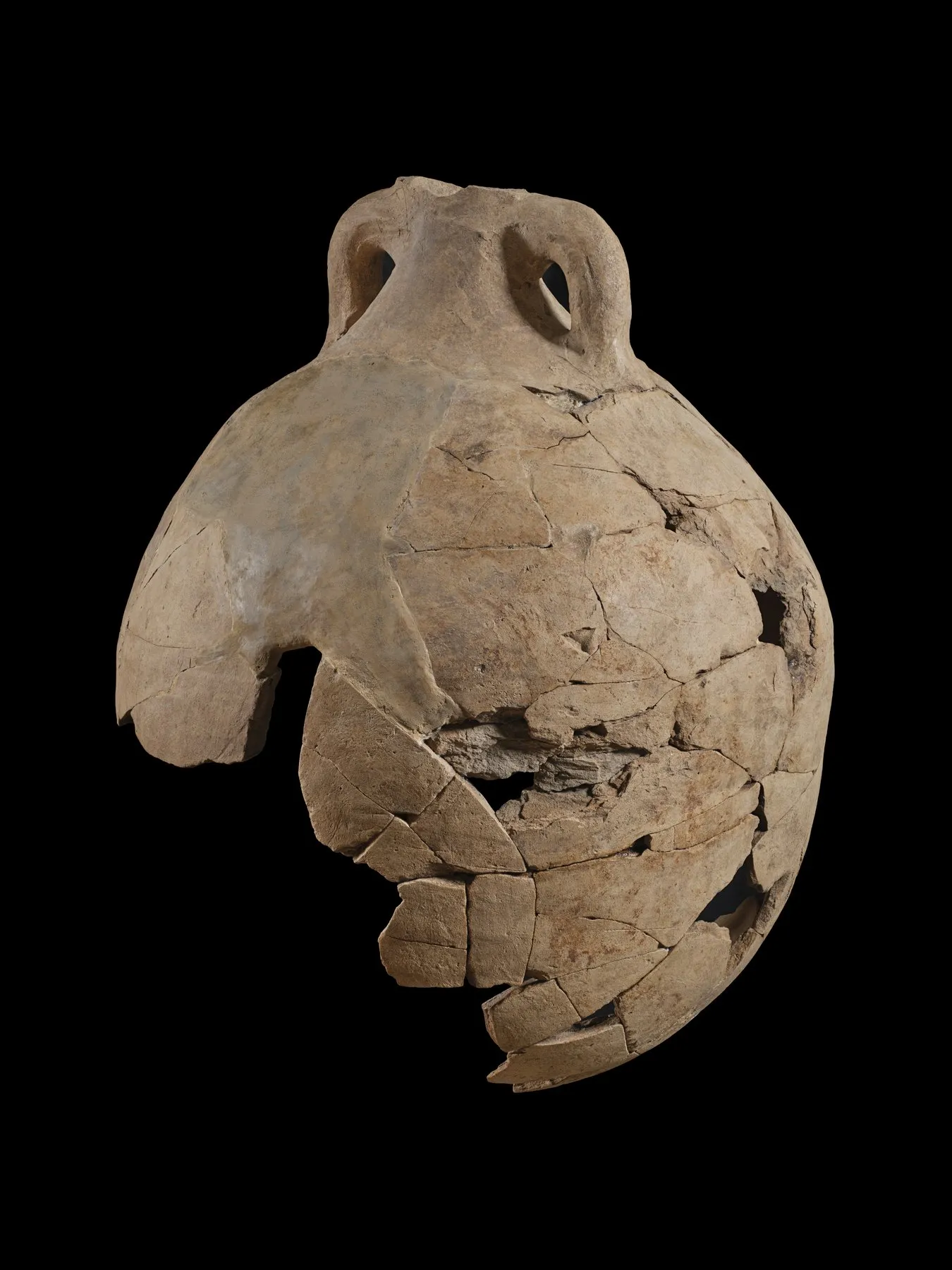 Another view of the jar, rebuilt from numerous fragments. Image: © National Museums Scotland.
Traces of its makers and later users
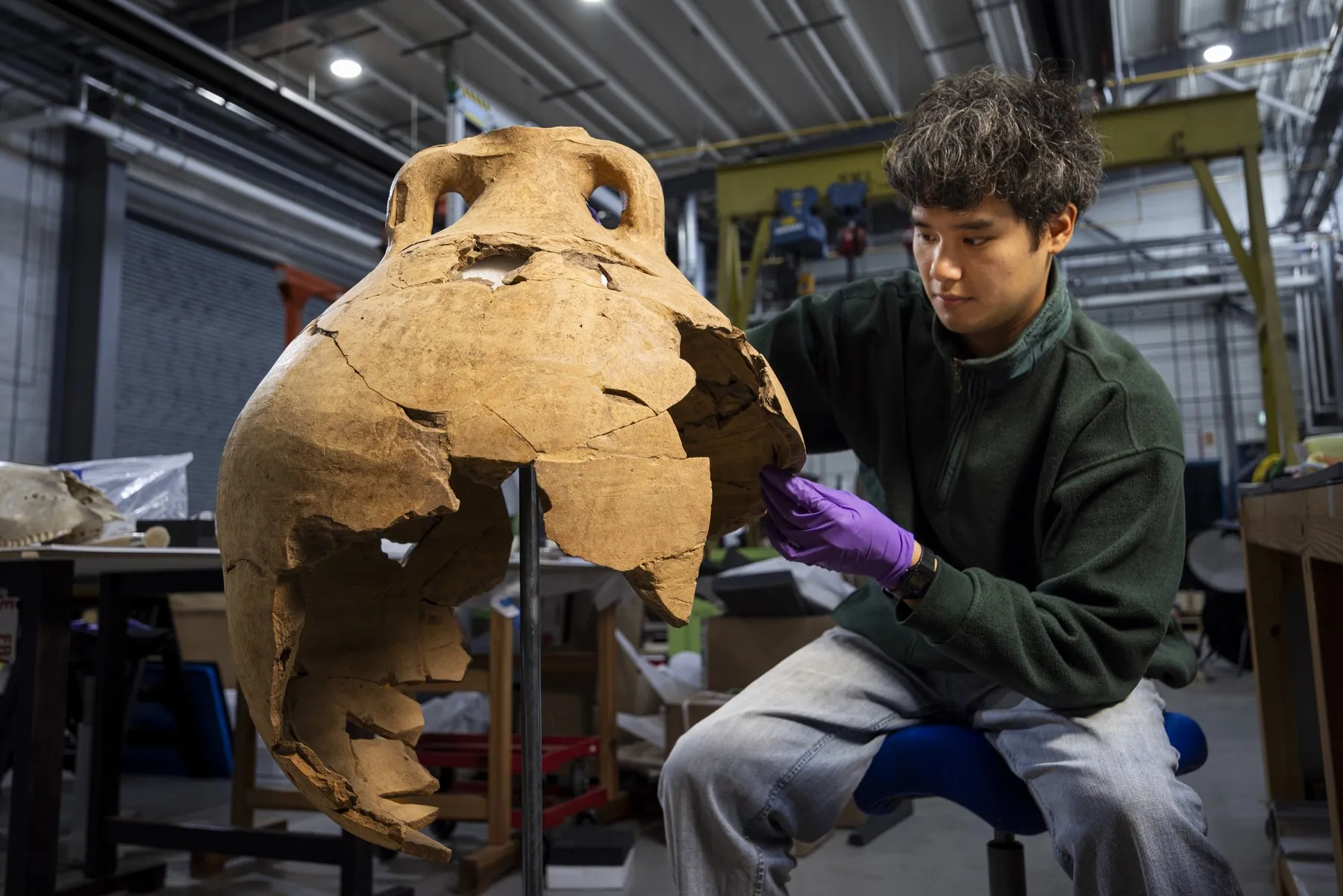
The jar holds other clues. Inverted marks on the inside show that the potters used the handle of an earlier vessel as a tool for working the clay. A rectangular opening suggests it was later reused, although nobody knows what for.
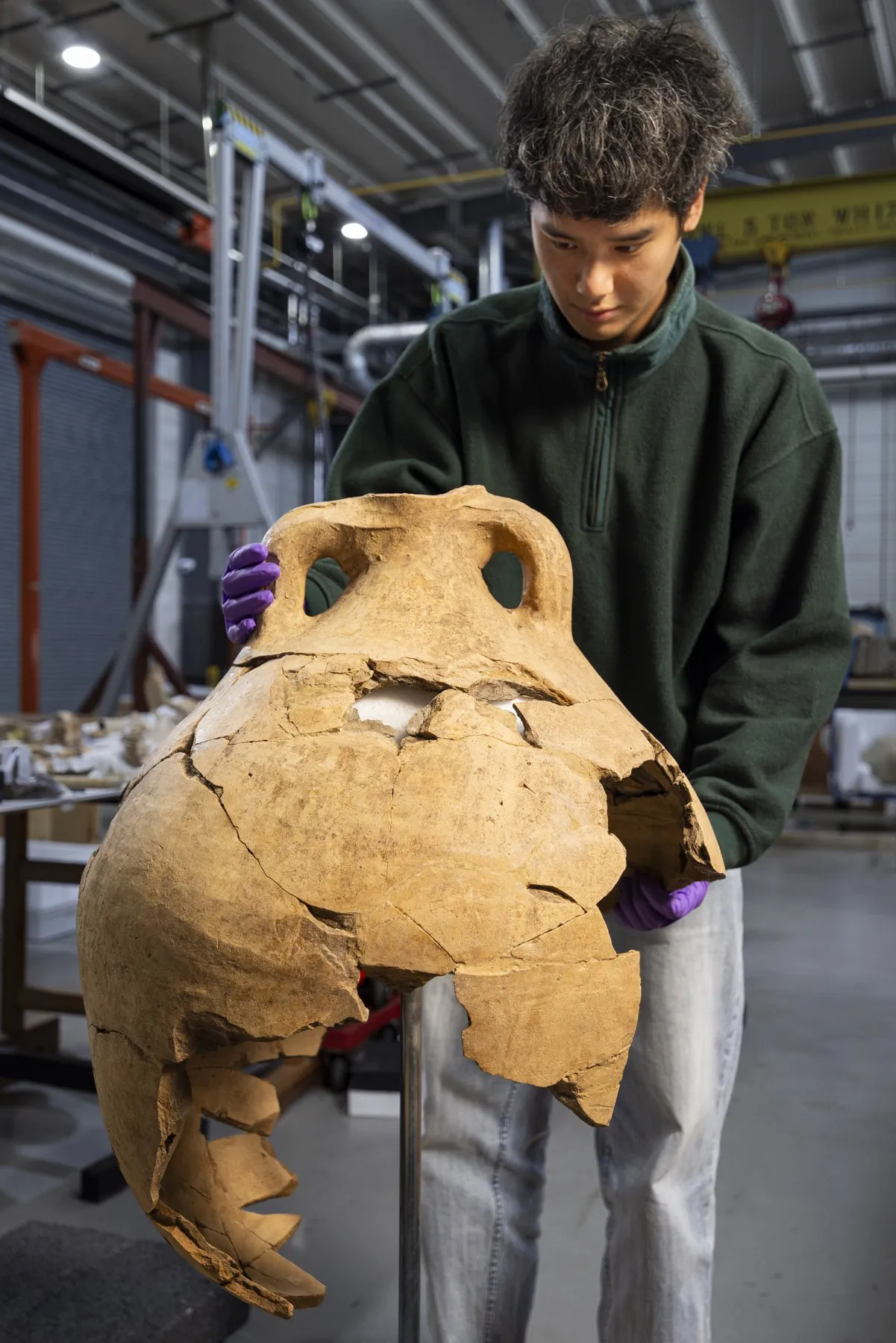 Conservator Wei-Yuan Yang with the amphora. Photo: © Duncan McGlynn, provided by National Museums Scotland.
The amphora is part of the exhibition Roman Scotland: Life on the Edge of Empire, open in Edinburgh until 18 April 2027, alongside two altars to Mithras and the Sun god also found at Inveresk.