Plant-based coating could replace the plastic lining in coffee cups
A University of Waterloo team in Canada has made a coating from cellulose acetate reinforced with cellulose nanocrystals that withstands boiling water, oil and solvents. In tests, the plastic lining of ordinary cups wore away and shed particles; the new coating barely changed. The caveat: this is a lab result, and there are no cups on sale with the material yet.
A paper coffee cup is not just paper: inside, a thin layer of plastic stops it going soggy. In Shirley Tang’s lab at the University of Waterloo in Canada, researchers have tried swapping that layer for one made only from plant-derived materials. The result, published in ACS Sustainable Chemistry & Engineering, is lab work for now, with no commercial cup behind it yet.
The coating is cellulose acetate reinforced with cellulose nanocrystals. According to the university, it stayed stable after long exposure to boiling water, cooking oil and a range of solvents.
Ordinary linings flake; the new one holds
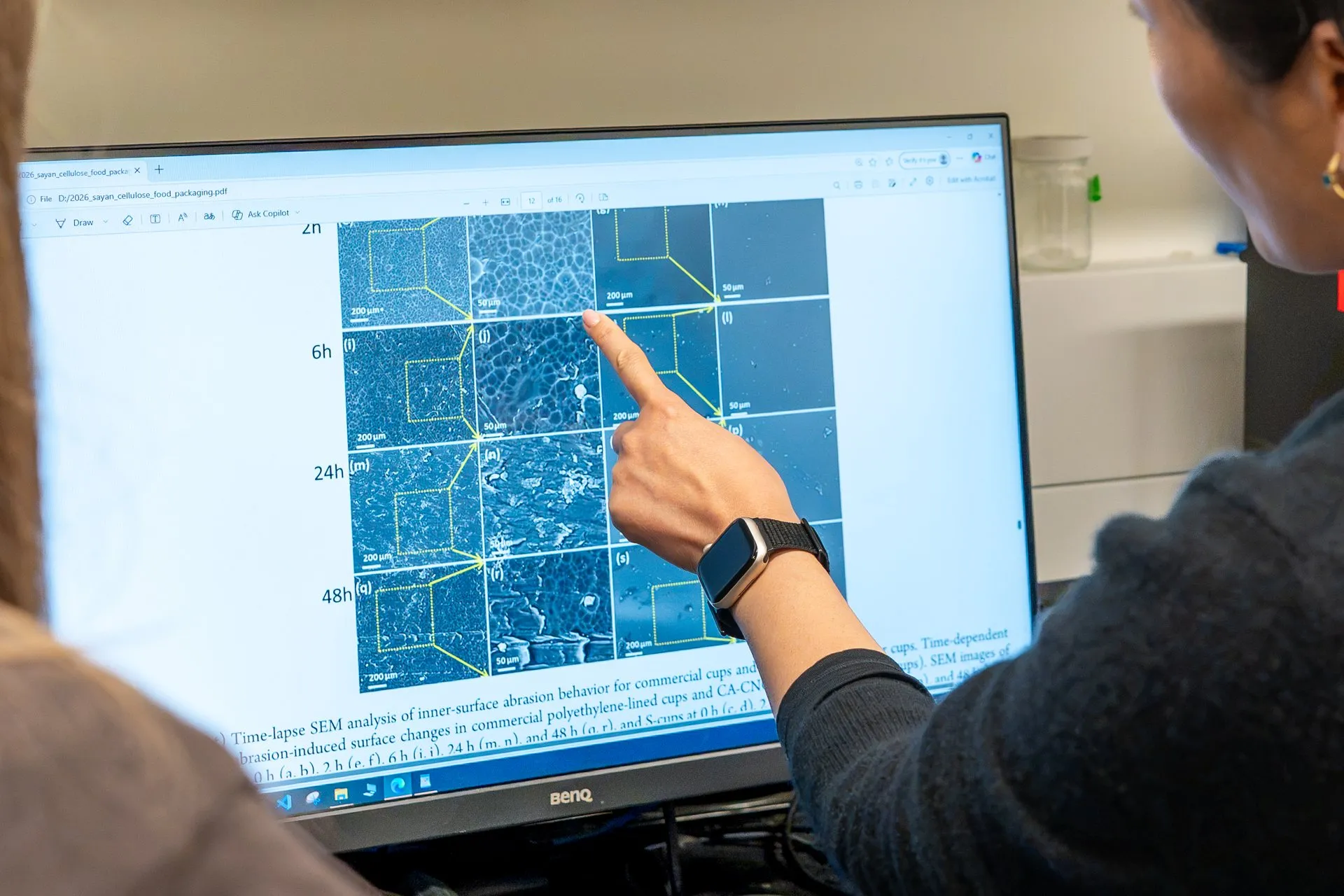
In abrasion tests, commercial plastic-lined cups showed surface damage and released particles, which the team says suggests microplastics could end up in the drink. The cellulose layer stayed largely intact under the same conditions. “Learning how easily some plastic liners can shed particles was eye-opening,” said Tang, a professor in Waterloo’s Department of Chemistry.
Today’s liners come from fossil fuels and can persist in the environment for centuries. Because the cup and the new coating would both be cellulose, they would not need separating before the paper is recycled, one of the current obstacles.
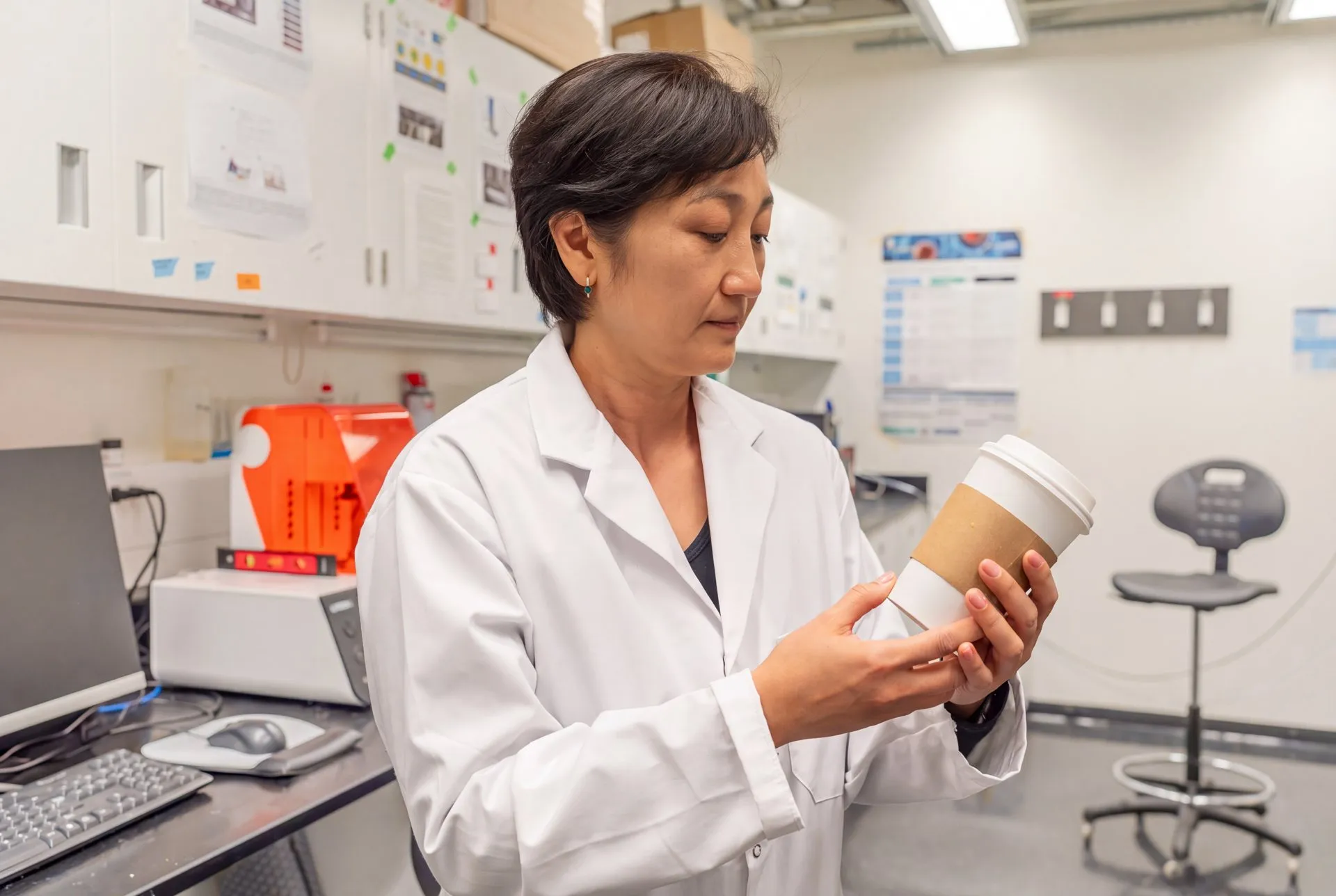 Dr Shirley Tang with a paper coffee cup in her lab at the University of Waterloo. Photo: Jay Mielke, University of Waterloo.
Less paper for the same cup
The coating also worked on very light paper, such as brown paper towels. “The coating allowed us to use much thinner paper while still achieving the durability needed for beverage containers,” said Dr Sayan Ganguly, a research associate in the lab. That could cut the material needed and, he says, lower costs.
The idea grew out of the group’s earlier research into light, sustainable materials for aviation. The researchers see possible uses in food packaging and anywhere companies want to replace plastic with renewable materials.
Why it’s good news
Millions of people drink coffee every day from paper cups lined with plastic. A plant-based alternative that copes with heat and makes recycling easier is a concrete step towards that daily habit leaving less waste behind.