3D-printed flowers help scientists count bees and other pollinators in the field
A team led by Spain's Doñana Biological Station (EBD-CSIC), with the University of Jaén, placed 64 3D-printed mallow flowers at 16 sites in Moraleda de Zafayona, Granada. Over 32 hours of observation they recorded 45 species visiting flowers, and 23 of them also landed on the plastic ones. The caveat: real flowers got more and longer visits, so the printed ones show where activity is higher rather than how many insects there are, and so far they have been tested in one area, on one plant, over one spring.
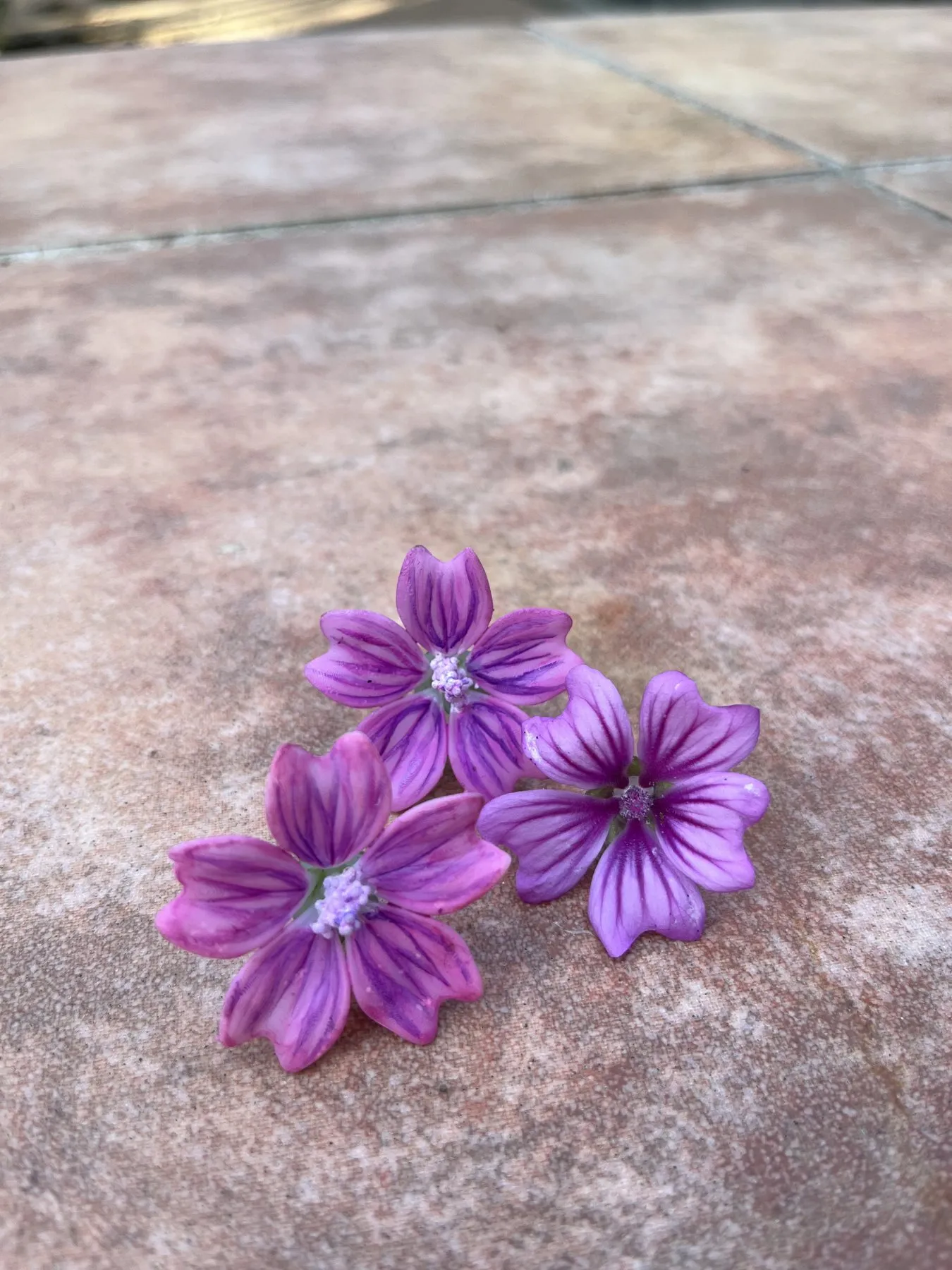
They look like mallows, but they are plastic. A team from Spain’s Doñana Biological Station (EBD-CSIC) 3D-printed 64 flowers in the shape of this plant, fixed them onto real mallows at 16 sites in Moraleda de Zafayona, in Granada, a landscape of old olive groves and scrub, and then watched to see who landed.
Between mid-April and late May 2025 the team observed each site for two hours, 32 hours in all. They recorded 45 insect species visiting flowers; 23 also landed on the plastic ones. The study, “3D-printed flowers for standardised pollinator monitoring”, is published in Biological Conservation, with the University of Jaén, the International University of La Rioja and partners in Switzerland, Singapore, Germany, Japan and China.
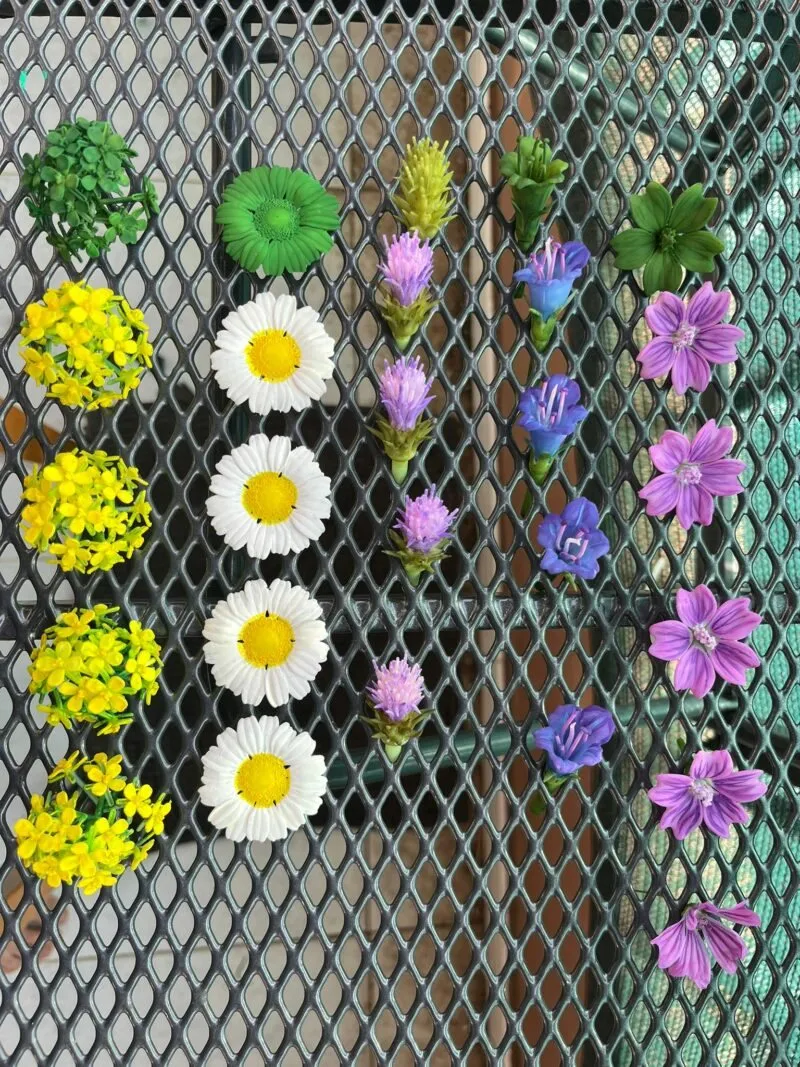 Some of the printed flowers, painted. Photo: Rocío Sánchez López / EBD-CSIC.
More bees on the mallows, more on the plastic
Real flowers won: they drew more species, more visits and longer ones. But for monitoring, something else matters. “Species richness and visit frequency on real and artificial flowers were highly correlated,” EBD-CSIC researcher Carlos Martínez Núñez told Europa Press. Sites buzzing on the mallows were also busier on the printed flowers.
The team tested four versions: shape only, coloured, with ultraviolet patterns (which bees can see and we cannot) and with a drop of sugar. “They all performed similarly,” Martínez says. A simple flower is enough.
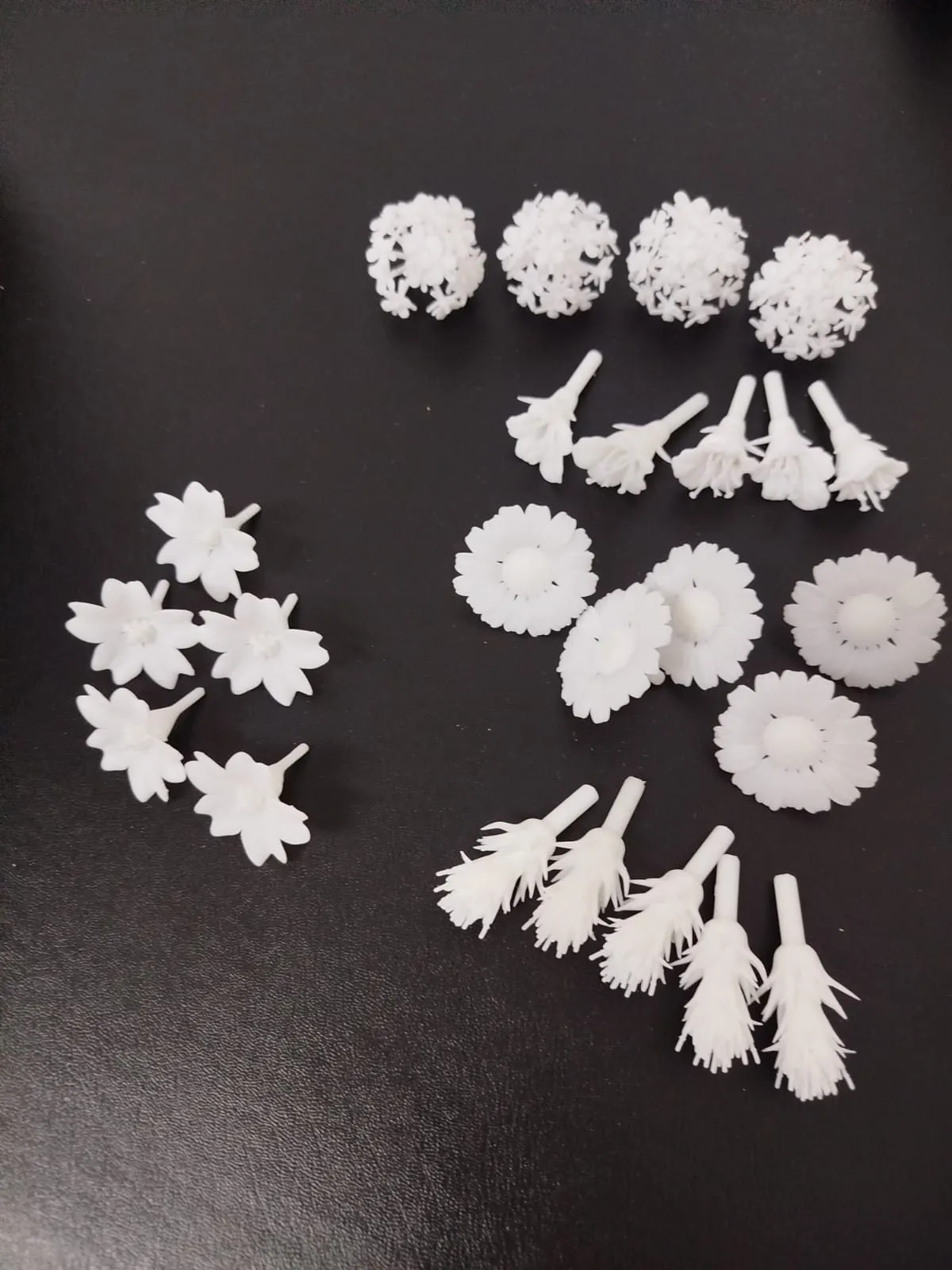 Artificial flowers of several species, fresh from the 3D printer. Photo: Rocío Sánchez López / EBD-CSIC.
The same flower everywhere
The advantage is that the flower never changes: it does not wilt or vary with the season. That lets researchers compare places and years with the same method, which is hard with natural flowers. The longer-term plan is to fit them with cameras and sensors and use AI to identify each visitor, something this study has not yet tested.
There are limits. Small bees approached the plastic flowers more than large ones, which could skew counts. The next step, the team says, is to check whether the method holds up in other regions, on other plants and over longer periods.
Sources
- Doñana Biological Station (EBD-CSIC) · photos and captions (email to the newsroom, 17 Nov 2026)
- Europa Press via Infobae · 3D-printed flowers designed to monitor pollinators in the field (15 Nov 2026, Spanish)
- Hortoinfo · 3D-printed artificial flowers installed to monitor pollinator populations (Spanish)