Scientists see hydrogen hiding between metal atoms for the first time, a step towards safer pipelines
A University of Sydney team led by Julie Cairney has directly observed hydrogen dissolved in the gaps between atoms in several alloys, something until now understood only in theory. The work is published in Nature. Knowing where hydrogen sits will help design metals that do not crack when storing or carrying hydrogen. This is basic science: there is no new material yet. The university has shared its images with us.
Hydrogen is the smallest atom there is, which makes it slippery. It seeps into metals and can make a very strong part crack without warning, a problem engineers call hydrogen embrittlement. A University of Sydney team has now seen, directly and for the first time, where some of that hydrogen hides: in the gaps between atoms in the metal’s lattice.
The work, published in Nature, is led by Professor Julie Cairney of the School of Aerospace, Mechanical and Mechatronic Engineering and the Australian Centre for Microscopy and Microanalysis. The first author is postdoctoral researcher Dr Chao Huang.
Three hiding places, one never seen
According to the university, hydrogen gets into a metal in three ways: by forming hydrides, by being trapped at defects, or by dissolving between atoms. The first two had been observed. The third was understood in theory but was very hard to see, because hydrogen escapes while the sample is being prepared.
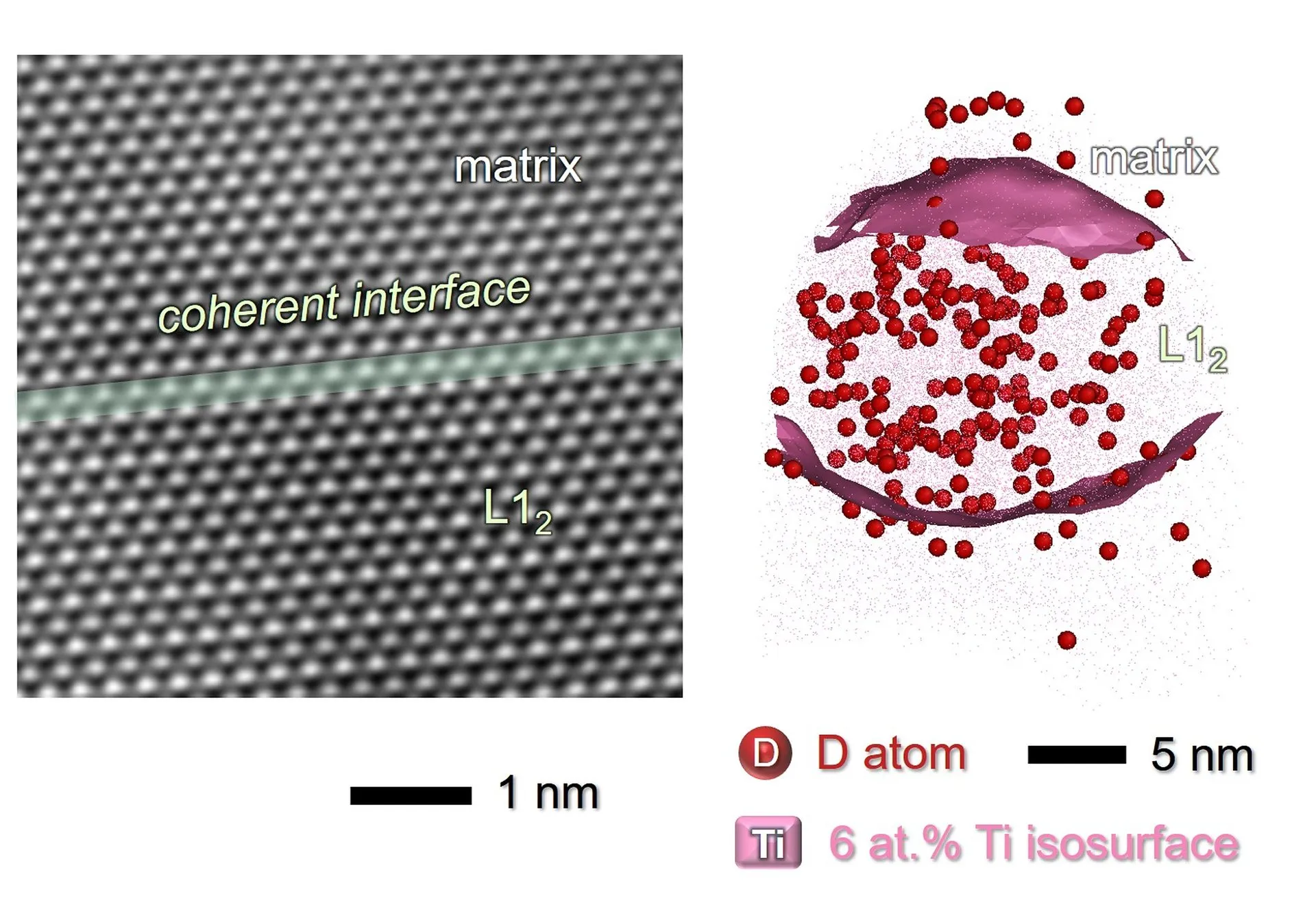
The study’s data: on the left, the atomic lattice under the electron microscope; on the right, deuterium atoms (red) detected with the atom probe. Image: University of Sydney.
Deep cold and heavier hydrogen
To do it, the team used cryogenic atom probe tomography, which rebuilds a material atom by atom, and swapped hydrogen for deuterium, a heavier isotope that is easier to track and less likely to escape. They confirmed the result with electron microscopy and theoretical calculations.
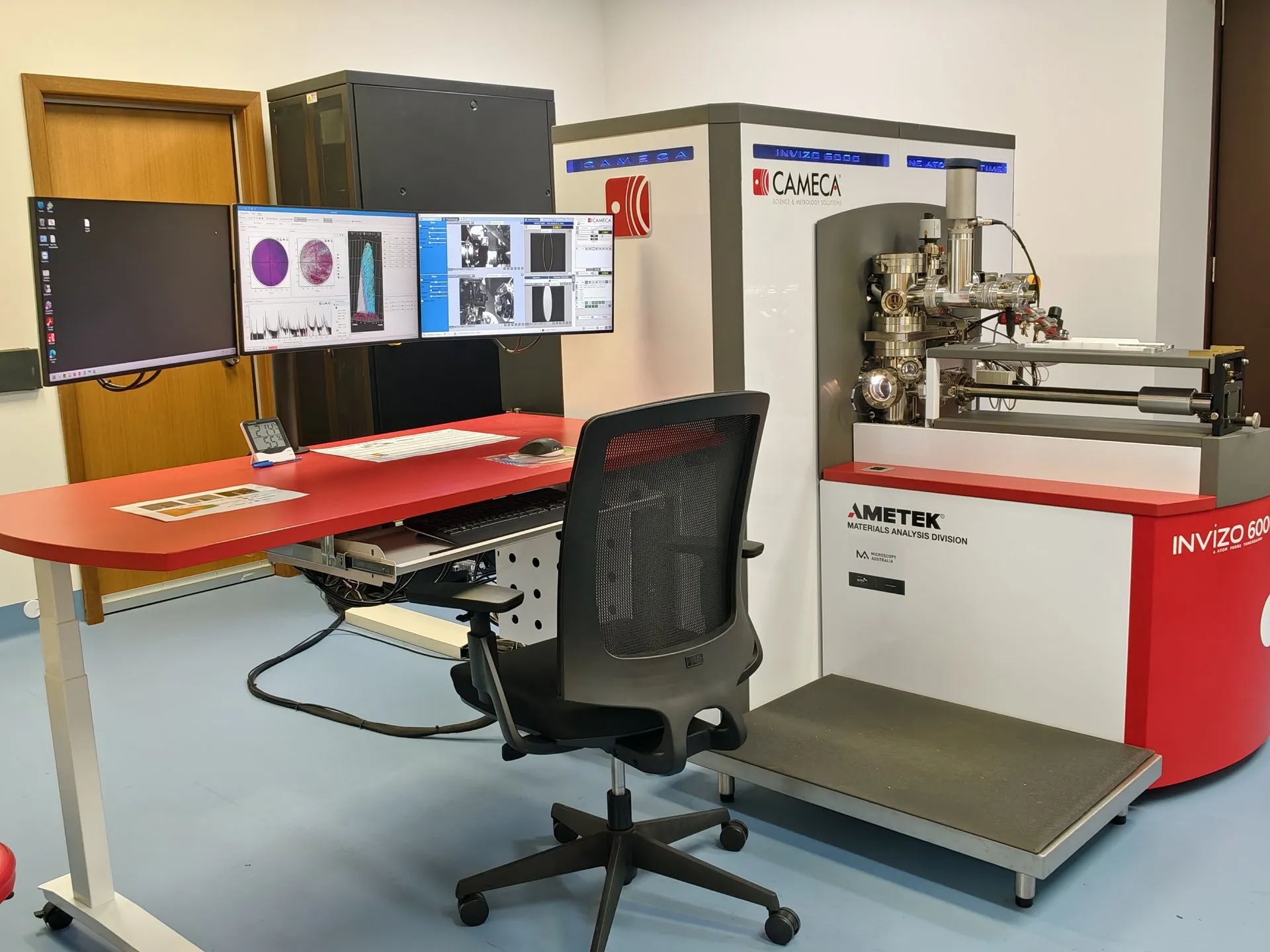
One of the University of Sydney’s atom probes. Image courtesy of the University of Sydney.
From the lattice to the pipeline
“This understanding is essential for developing safer and more reliable materials for hydrogen storage and transport,” Cairney said in the university’s release. The caveat: this helps explain the problem; it is not a fix. There is no new steel yet.
Next, Huang says, the team will study how hydrogen changes the way metals deform under stress, working with ultra-high-strength steels, with the aim of making stronger, more hydrogen-resistant steels.
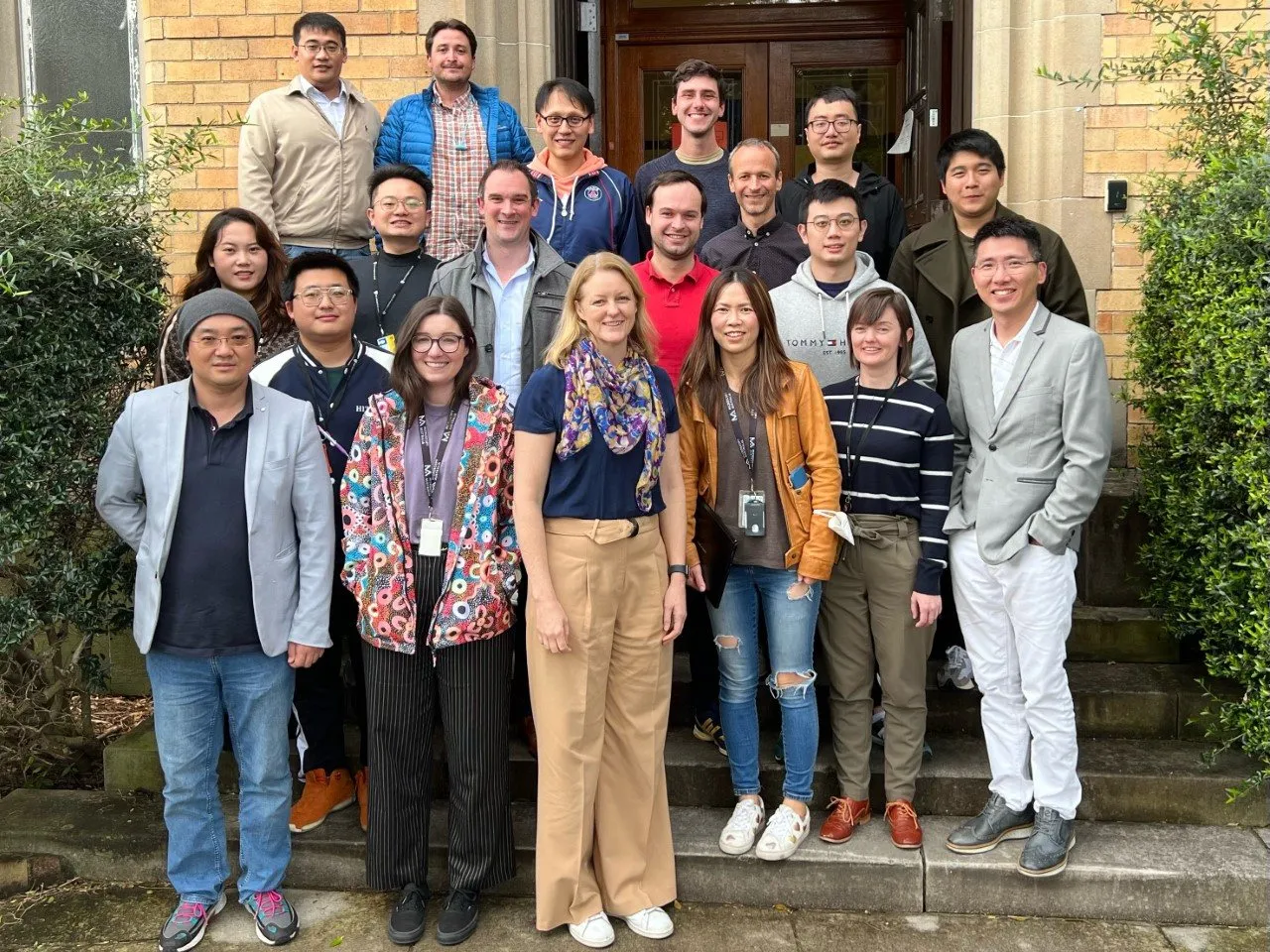
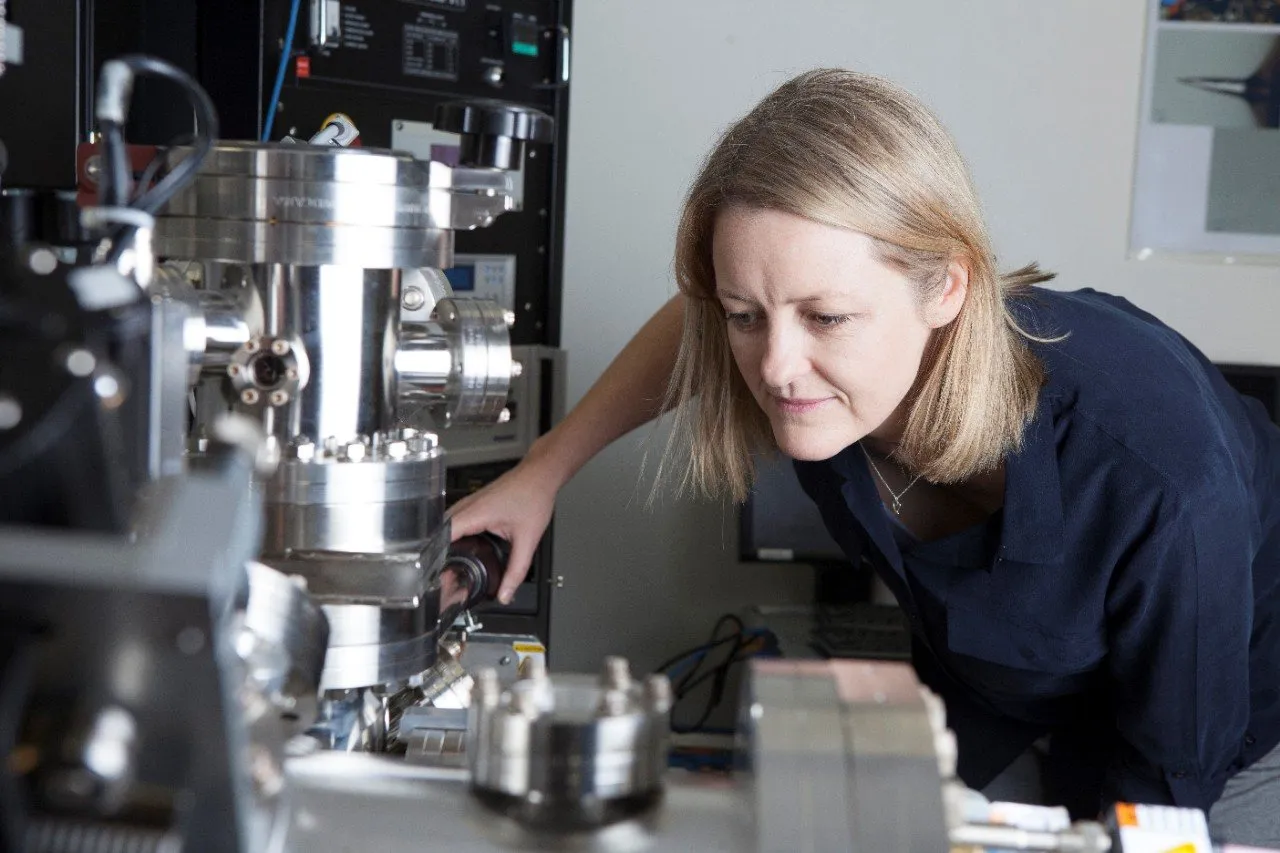
Julie Cairney’s research group at the University of Sydney. Image courtesy of the University of Sydney.