Spain's newest research ship sails for Antarctica as the country marks 40 years of polar science
The Odón de Buen, the most modern ship in Spain's scientific fleet, left Cádiz on Wednesday for the 40th Spanish Antarctic Campaign, with more than 350 people involved and around 30 projects. For the first time it will open Spain's Antarctic bases. The voyage comes 40 years after the first Spanish camp on Livingston Island, set up on 27 December 1986.
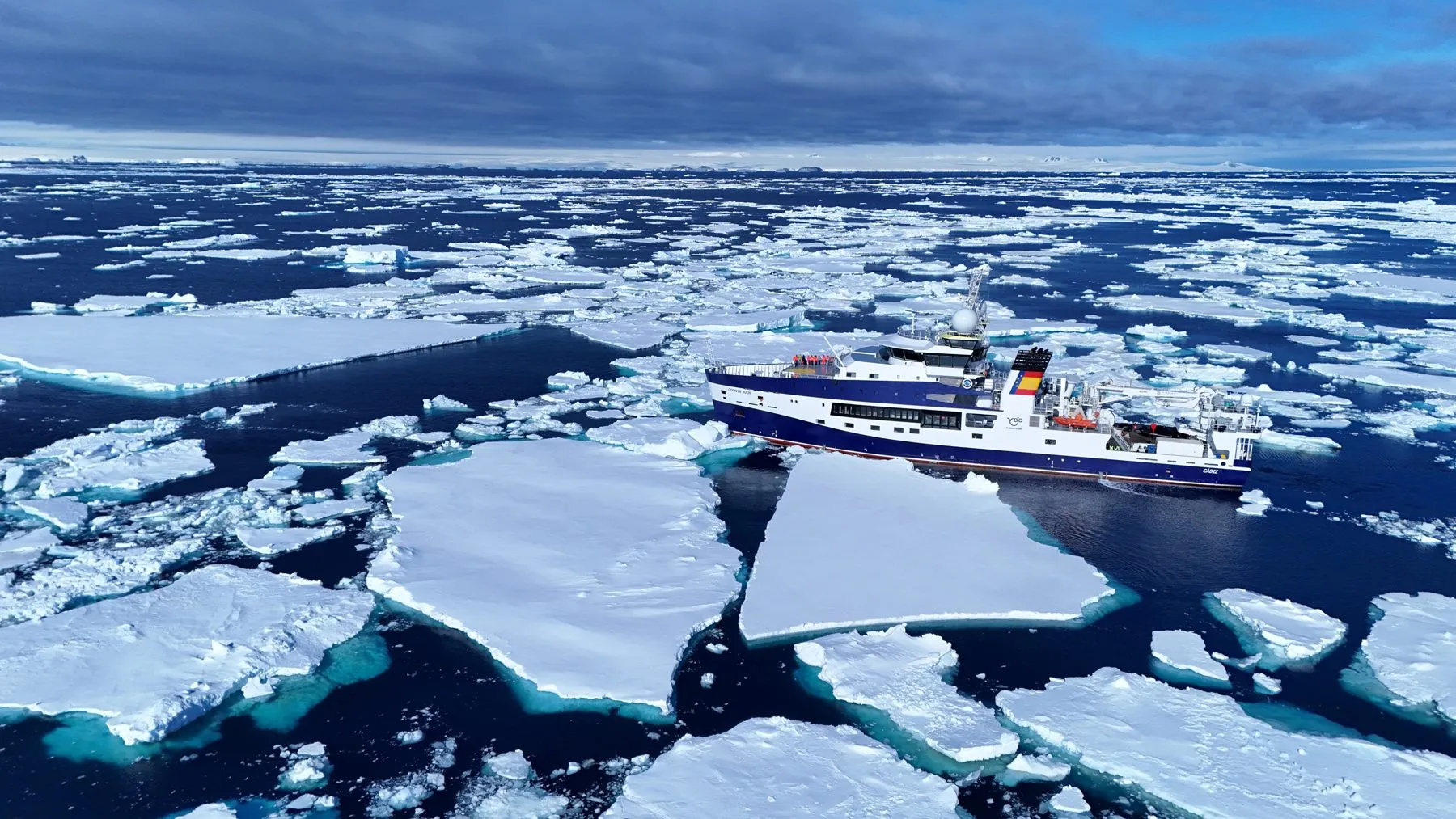
Forty years after a small group set up Spain’s first camp on Livingston Island, on 27 December 1986, the newest ship in the country’s scientific fleet has turned south. The Odón de Buen, run by the Spanish Institute of Oceanography (IEO-CSIC), left the port of Cádiz on Wednesday 4 November to open the 40th Spanish Antarctic Research Campaign.
Spain’s Ministry of Science describes it as the ship’s first Spanish Antarctic research campaign, after trials in 2025 in which it had already broken ice in Antarctic waters. It also takes on a new job: for the first time, the Odón de Buen will open the Spanish bases and carry people and supplies.
200 researchers, around 30 projects
The campaign involves more than 350 people: about 200 researchers, 50 specialist technicians and 100 crew, according to ministry figures reported by Europa Press. There will be around 30 research and outreach projects, most funded by the State Research Agency, plus collaborations with other countries’ Antarctic programmes.
“Spain continues to contribute to the knowledge of a territory that is fundamental to understanding the future of our planet,” said Eva Ortega, the ministry’s Secretary General for Research, at the send-off. She was joined by Blanca Flores, the government’s sub-delegate in Cádiz, and Carlos Closa, CSIC vice-president for organisation and institutional relations.
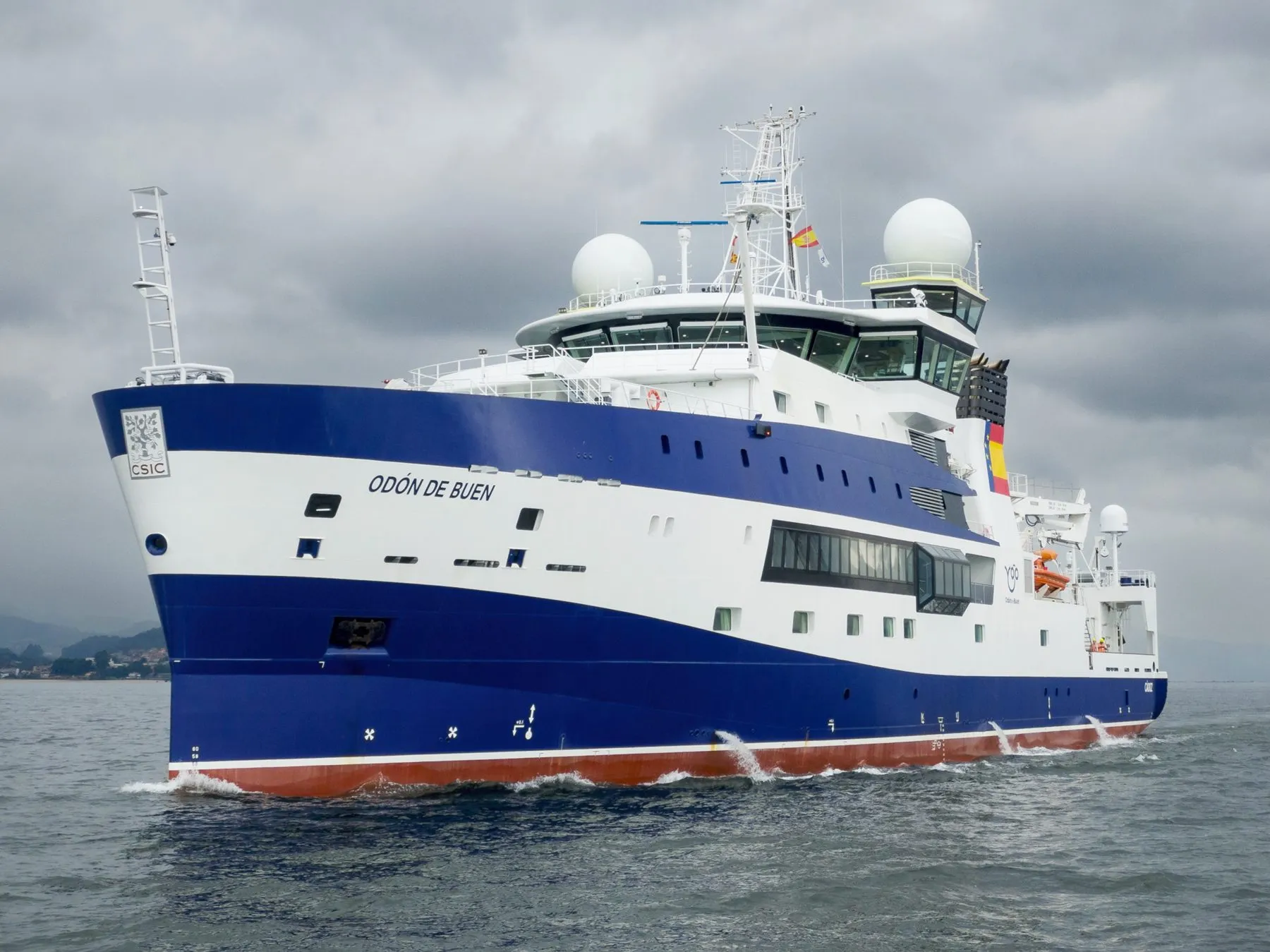
The Odón de Buen (IEO-CSIC). Photo courtesy of CSIC.
Built for the ice
Built in Vigo by Armón, the ship is 84.3 metres long, has about 1,000 square metres of laboratories and work space, and holds PC7 polar class, which lets it sail through ice. It can work at depths of up to 6,000 metres, according to the specifications released for its first expedition.
Spain has two Antarctic bases: Juan Carlos I on Livingston Island, run by CSIC’s Marine Technology Unit, and Gabriel de Castilla on Deception Island, run by the Spanish Army. In the ministry’s words, polar research helps explain processes that affect the whole planet: climate, oceans, ecosystems and ice.
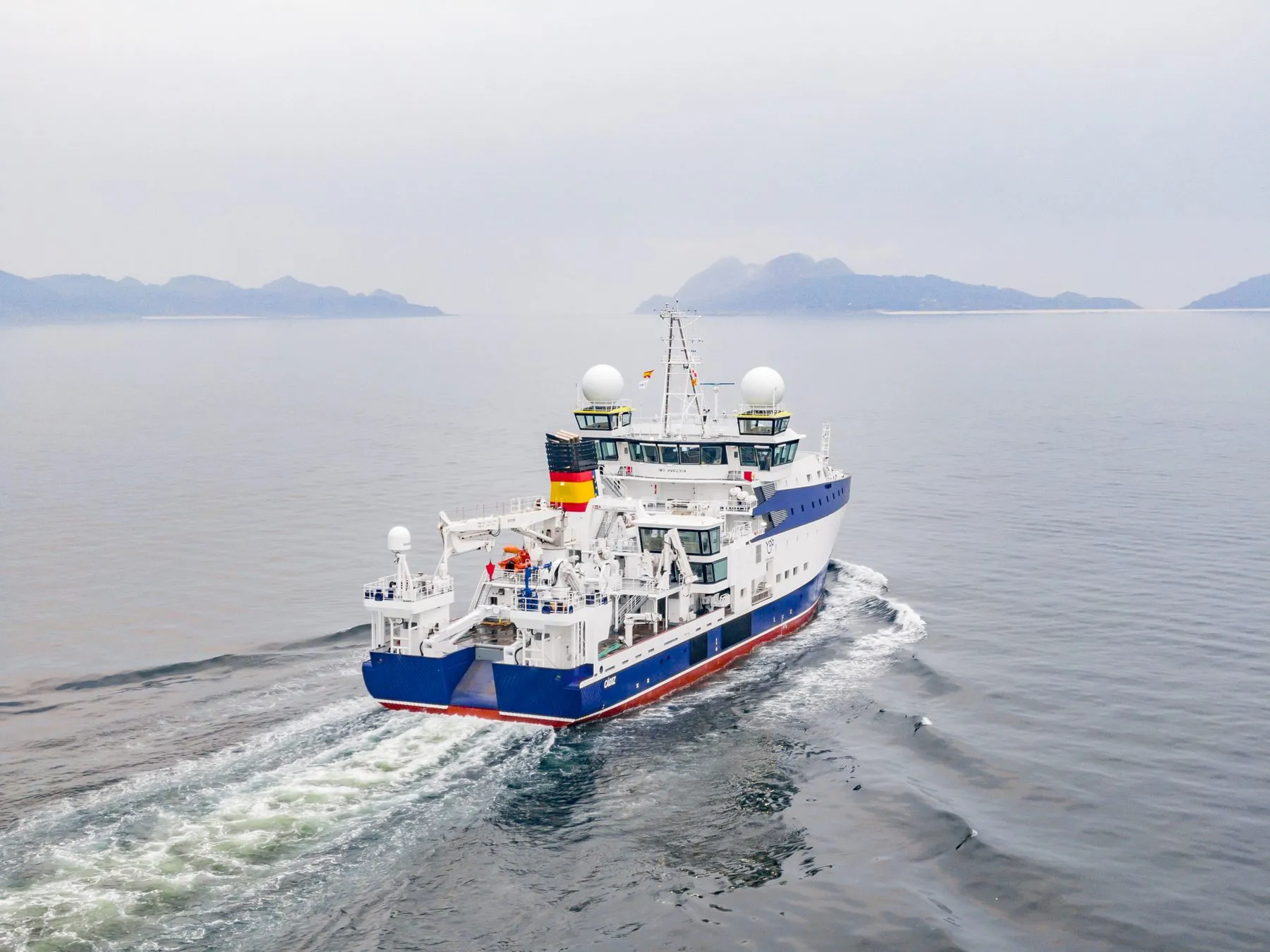
The ship from the air. Photo courtesy of CSIC.
Next comes the crossing: once the ship reaches the South Shetland Islands, it will open the bases and the first projects will begin.
Sources
- El Debate (Europa Press) · Odón de Buen begins its first Spanish Antarctic research campaign from Cádiz (4 Nov 2026, in Spanish)
- Pescare · Odón de Buen: a new era for Spanish polar science (ship specifications, in Spanish)
- Spanish Ministry of Science · Odón de Buen breaks ice in Antarctic waters for the first time (February 2025, in Catalan)