South African town's 'ancient ovens' turn out to be 400,000-year-old termite nests
In the early 2000s, a local artist in Calitzdorp, in the Little Karoo, came across pipe-like rock structures that looked like old ovens. A team led by Miengah Abrahams of the University of Cape Town has shown they are fossilised termite nests between 323,000 and 401,000 years old, and has described them as a new kind of trace fossil named after the town.
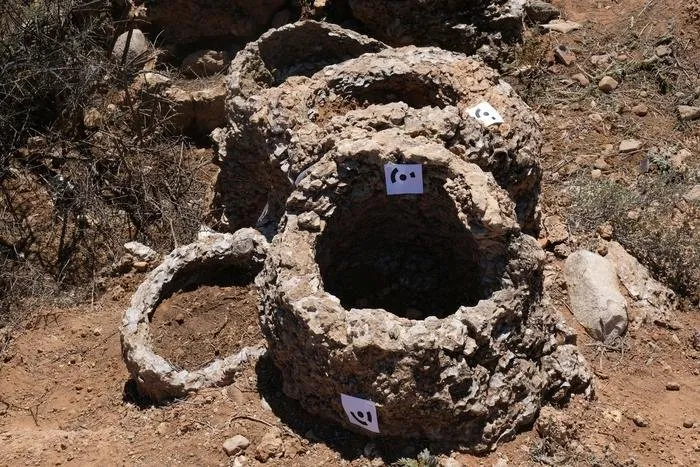
In the early 2000s, a local artist in Calitzdorp, a town in South Africa’s Little Karoo, came across pipe-like rock structures poking out of the ground. They looked like ovens left by the area’s early inhabitants. They were something else: fossilised termite nests between 323,000 and 401,000 years old, according to a study led by the University of Cape Town (UCT) in the Journal of Quaternary Science.
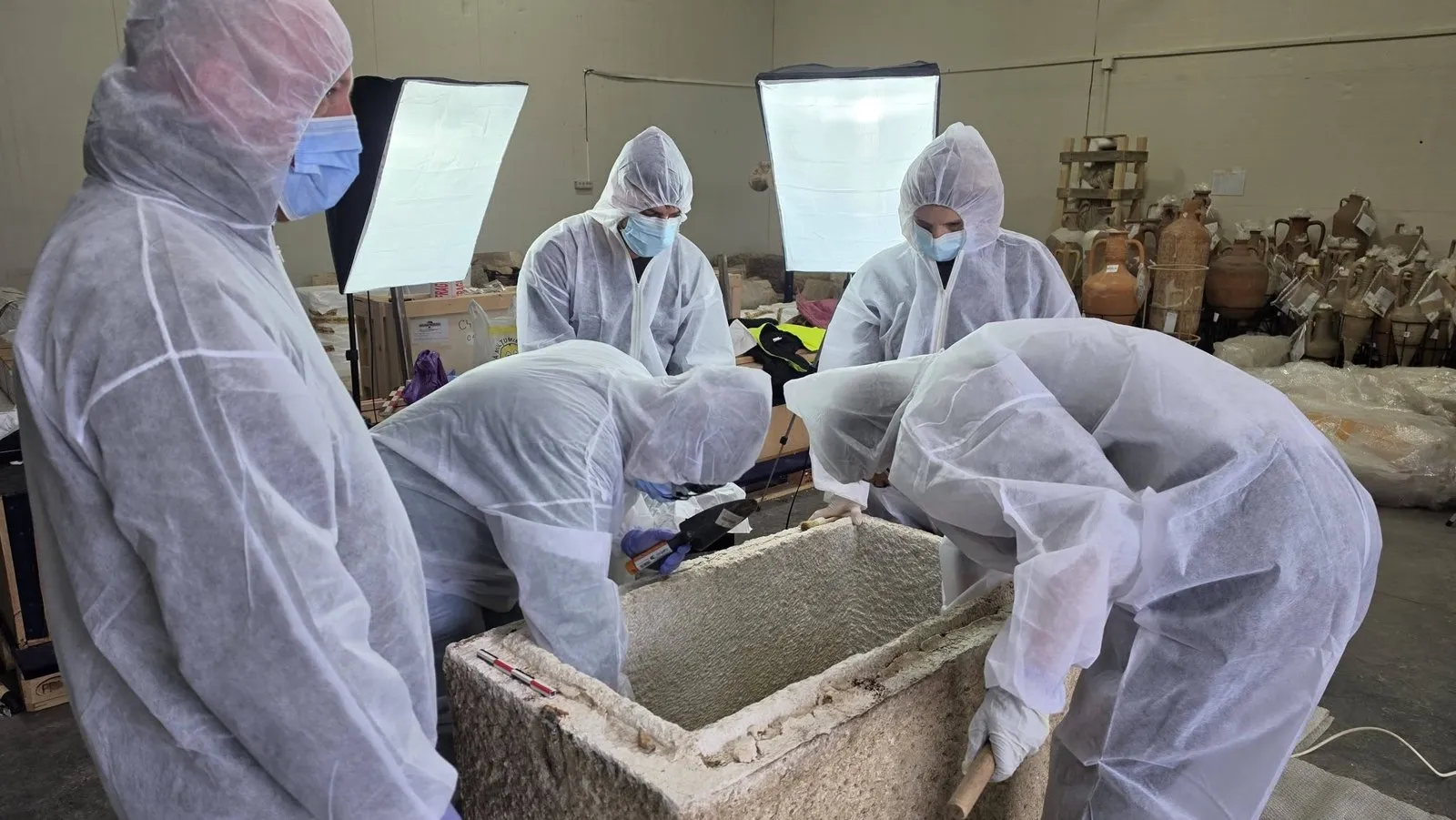
The find was the artist’s; the scientists’ work was to explain it. One caveat: the authors do not identify which termite built the nests, only that it is an extinct species.
Eight nests, a metre deep
A single site in Calitzdorp holds eight well-preserved nests. Each is about a metre deep and 65 centimetres across, according to UCT. Uranium-series dating places them in the Middle Pleistocene.
The termites preserved them themselves: their activity drew calcium carbonate into the sand, which hardened like rock (calcretisation). The researchers have described them as a new ichnogenus and ichnospecies, a new kind of trace fossil, and named them after the town: Columnanidus calitzdorpensis.
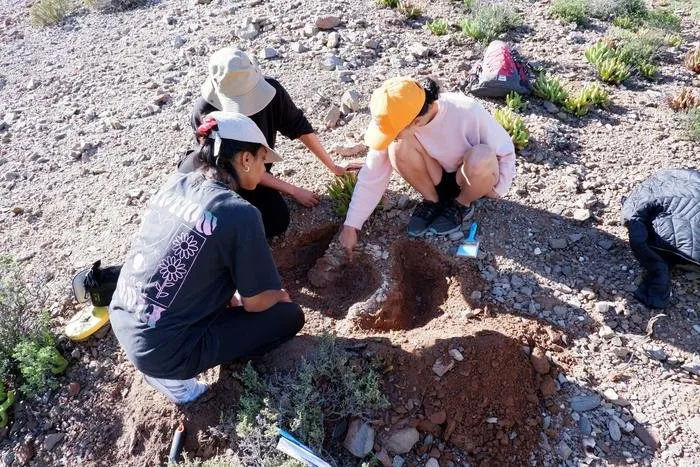
Miengah Abrahams (right) with MSc students Rabia Jacobs and Senate Marakabei during fieldwork in the Little Karoo. Photo courtesy of UCT: Robert Muir.
From an impact report to the town museum
The structures came to scientists’ attention in the mid-2000s, in a palaeontological impact assessment by geologist John Almond, now a co-author. Miengah Abrahams, a senior lecturer in Geological Sciences at UCT, learned of it from Professor Emese Bordy and began the research in 2021, with colleagues from South Africa, Argentina and Australia.
In October the team gave the Calitzdorp Museum, which houses one of the nests, a poster about the discovery. “Engaging with locals about the fossil heritage on their doorsteps is a rewarding aspect of science,” Abrahams says. “We hope visitors to the museum, especially children, will gain a deeper appreciation for the natural world around them.”
Next, the team plans to study similar nests in the Northern Cape and near Ceres and Worcester.
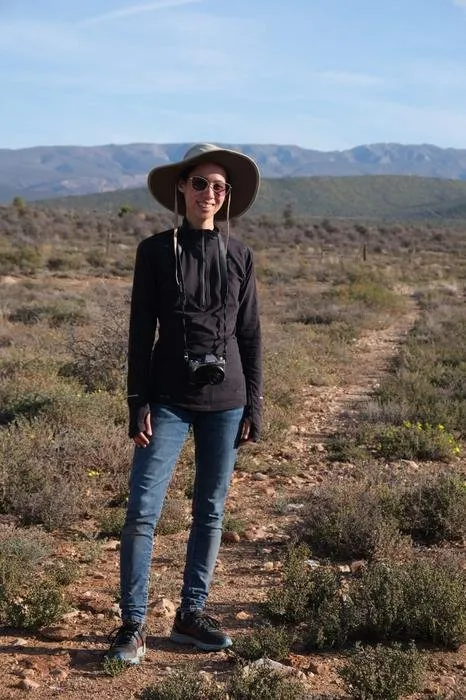
Miengah Abrahams, senior lecturer in Geological Sciences at UCT, who leads the study. Photo courtesy of UCT: Robert Muir.