Giant extinct bird from Flores 'hobbit' cave named after Indonesian scientist
A leg bone found at Liang Bua, the cave on the Indonesian island of Flores where Homo floresiensis was discovered, belonged to a megapode weighing about 3.9 kg, several times heavier than the one living on the island today. A team from the University Museum of Bergen describes it in the journal Alcheringa, and the species honours Rokus Due Awe, the Indonesian zooarchaeologist who identified the 'hobbit' remains. It is a single bone: nobody knows yet whether it could fly or when it died out.
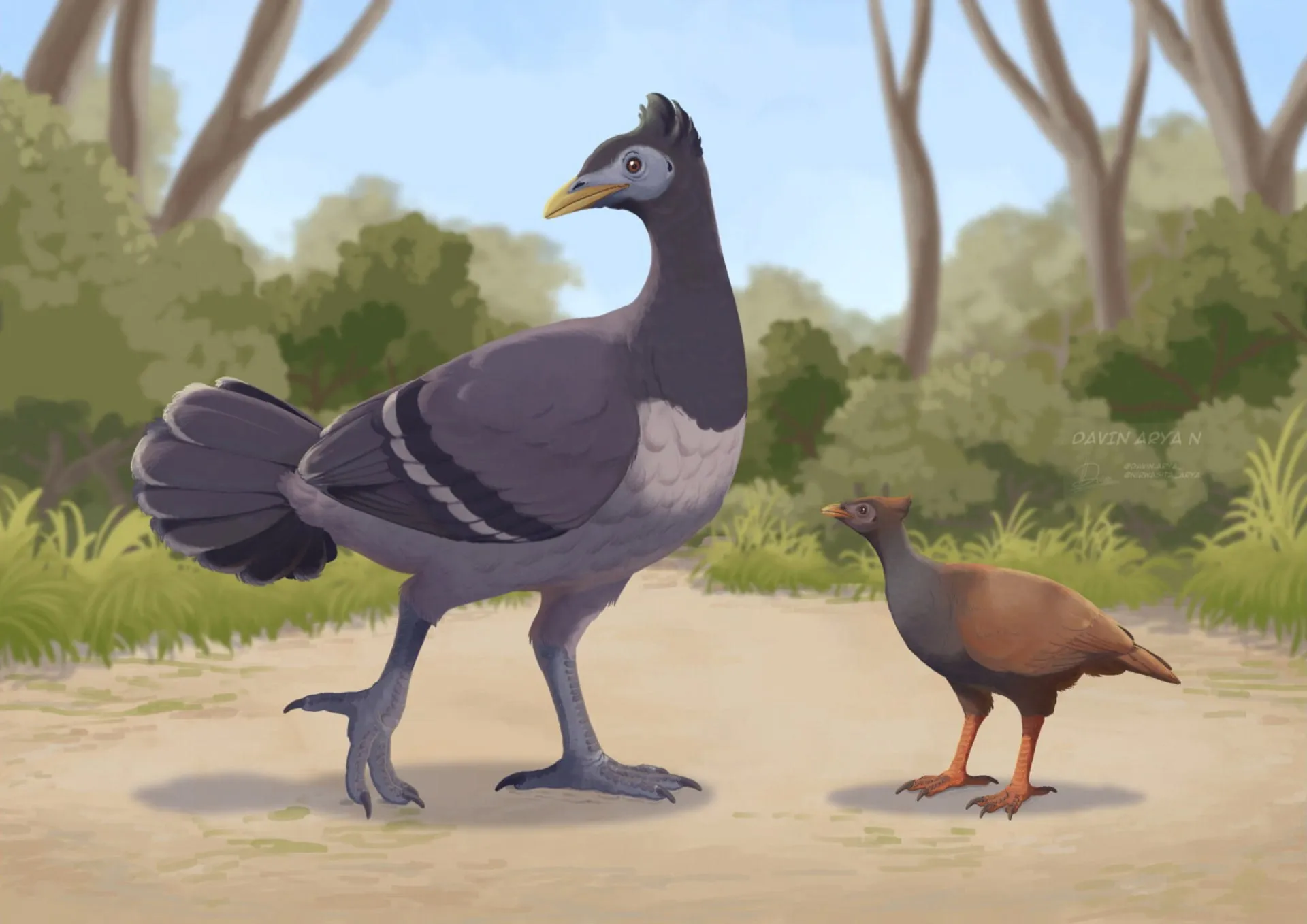
It is the lower half of a right leg bone. It came out of Liang Bua in 2009, the cave on the Indonesian island of Flores where Homo floresiensis, the small human nicknamed the ‘hobbit’, was found. Now it has a name: Megapodius rokusi, a bird new to science.
Palaeontologist Hanneke Meijer of the University Museum of Bergen in Norway and colleagues describe it in the journal Alcheringa. The sediments it came from are between 190,000 and 120,000 years old.
A chicken relative weighing almost 4 kg
Megapodes are ground birds related to chickens that don’t sit on their eggs: they bury them and let the heat of the ground do the work. The team estimates this species weighed about 3.9 kg. The megapode living on Flores today, Megapodius reinwardt, weighs between half a kilo and 1.2 kg.
The bone is larger than the same bone in any other known species of the genus, living or extinct. It is also the first fossil megapode described from Wallacea, the island region between mainland Asia and Australia.
A name for Rokus Due Awe
The species is named after Rokus Due Awe, the Indonesian zooarchaeologist who spent years studying animal remains from the country’s sites and was the first to correctly identify the bones and teeth of Homo floresiensis after the 2003 discovery. According to the authors, it is the first megapode named after an Indonesian researcher.
The authors suggest its eggs, which are very nutritious, may have been an easy food for Homo floresiensis and, later, for modern humans.
What one bone can’t tell us
With no wing or shoulder bones, it is unknown whether it could fly. Nor is it known when it went extinct or whether it ever lived alongside today’s smaller species: the team suggests the small one may have reached Flores only after the big one disappeared. Answering that will take more fossils.