Scientists map one of the world's largest known coral colonies, 1.56km long off the Cocos Islands
A team led by marine biologist JP Hobbs of Adelaide University, with Queensland Museum and James Cook University, took 12 dives to measure a rose coral colony (genus Pachyseris) stretching 1.56km along the outer reef of the Cocos (Keeling) Islands in the Indian Ocean. The caveat: nobody yet knows whether it is one organism or several colonies that have fused; genetic tests now under way will tell.
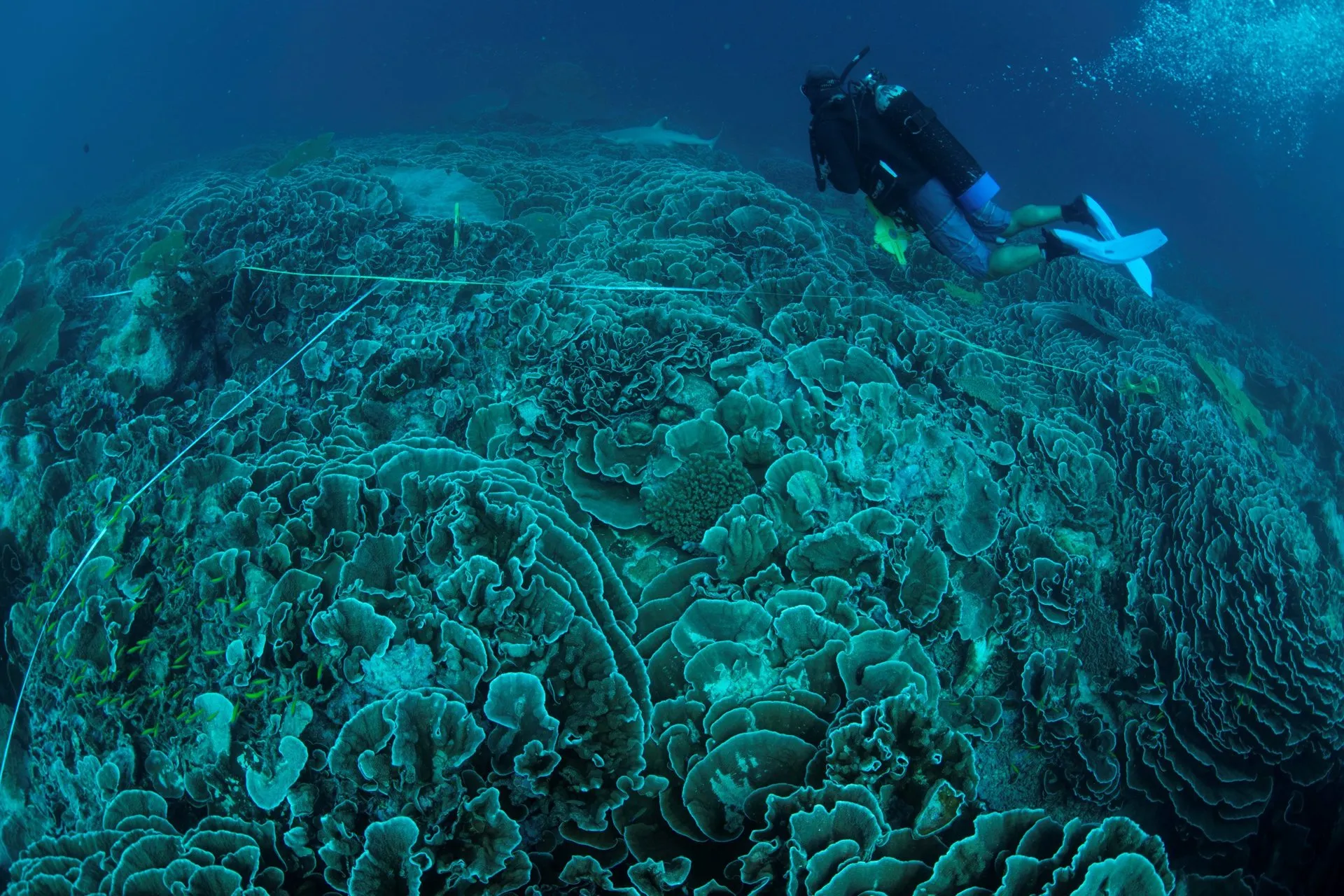
It took 12 dives to get from one end to the other. Each time, JP Hobbs swam over the coral until his air ran low, marked the spot with GPS and picked up from there on the next dive. In the end the rose coral colony on the outer reef of the Cocos (Keeling) Islands measured 1.56 kilometres: about 100 buses end to end.
Hobbs, a marine biologist at Adelaide University, worked with Queensland Museum and James Cook University. According to their press release, the colony covers about 56,940 square metres, three times the playing surface of the Melbourne Cricket Ground, and grows on the reef slope between 14 and 65 metres deep. The work is funded by Parks Australia as part of research in the islands’ marine park.
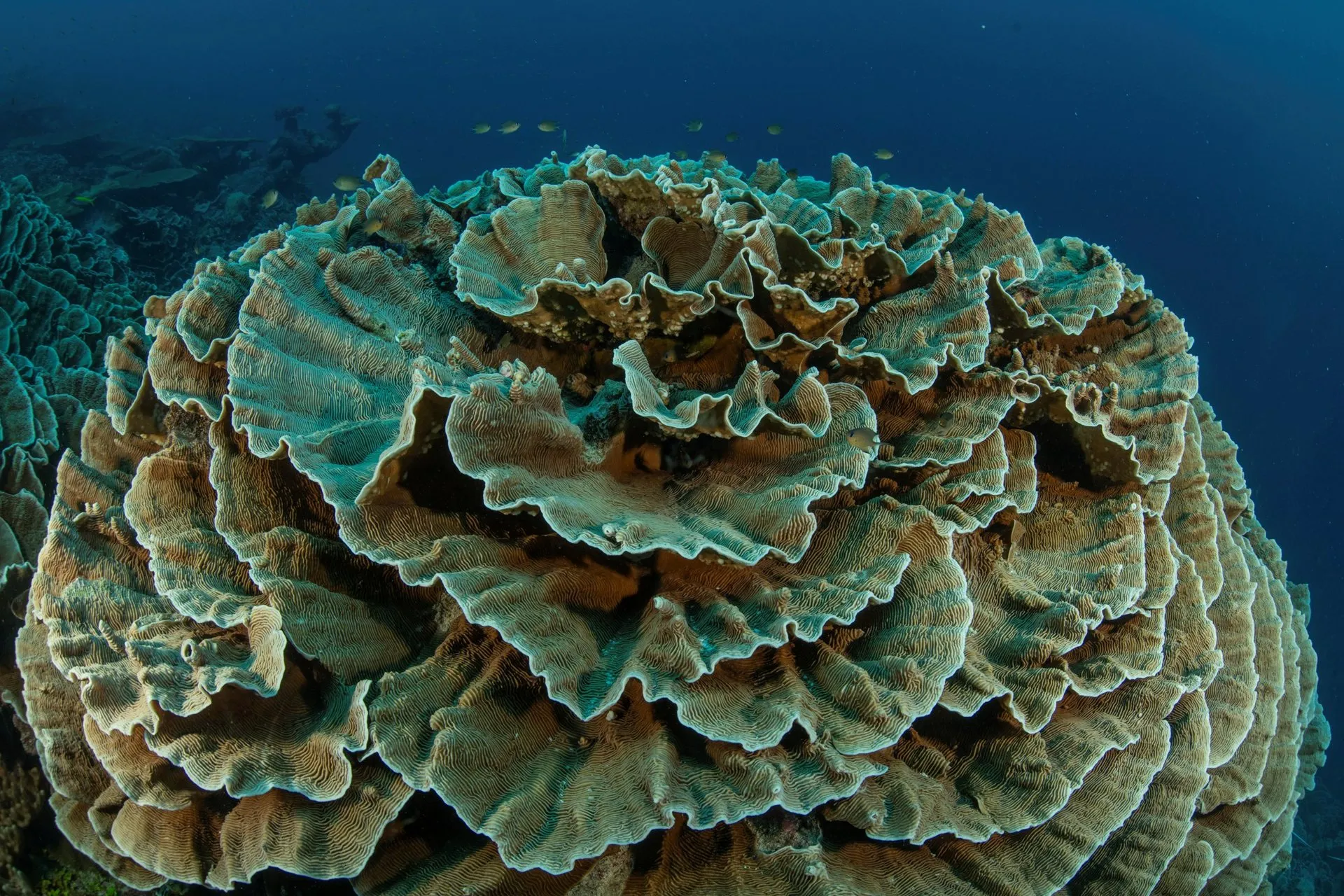 The wavy plates that give rose coral (genus Pachyseris*) its name. Photo by Justin Gilligan, shared by Adelaide University and Queensland Museum.*
A diver spotted it 30 years ago
The first person to notice it was Dieter Gerhard, who has run dives on the island for more than three decades. Nobody had measured it because it cannot be seen from above: below a few tens of metres, aircraft and satellites can no longer pick out corals, so someone has to go down and look.
That so much of it grows so deep is what makes it interesting. Deeper reefs get less light and stay cooler than the surface, which is why they are studied as possible refuges for corals hit by bleaching in shallow water.
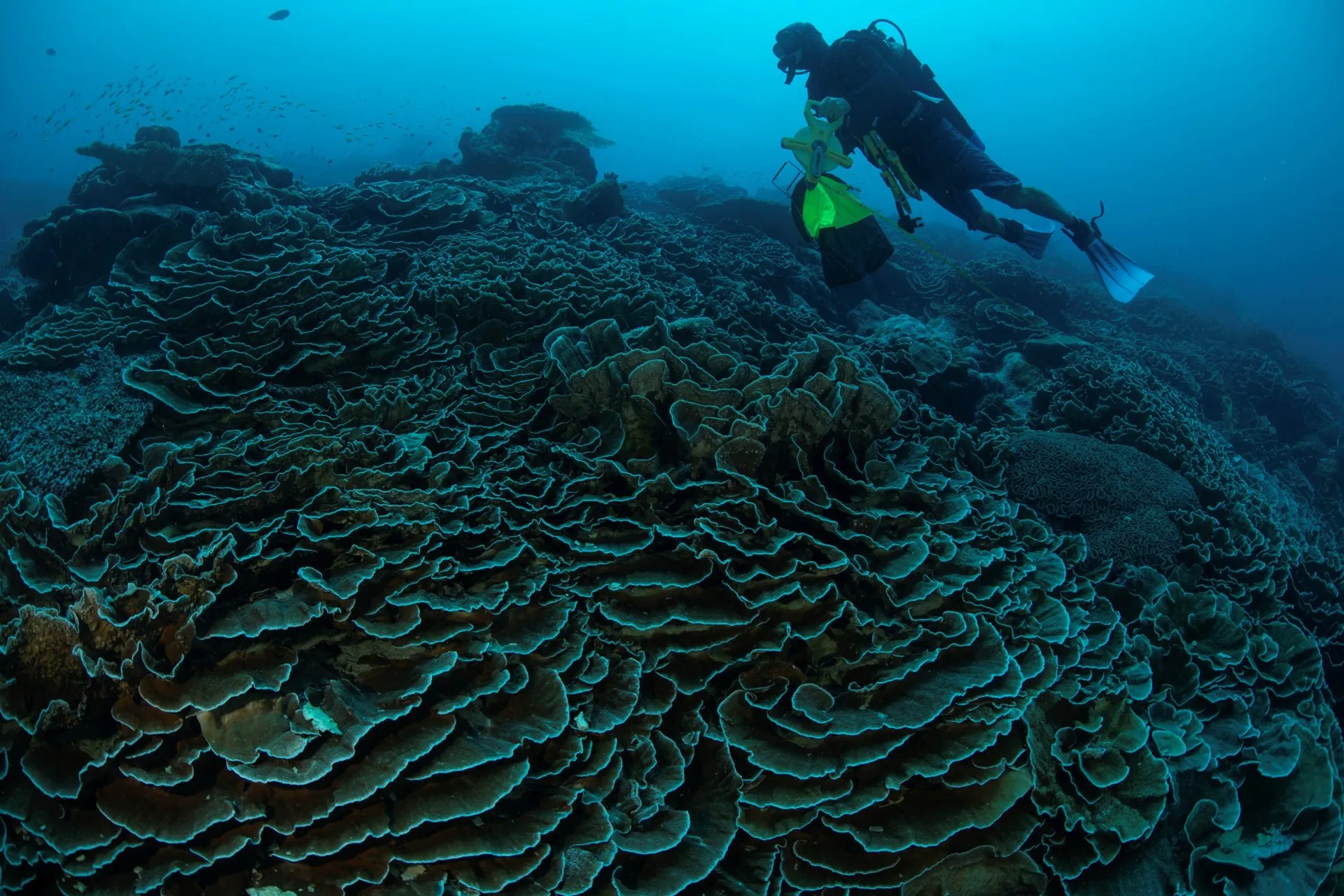 A team diver surveys the colony. Photo by Justin Gilligan, shared by Adelaide University and Queensland Museum.
One living thing, or many?
That question is still open. If DNA from the samples the team collected along the colony turns out identical, it is a single genetic individual; if not, it is several neighbouring colonies that have grown into one another. Genetic tests are already under way, and until they come back its age and growth rate will also remain unknown.
The Cocos (Keeling) Islands are two atolls with 27 islands and about 600 residents, roughly halfway between Australia and Sri Lanka. Charles Darwin visited in 1836 aboard HMS Beagle, studying how coral atolls form.