Densest known candelabra coral population in the Atlantic found off Tenerife
A robot from the Spanish Institute of Oceanography (IEO-CSIC) counted 190 candelabra coral colonies about 100 metres down off south-east Tenerife, with up to 9.3 per square metre: the highest density recorded for the species in the Atlantic. The caveat: nobody yet knows how far the population extends, and it lies less than two kilometres from areas being considered for offshore wind farms.
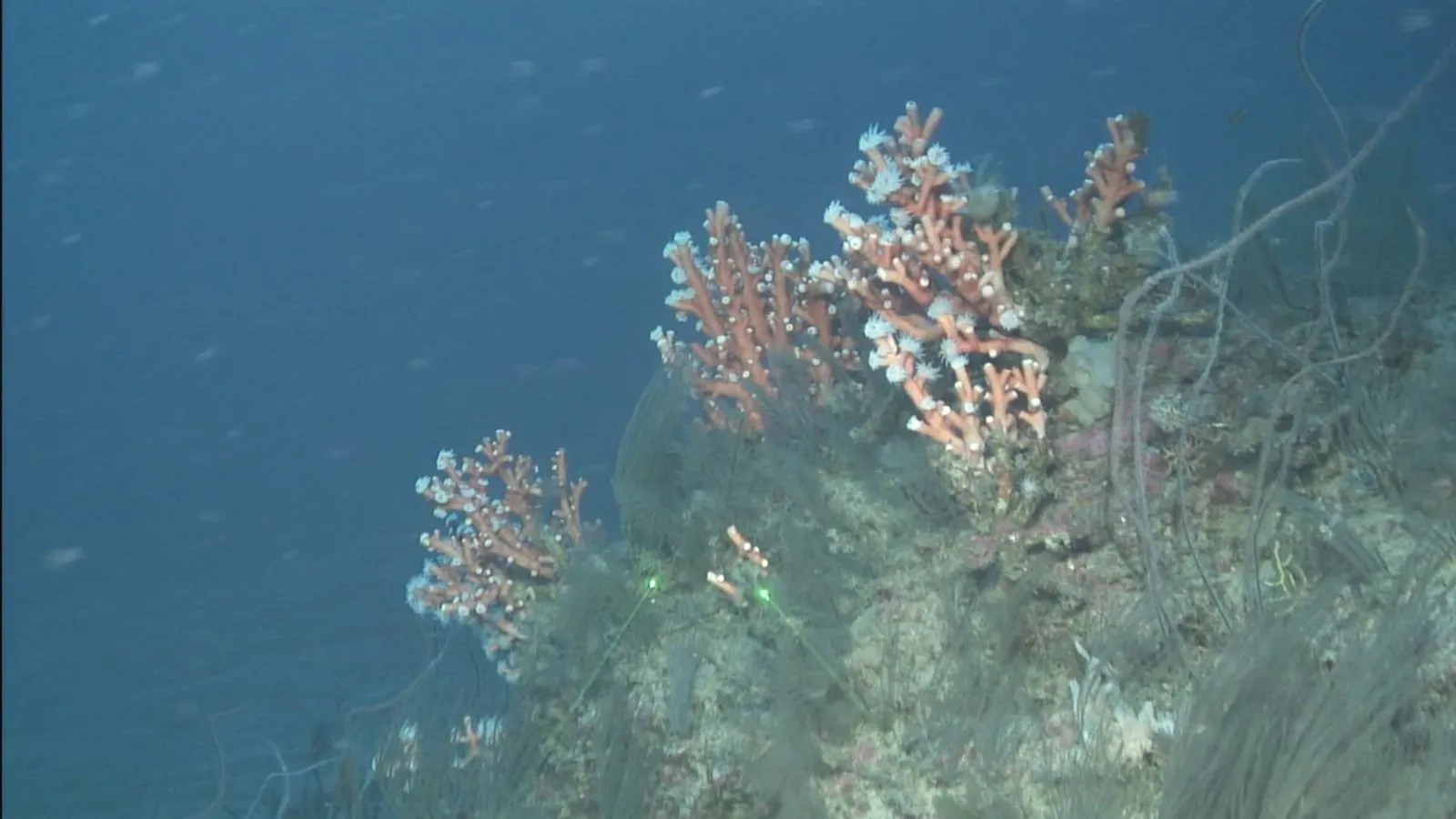
About 100 metres below the surface off the south-east coast of Tenerife, the underwater robot Liropus 2000 followed a 1.8-kilometre transect and kept counting: 190 colonies of candelabra coral (Dendrophyllia ramea), almost all on rocky ground, between 92 and 108 metres deep.
In the most crowded patches there were up to 9.3 colonies per square metre. According to the study by the Spanish Institute of Oceanography (IEO-CSIC), published in Regional Studies in Marine Science, these are the highest densities recorded for the species in the Atlantic Ocean. Until now there was no quantitative data on its Atlantic populations. What is still unknown is how far this coral forest actually extends.
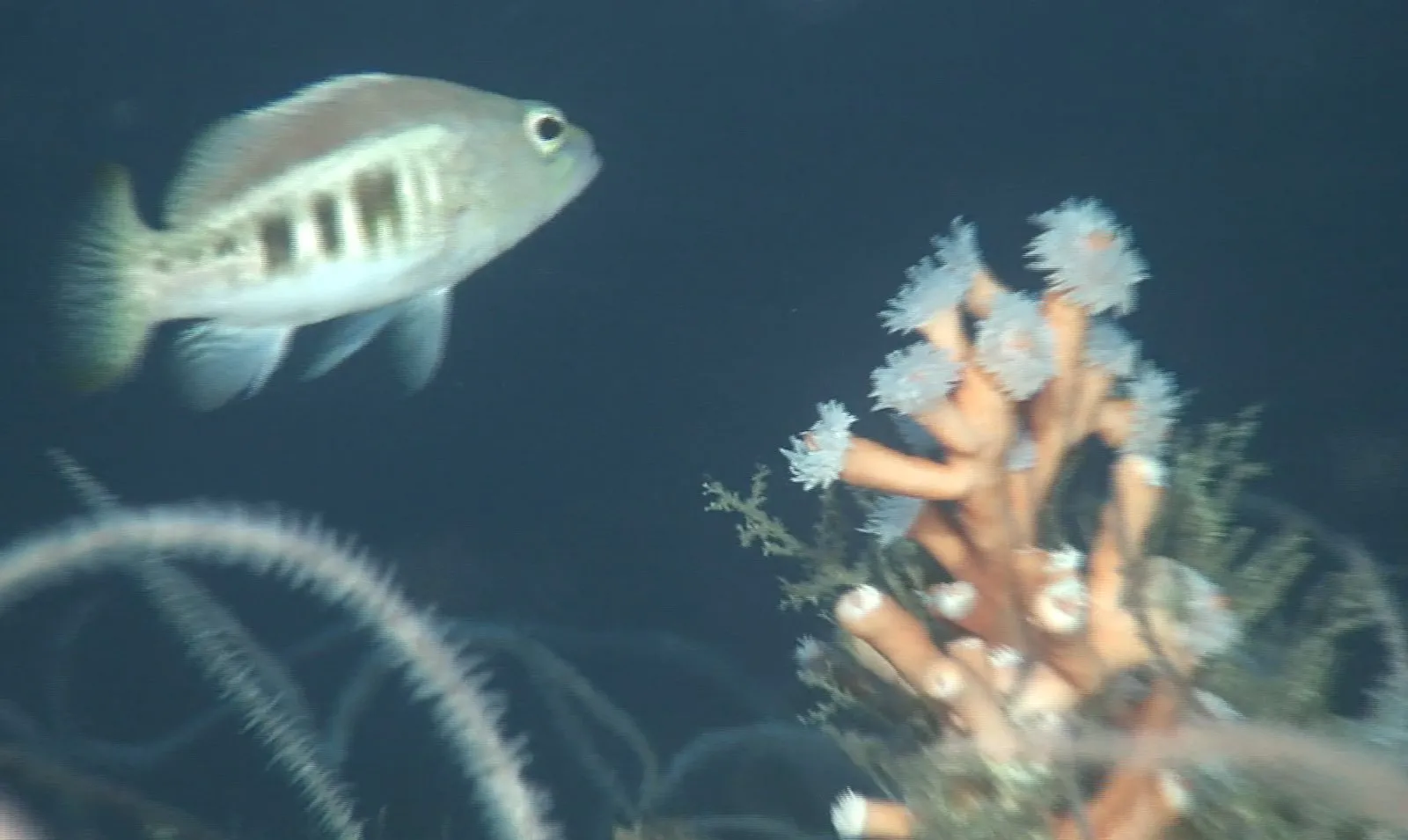
A fish next to a candelabra coral colony. Images: Spanish Institute of Oceanography (IEO-CSIC).
Colonies almost 70 centimetres wide
“What makes this finding exceptional is not only the high density of colonies but also their size,” says Silvia Oliva, an IEO-CSIC researcher and the study’s lead author. Of the colonies measured, 58% were more than 20 centimetres wide and some reached 68.5. That is comparable to the largest found in some Mediterranean populations.
The footage was taken on the DEEP CANARIES expedition in February and March 2025, aboard the research vessel Ángeles Alvariño. The work is part of the BIODIV project, funded by the European Union (NextGenerationEU) and run by Spain’s Ministry for the Ecological Transition and the CSIC through the IEO.
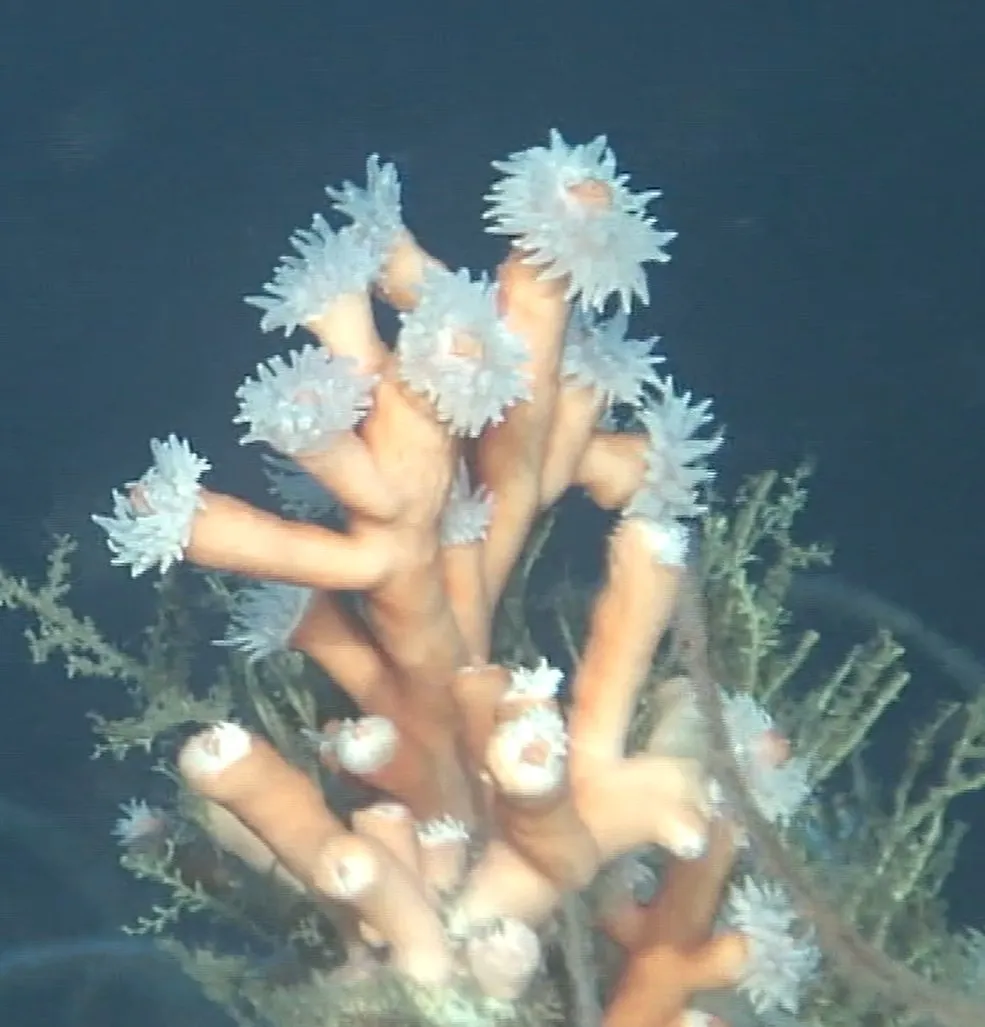
Close-up of the polyps of a candelabra coral colony. Images: Spanish Institute of Oceanography (IEO-CSIC).
Protected in the Mediterranean, not the Atlantic
In the Mediterranean, candelabra coral is protected under the Barcelona Convention and listed as vulnerable on the IUCN Red List for that region. That protection does not cover Atlantic populations, although reefs are an EU habitat of community interest and the FAO treats the species as an indicator of vulnerable marine ecosystems.
The team found remains of fishing gear among the colonies. The population also lies less than two kilometres from areas identified in maritime spatial plans for possible offshore wind development. The authors stress that their results do not mean human activity is harming the population now, but they call for protection to be extended to the Atlantic and for more research to map how far it reaches.
Sources
- IEO-CSIC, via Nova Ciencia · Densest known Atlantic population of candelabra coral found off Tenerife (19 Nov 2026, in Spanish)
- Tenerife Weekly · The highest density population of candelabra coral known in the Atlantic (20 Nov 2026)
- Spanish Institute of Oceanography (IEO-CSIC) · images provided to Happy News of the Day (email, 23 Nov 2026)