Flexible rubber blades could make tidal power cheaper
The University of Edinburgh and Michelin tested a turbine whose blades bend on their own with the current: it produced as much energy as a conventional design and cut load fluctuations by up to 29%. So far this is a 1.26-metre model in a test tank, and it has yet to be tried at sea.
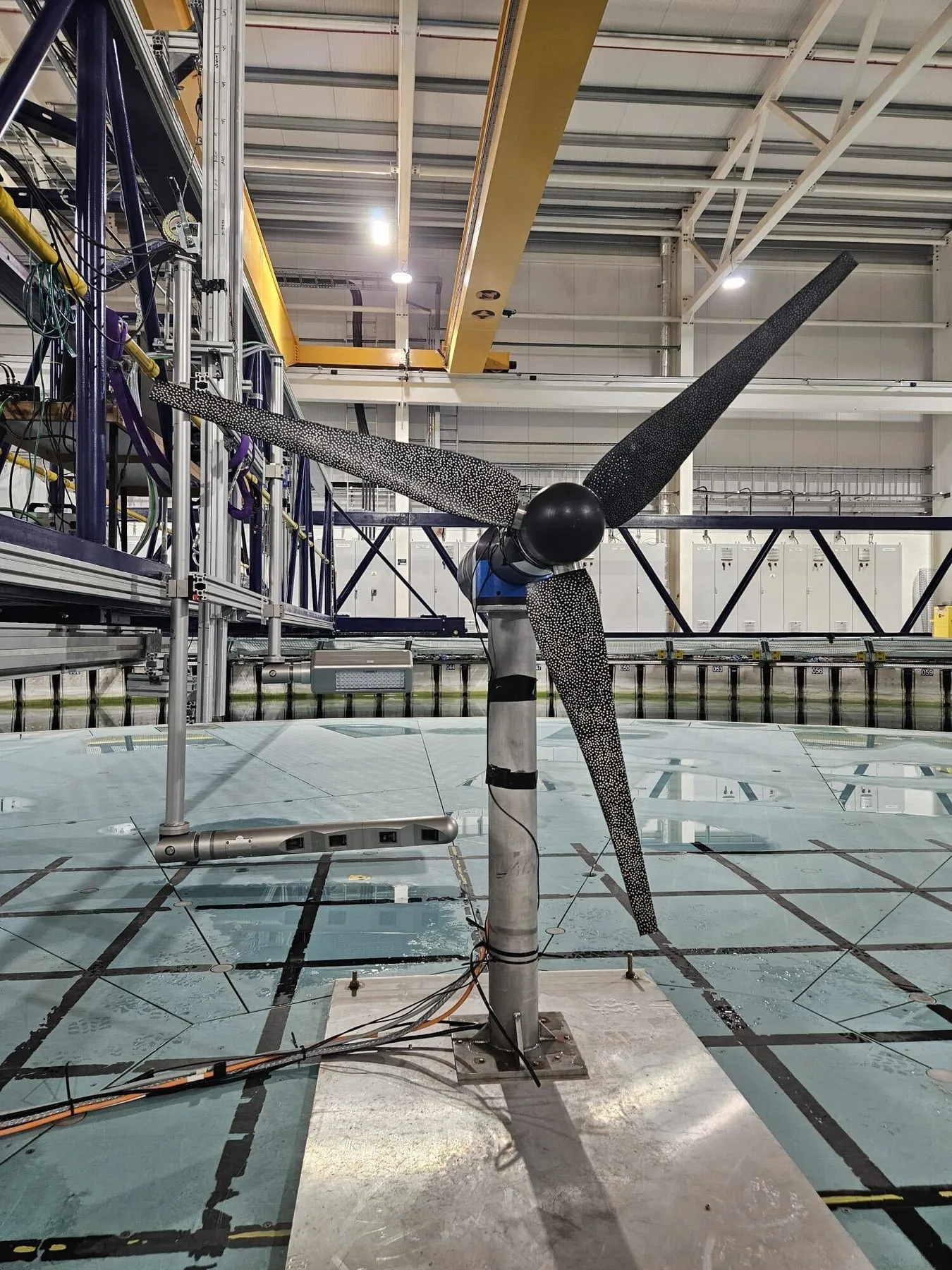
When the current surges, the edge of these blades curls by itself and sheds the excess force. There are no hinges, bearings or motors to turn them. They are made of rubber around an internal steel spar, and were designed by engineers at the University of Edinburgh and the tyre maker Michelin.
The work, published in Nature, is still at the research stage. Michelin helped fund it alongside the UK’s EPSRC and Edinburgh Innovations, and has filed a patent; the university holds related patents.
Same energy, fewer jolts
The team tested a 1.26-metre model in FloWave, the university’s circular test tank. The turbine generated as much energy as a conventional one with active blade control and cut the sharp load fluctuations that fatigue materials over time by up to 29%.
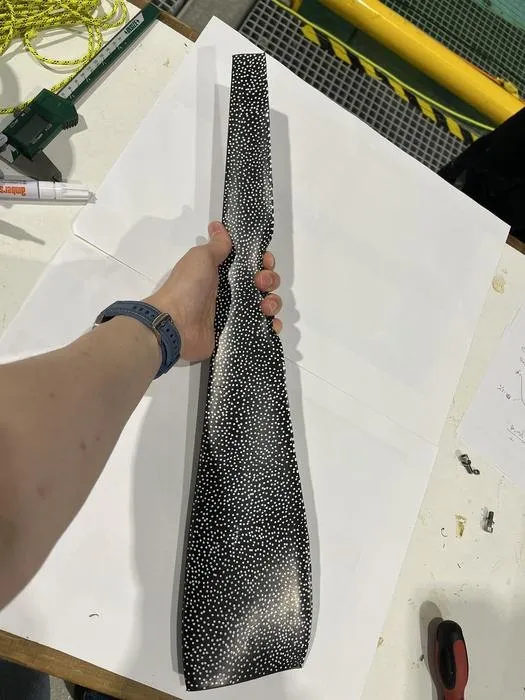 A researcher demonstrates the flexibility of the rubber blade. Photo: University of Edinburgh/Michelin.
Active control, which angles the blades to suit the current, is expensive and a common source of breakdowns, Ocean News reports. Doing without it could allow simpler, lighter turbines and open up sites too turbulent for today’s designs.
From test tank to open water
Simulations of a 20-metre turbine point to similar performance at commercial scale, and early calculations suggest the blades could outlast the 20-year service life of current turbines. These are estimates: the blades have not yet been tested at sea, and more development and trials are needed before any industrial use.
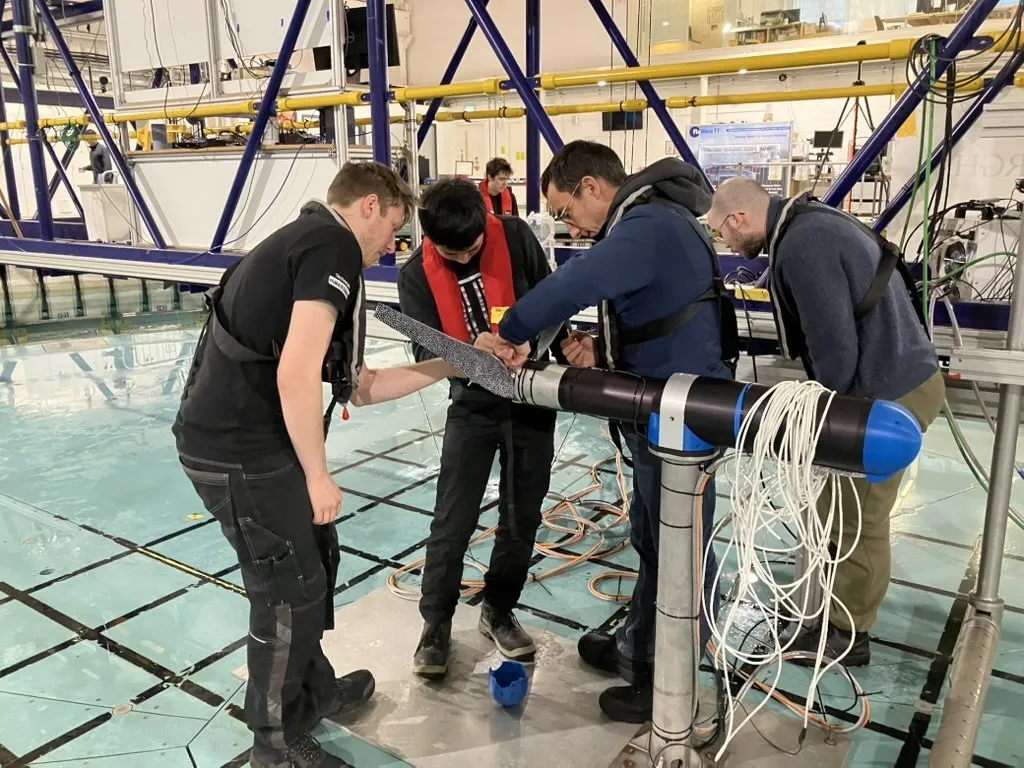 The team prepares a turbine for testing at FloWave. Photo: University of Edinburgh/Michelin.
The UK aims to install 1 gigawatt of tidal power by 2035, enough for around a million homes, according to the university.