Spanish study finds clue to why Alzheimer's hits some neurons first
Researchers at the Technical University of Madrid (UPM) and the University of Hamburg analysed 1.3 million brain cells with artificial intelligence and network medicine. In SST neurons, among the most vulnerable, they found a possible mechanism linking inflammation and cell damage. The caveat: it is a computer analysis that still needs lab confirmation, and it does not propose a treatment.
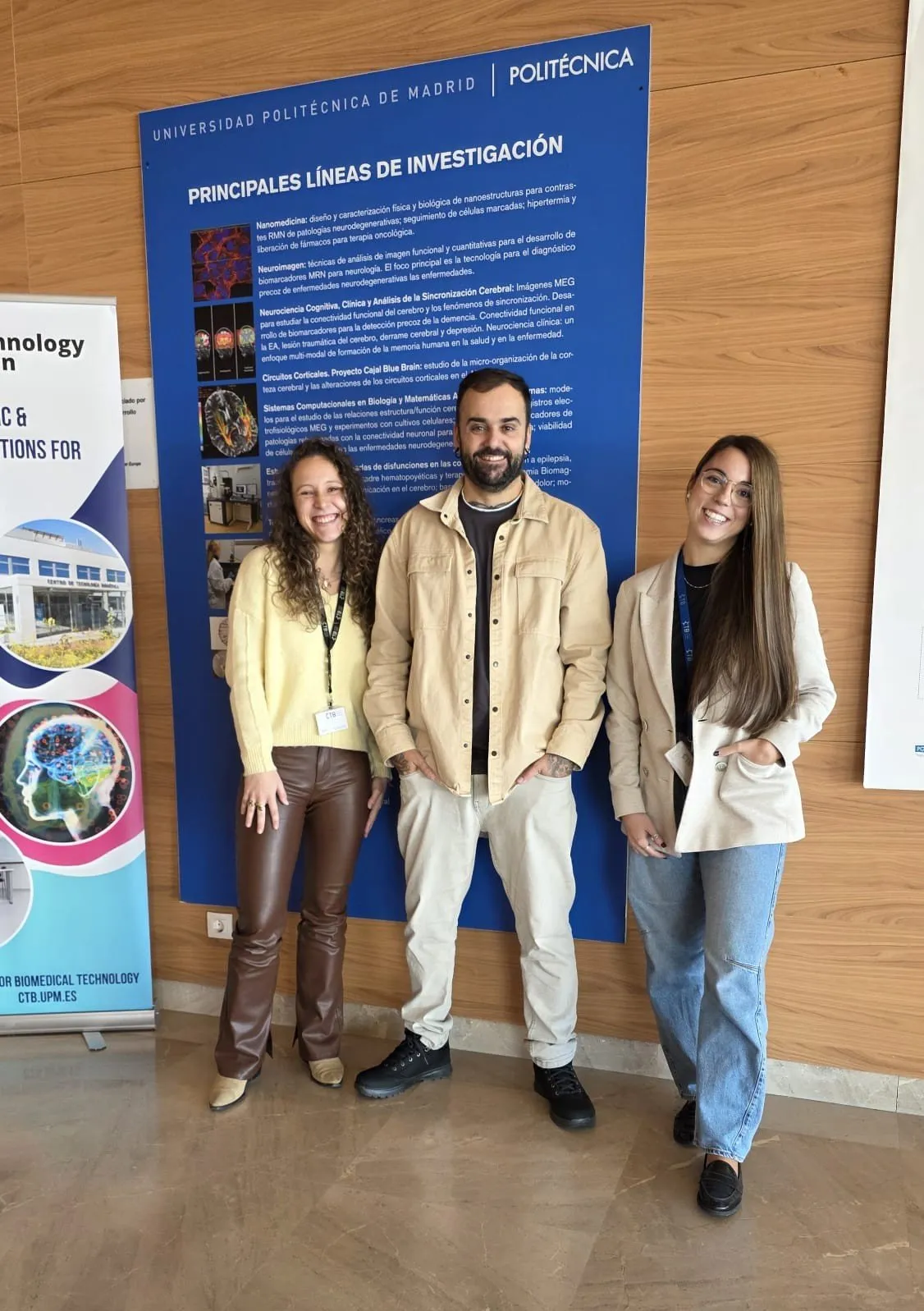
1.3 million brain cells, one by one. That is what a team at the Centre for Biomedical Technology of the Technical University of Madrid (UPM), working with the University of Hamburg, analysed to understand what changes inside each type of cell when Alzheimer’s sets in. The study, published in NAR Genomics and Bioinformatics, is a computer analysis: it generates hypotheses that now need to be tested in the lab.
“It is still unclear what happens inside each type of brain cell,” first author Andrea Álvarez, a doctoral researcher at UPM who did part of the work during a stay in Hamburg, told Redacción Médica.
Two methods, two angles on the same question
The data come from Seattle’s public SEA-AD atlas, with tissue from a brain region called the middle temporal gyrus, donated by 84 people at different stages of Alzheimer’s and by 5 young people without the disease. The team compared healthy cells with those at the most advanced stage.
They used two tools at once. Network medicine maps which genes act together and what controls them. An artificial intelligence model, scGPT, trained on more than 33 million human cells, ranks which genes matter most. Both pointed to the same groups of genes: inflammation, communication between neurons and the structure around cells. And each found things the other missed.
Inflammation and damage in the most fragile neurons
The most striking finding is in SST neurons (named after the somatostatin they make), a type of neuron that regulates others and is especially vulnerable to Alzheimer’s. In them, the study points to a possible new link between two genes: CEBPB, a known regulator of inflammation, and CENPQ, which is involved in cell division.
The authors suggest this axis could connect brain inflammation with damage to those neurons. They present it as a hypothesis: the networks are inferred from data, the AI does not prove cause and effect, and the study only compares healthy brains with advanced-stage ones, so it cannot show how the disease progresses.
More than 800,000 people in Spain live with Alzheimer’s, with about 40,000 new diagnoses a year, according to the Spanish Society of Neurology. The next step is to test the genes flagged by the study in the lab, to see whether any could become targets for future treatments.