Exercise slows biological aging in breast cancer survivors
In a University of California San Diego trial with 253 breast cancer survivors, women who followed a remote exercise program improved their attention, and in a subgroup their biological age advanced by one month in a year, compared with almost ten months in the comparison group. The caveat: the trial's two main goals, processing speed and how women rated their own memory, did not improve more than in the other group.
When the trial began, these women’s biological age, measured in their DNA, was on average 8.7 years ahead of their actual age. A year later, for those who followed an exercise program, that clock had moved forward by one month. For those in the comparison group, by almost ten.
They are 253 women who had finished treatment for breast cancer, were not very physically active and had noticed problems with memory or concentration. They were recruited by a University of California San Diego team led by researcher Sheri Hartman, and the randomized trial was published in the Journal of the National Cancer Institute. The biological-age results come from a subgroup of 124 participants.
Exercise from home, with a tracker and a coach
Half were assigned a remote program: an activity tracker and coaching to reach 150 minutes a week of moderate-to-vigorous exercise. The other half received a health and wellness program, also with a coach, but without exercise.
Women in the first group added about 35 minutes of exercise a week on average. And their attention improved more, at six months and at one year. Memory also improved more at six months, although that advantage had disappeared by one year.
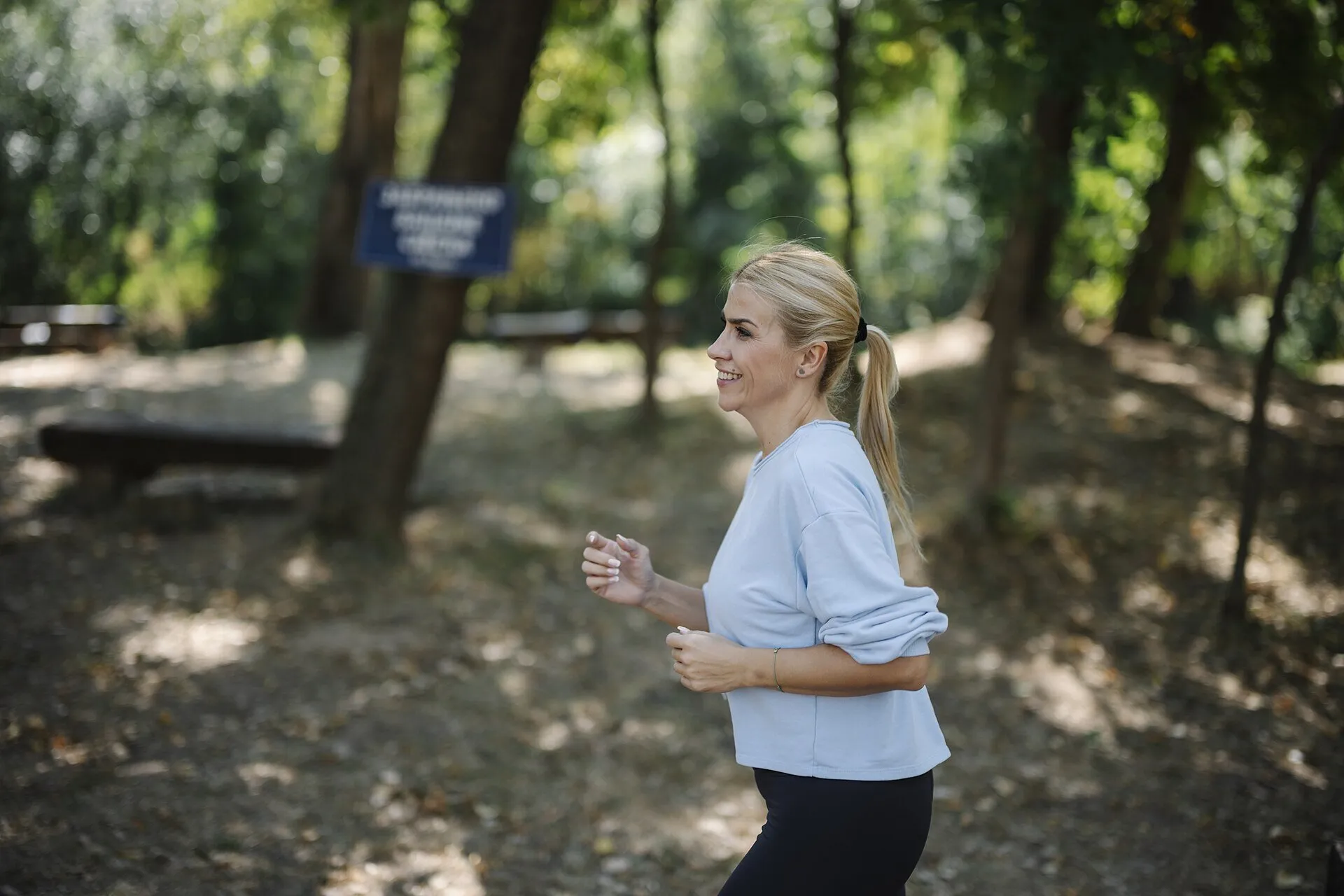
 Exercising at home. File image: Shixart1985 / Wikimedia Commons (CC BY 2.0).
What did not change
The trial’s two main goals, mental processing speed and how women rated their own memory, did not improve more than in the other group, and neither did executive function. Both groups improved on every test, and the benefits of exercise were modest.
The authors call for larger studies to confirm the results, and note that it has not yet been shown that slowing biological aging is what improves attention. It also remains to be seen who benefits most and how much exercise is needed. The study was funded in part by the US National Cancer Institute, and the authors declare no conflicts of interest.