Melanoma doctor Georgina Long wins Australia’s top science prize
Oncologist Georgina Long, Medical Director of Melanoma Institute Australia, has received the 2026 Prime Minister’s Prize for Science, the country’s highest science honour. According to the University of Sydney, her research led to the first highly effective drug therapies for melanoma and has improved survival tenfold for people with stage IV disease. The caveat: the prize recognises years of trials involving many teams, and advanced melanoma still cannot be cured in every patient.
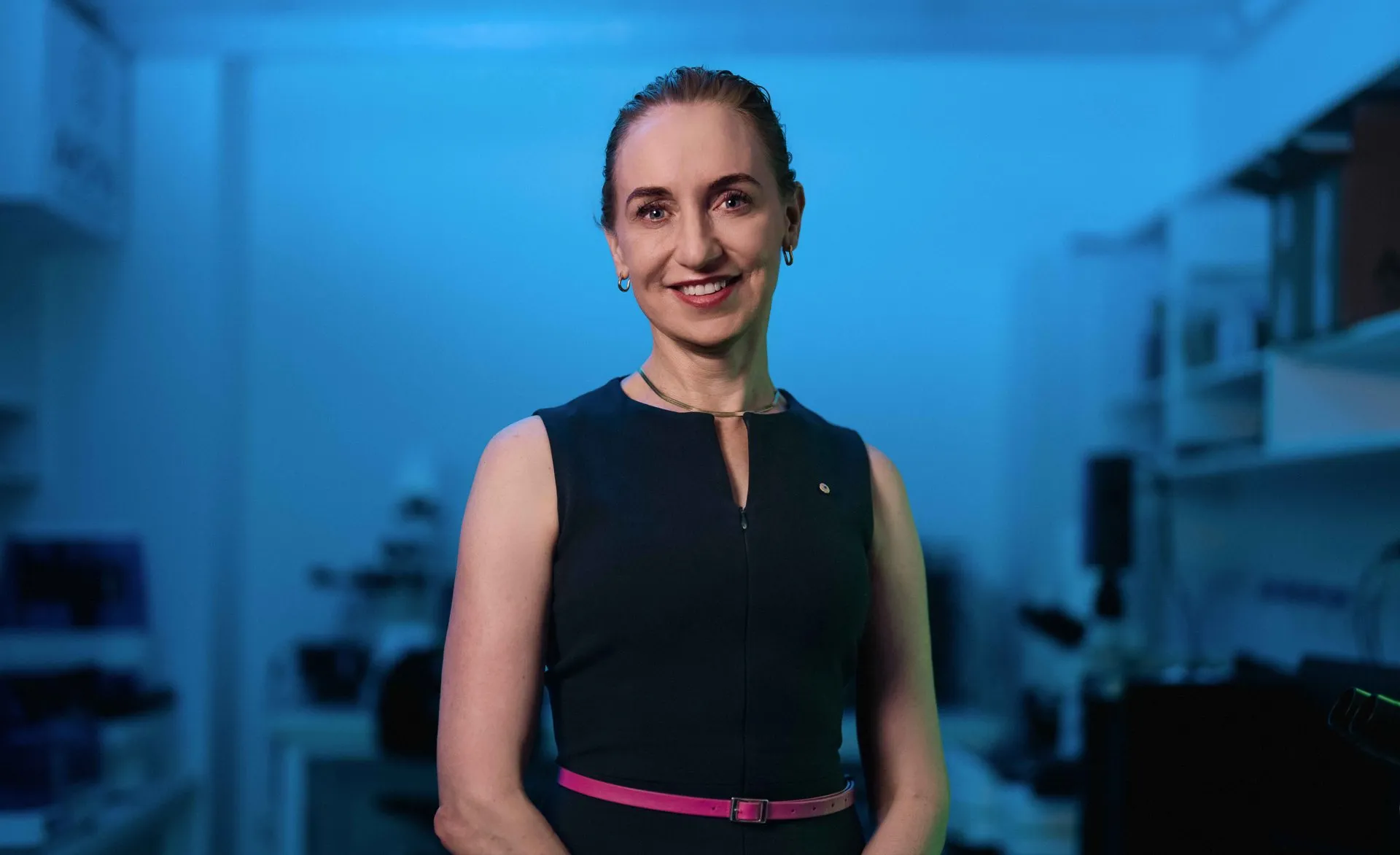
Not long ago, a person whose melanoma had spread to the brain could expect to live four to six months. Today, according to the University of Sydney, around half of patients with active, asymptomatic brain metastases are alive at seven years. Much of that change traces back to Georgina Long, who on 24 November received the 2026 Prime Minister’s Prize for Science in Canberra.
Long is Medical Director of Melanoma Institute Australia and Chair of Melanoma Medical Oncology and Translational Research at the University of Sydney. The prize recognises, in the university’s words, her pioneering research in precision oncology, which led to the first highly effective drug therapies for melanoma, the deadliest form of skin cancer.
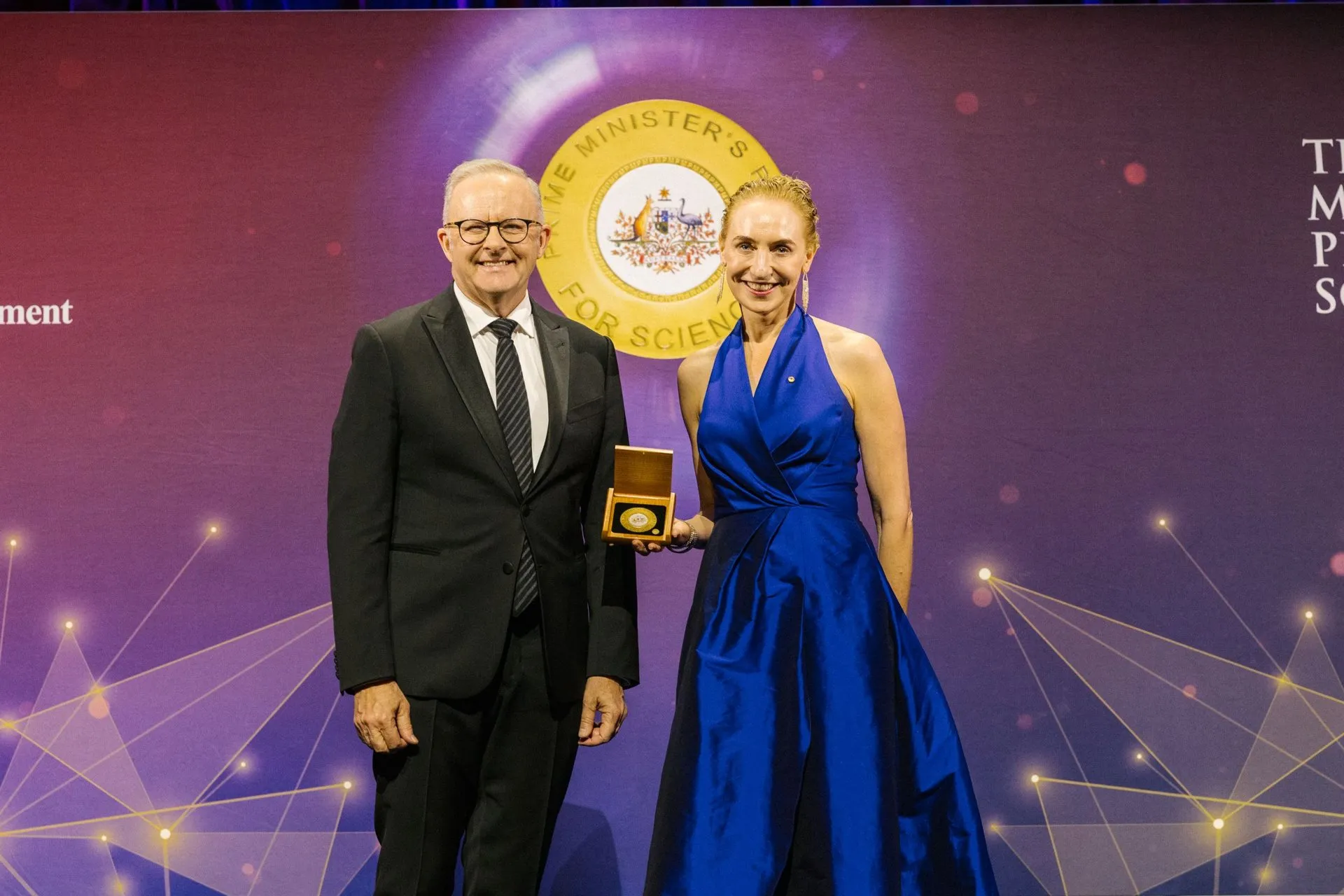 Georgina Long receives the Prime Minister’s Prize for Science medal from Anthony Albanese in Canberra. Photo: Melanoma Institute Australia.
Ten times the survival at the most serious stage
The institute and the university give the same figures: Long’s research has improved survival tenfold for people with stage IV melanoma, the most advanced stage, and 24-fold for those with brain metastases. The gains come from the immunotherapies and targeted drugs her team helped test in clinical trials.
Her other big front is immunotherapy given before surgery for stage III melanoma. Her trials showed this approach can dramatically reduce recurrence, and in 2025 Australia became, according to the University of Sydney, the first country in the world to provide broad, subsidised access to it.
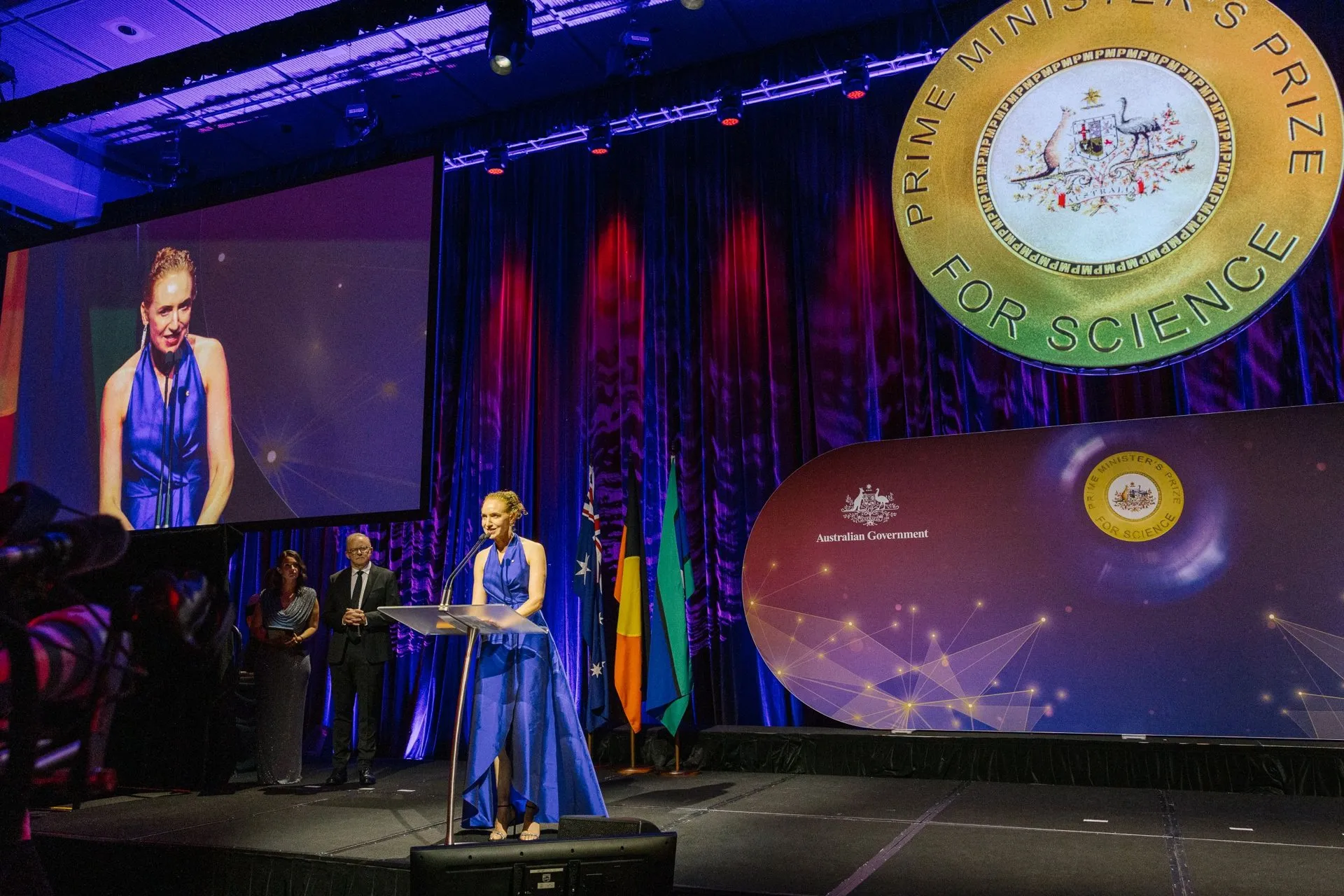 Georgina Long gives her speech at the award ceremony. Photo: Melanoma Institute Australia.
“It spurs me on to achieve more”
“I want to cure cancer,” Long says in the university’s announcement. “Receiving this prize acknowledges what has been achieved, and it spurs me on to achieve more.” She becomes only the second person to receive both this prize and the title of Australian of the Year, which she shared in 2024 with pathologist Richard Scolyer.
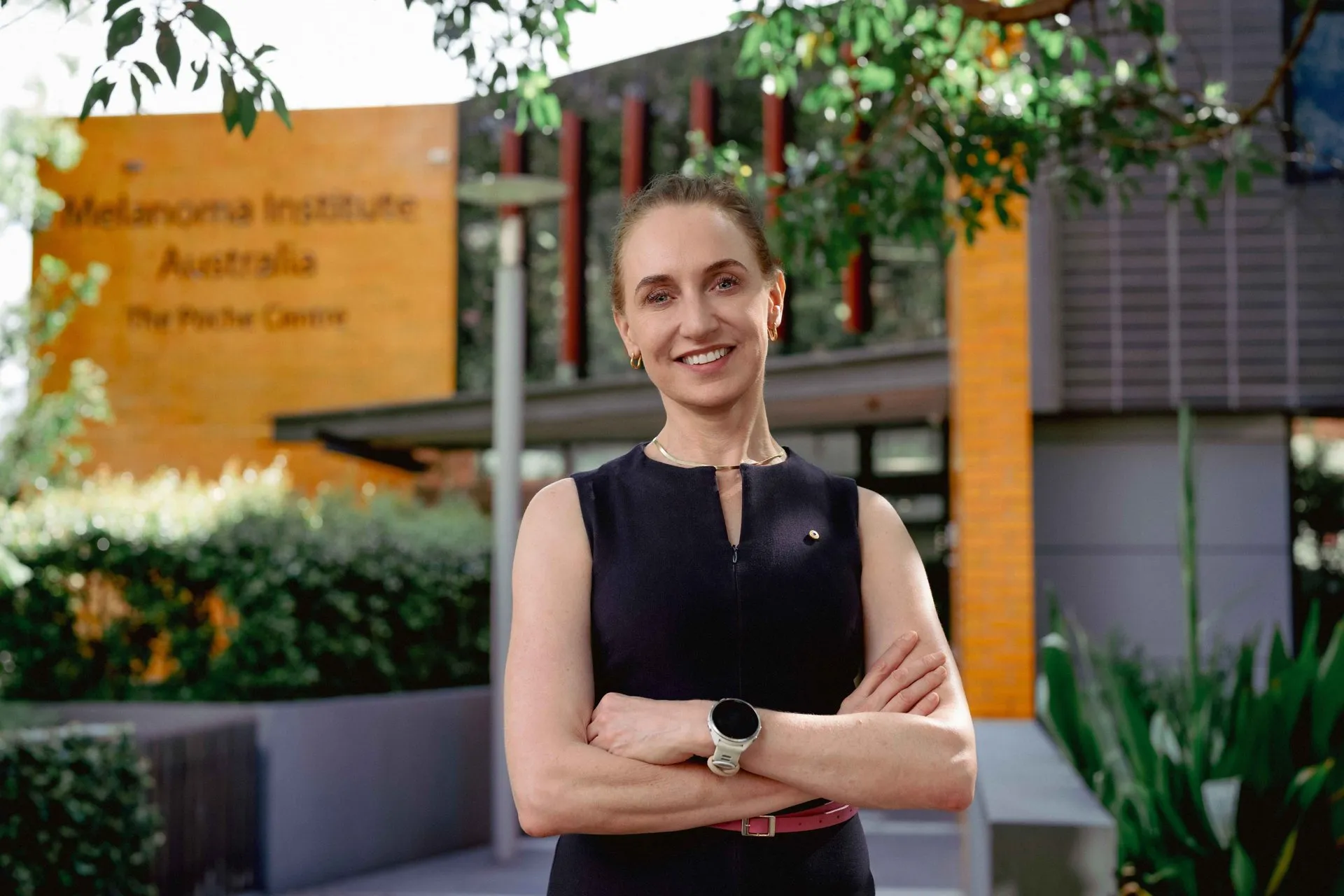 Georgina Long outside Melanoma Institute Australia in Sydney. Photo: Melanoma Institute Australia.
The work goes on: the institute is now focused on the patients these treatments do not yet help, with the goal that nobody dies from melanoma.
Sources
- University of Sydney · Sydney researchers take top honours in the 2026 Prime Minister’s Prizes for Science (24 Nov 2026)
- Melanoma Institute Australia · Professor Georgina Long honoured with 2026 Prime Minister’s Prize for Science (24 Nov 2026)
- ABC News · Melanoma researcher Georgina Long wins the 2026 Prime Minister's Science Prize (25 Nov 2026)
- Melanoma Institute Australia · photos provided to the newsroom (email, 25 Nov 2026)