Stick-on ultrasound patch brings REM sleep 43 minutes sooner, without drugs
Engineers at the University of Texas at Austin tested a soft patch on 28 young adults that stimulates a deep part of the brain with ultrasound while recording their sleep. On the night they wore it, they reached REM sleep about 43 minutes sooner and spent 16 more minutes in it. The caveat: it is a small study with no placebo group, the effect was weaker in poor sleepers, and the patch is not on sale.
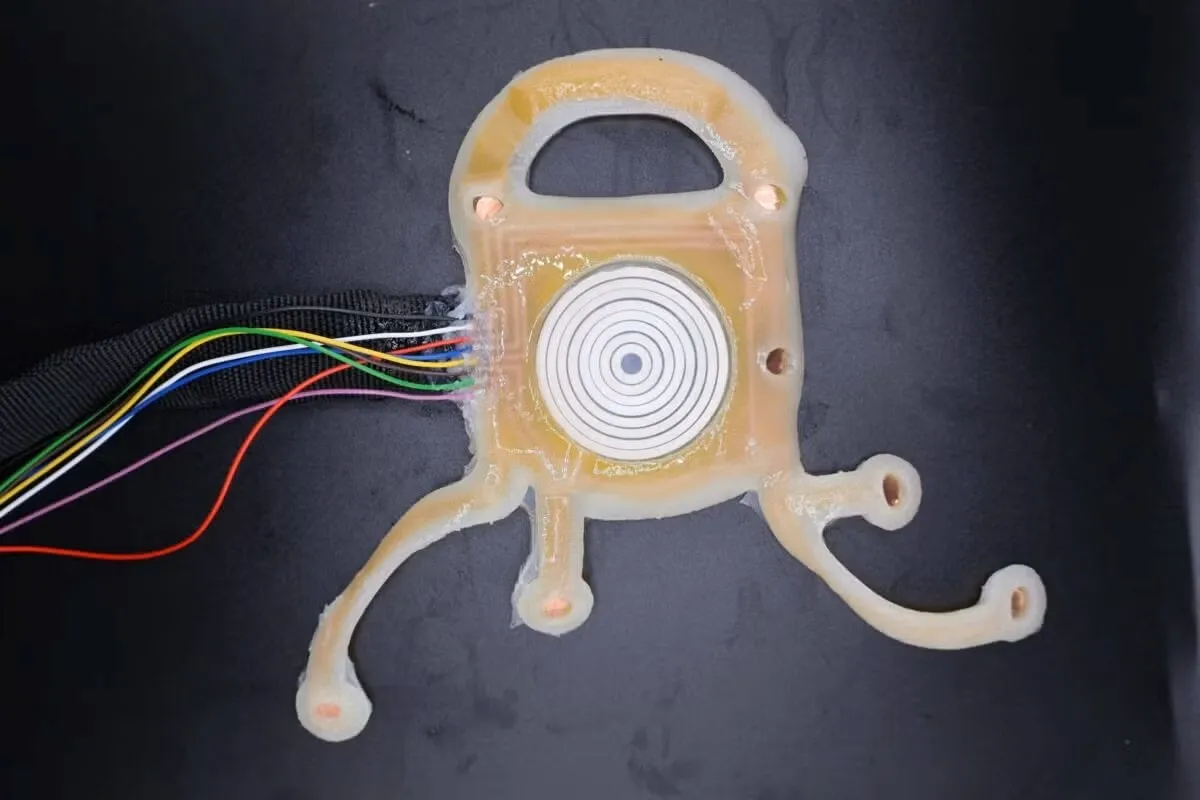
It sticks next to the temple, needs no surgery or pills, and sends gentle ultrasound to a deep part of the brain while you sleep. NEUSLeeP is a soft patch built by biomedical engineers at the University of Texas at Austin, and in its first test on people it brought on REM sleep, the stage when we dream most, noticeably sooner.
The study, published in Nature Communications, was led by Kai Wing (Kevin) Tang, a recent biomedical engineering PhD graduate, in the lab of Professor Huiliang (Evan) Wang at the Cockrell School of Engineering. “This is the first time we’ve been able to noninvasively target deep brain regions involved in REM sleep,” Tang said in the university’s statement.
How it works
The patch targets the subthalamic nucleus, a small structure involved in regulating sleep, ZME Science reports. The team located it in each volunteer with an MRI scan before fitting the patch. Overnight it delivers five 5-minute sessions about 90 minutes apart, alternating 30 seconds of stimulation with 30 seconds of rest.
Built-in electrodes record brainwaves, eye movements and muscle activity, so the patch measures sleep while it stimulates it.
What happened to the 28 volunteers
Twenty-eight people aged 19 to 38 took part: 16 slept well and 12 had insomnia symptoms without a diagnosis. They spent two nights in a row in a sleep lab, the first without stimulation and the second with it. Across the 26 usable recordings, the first REM period arrived about 43 minutes sooner on average (from 177 to 134 minutes), and total REM rose by about 16 minutes, from 64 to 80. Participants found the patch comfortable, with minimal side effects.
Those numbers need careful reading. Everyone slept without stimulation first, so part of the gain may simply come from getting used to the lab. In the insomnia-symptom group, the share of REM went up, but the earlier onset and extra minutes were not statistically significant. Sleep efficiency and night-time awakenings did not improve.
What comes next
The team is planning larger trials in people with chronic insomnia, depression or PTSD, and has filed a patent. “REM sleep is not just about dreaming—it’s about emotional reset and stress adaptation,” said Gregory Fonzo, a psychiatrist at Dell Medical School and one of the study’s principal investigators.
For now the device is experimental. For insomnia, cognitive behavioural therapy remains the recommended treatment.
Sources
- Nature Communications · Skin-attached bioadhesive patch enabling ultrasound deep brain stimulation and real-time electrophysiological monitoring for REM sleep enhancement
- Sleep Review · Ultrasound Patch Aims to Boost REM Sleep
- ZME Science · Scientists Used a Stick-On Brain Patch to Bring REM Sleep 43 Minutes Earlier (18 Nov 2026)