Barcelona hospital treats lymphedema with a robot doing all the microsurgery
On 10 November, the plastic surgery team at Bellvitge University Hospital used new Symani robot scissors that cut and cauterise for the first time in an operation, so dissection, coagulation and the stitching of vessels under half a millimetre wide were all done by the same machine. The 'world first' claim comes from the manufacturer, and so far it is a single procedure.
The lymphatic vessels stitched in this operation can be less than half a millimetre wide. On 10 November, at Bellvitge University Hospital in L’Hospitalet de Llobregat, near Barcelona, a robot did all of that fine work for the first time: separating tissue, sealing bleeding vessels and joining each lymphatic vessel to a vein.
The patient had lymphedema, the swelling that appears when lymph fluid stops draining properly, often after cancer treatment has damaged or removed lymph nodes. The technique, called lymphaticovenous anastomosis, connects blocked lymphatic vessels to nearby surface veins so the trapped fluid can flow again.
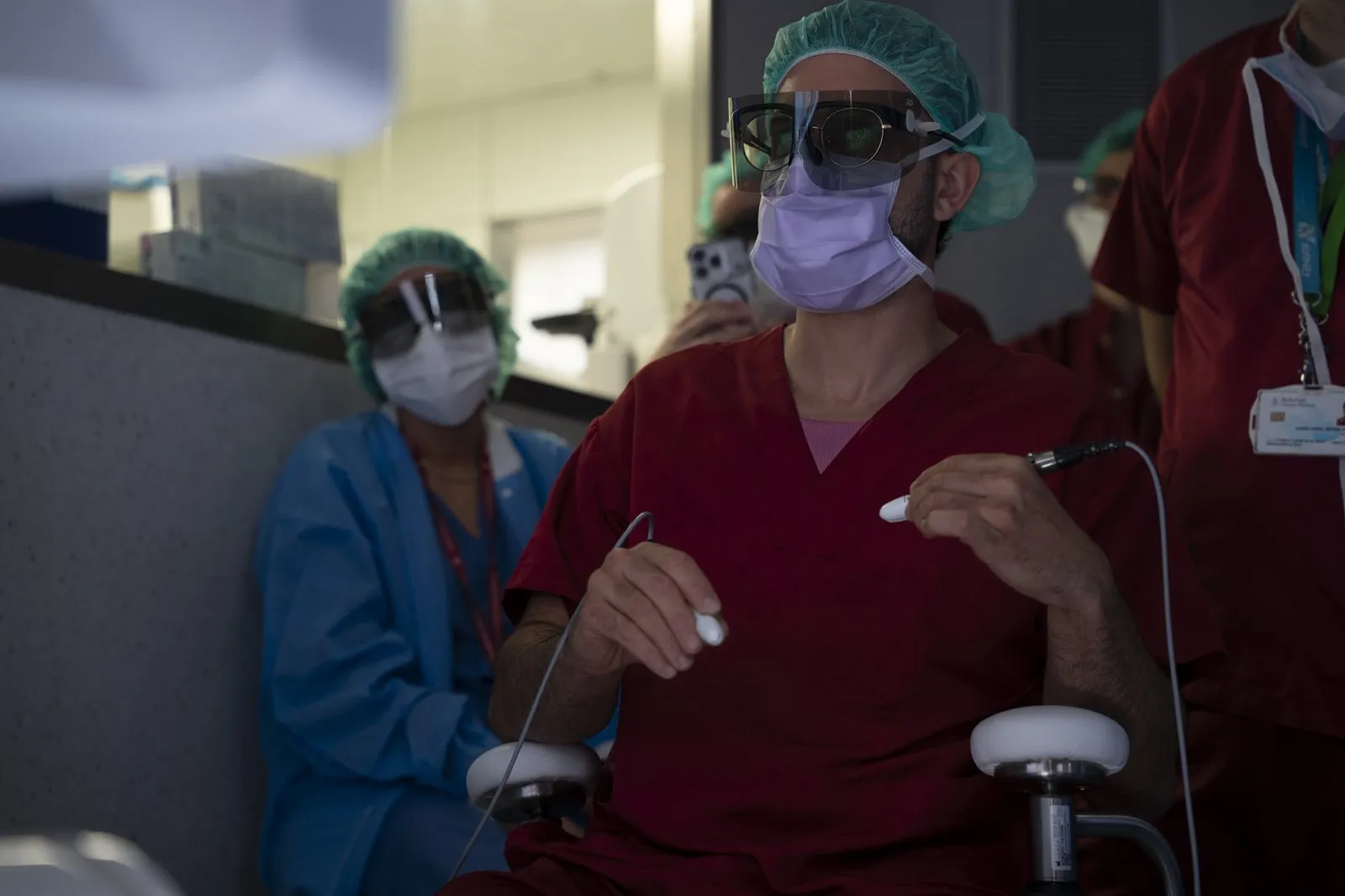 The surgeon controls the robot from a console, with one controller in each hand. Photo: Bellvitge University Hospital.
Scissors that also cauterise
The hospital has had the Symani robot since the summer and, according to Forbes Spain, has carried out 12 microsurgeries with it since July, mostly for lymphedema. Until now the robot stitched and dissected, but to stop bleeding the team had to switch back to conventional methods.
What is new is an energy instrument, monopolar scissors, that cuts tissue and seals small vessels without changing tools or moving the robot. The claim that Bellvitge is the first hospital in the world to use them on patients comes from the manufacturer, as reported by Forbes Spain.
“Until now, we had to do part of the operation by hand,” says Sergi Barrantes, head of the hospital’s Lymphedema Surgery Unit. Anna López Ojeda, head of Plastic and Reconstructive Surgery, calls it “the precision technology we had been waiting for”.
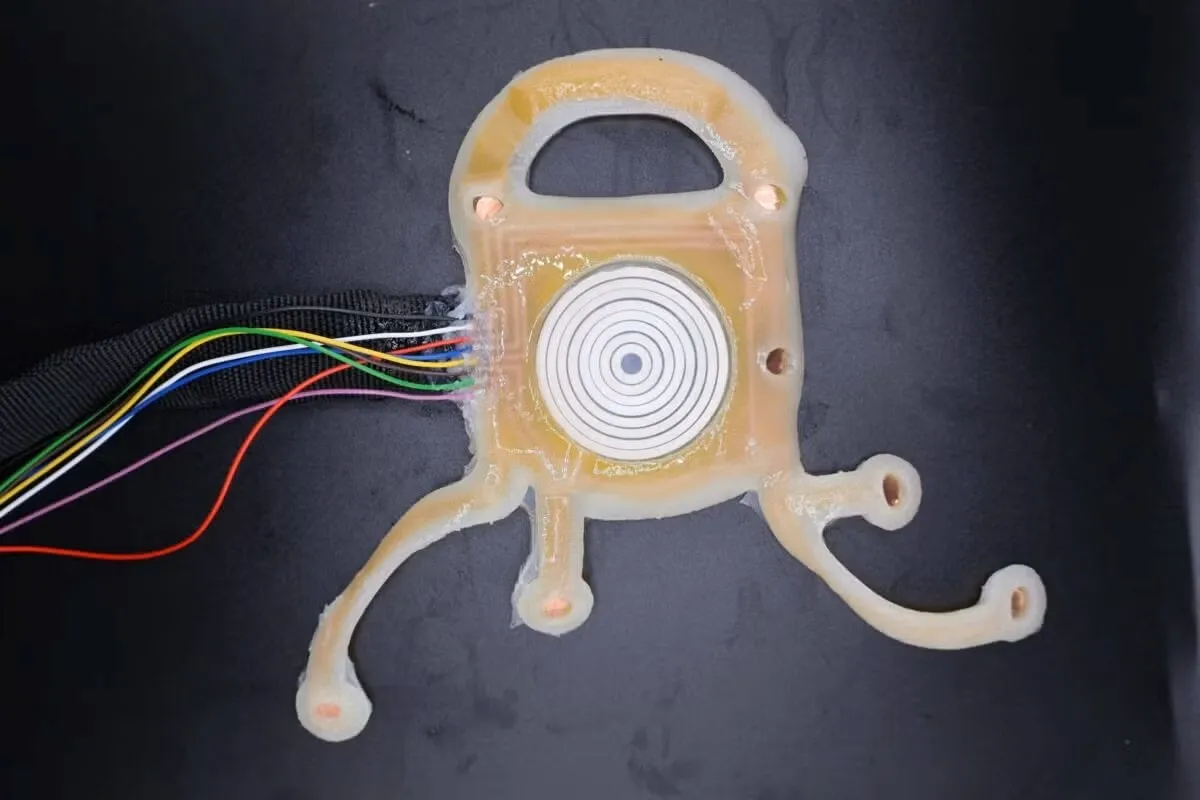
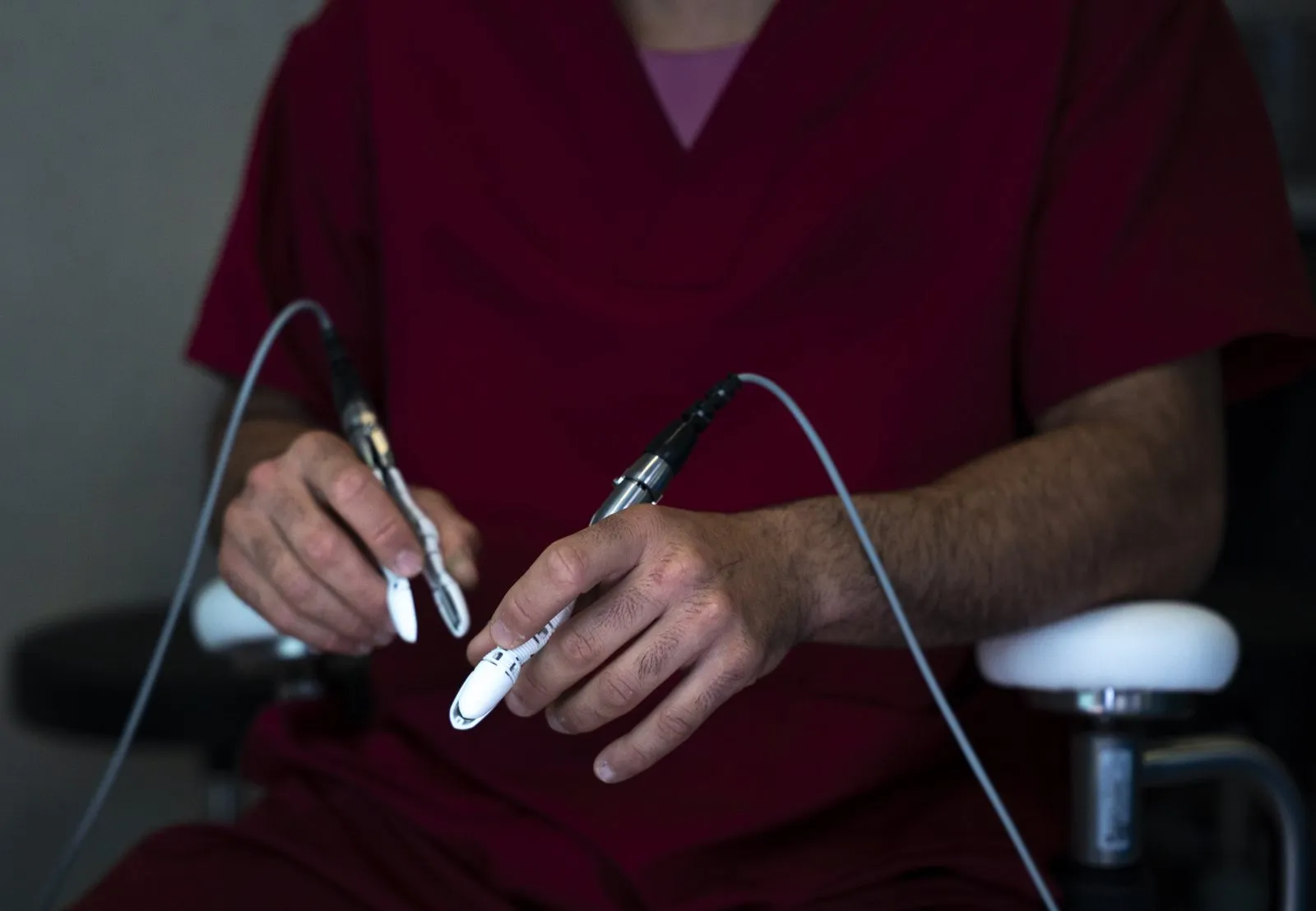 The controllers the surgeon uses to guide the micro-instruments. Photo: Bellvitge University Hospital.
Movements scaled down twenty times
From the console, the surgeon sees the surgical field magnified up to 30 times, also in 3D, and moves two arms fitted with micro-instruments. The system filters out the natural tremor of the hand and scales each movement down by up to 20 times, according to the hospital.
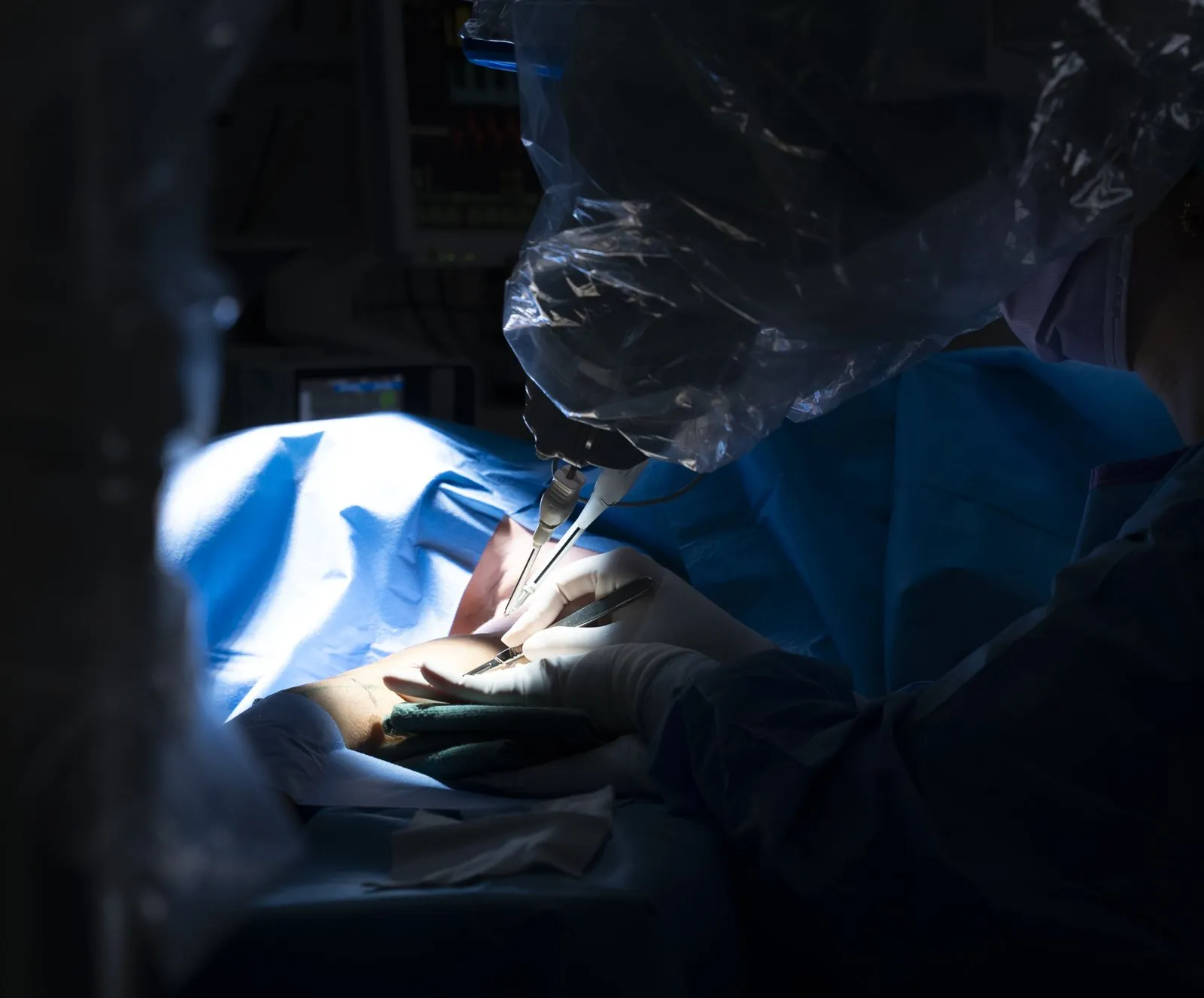 The robot’s micro-instruments during the operation. Photo: Bellvitge University Hospital.
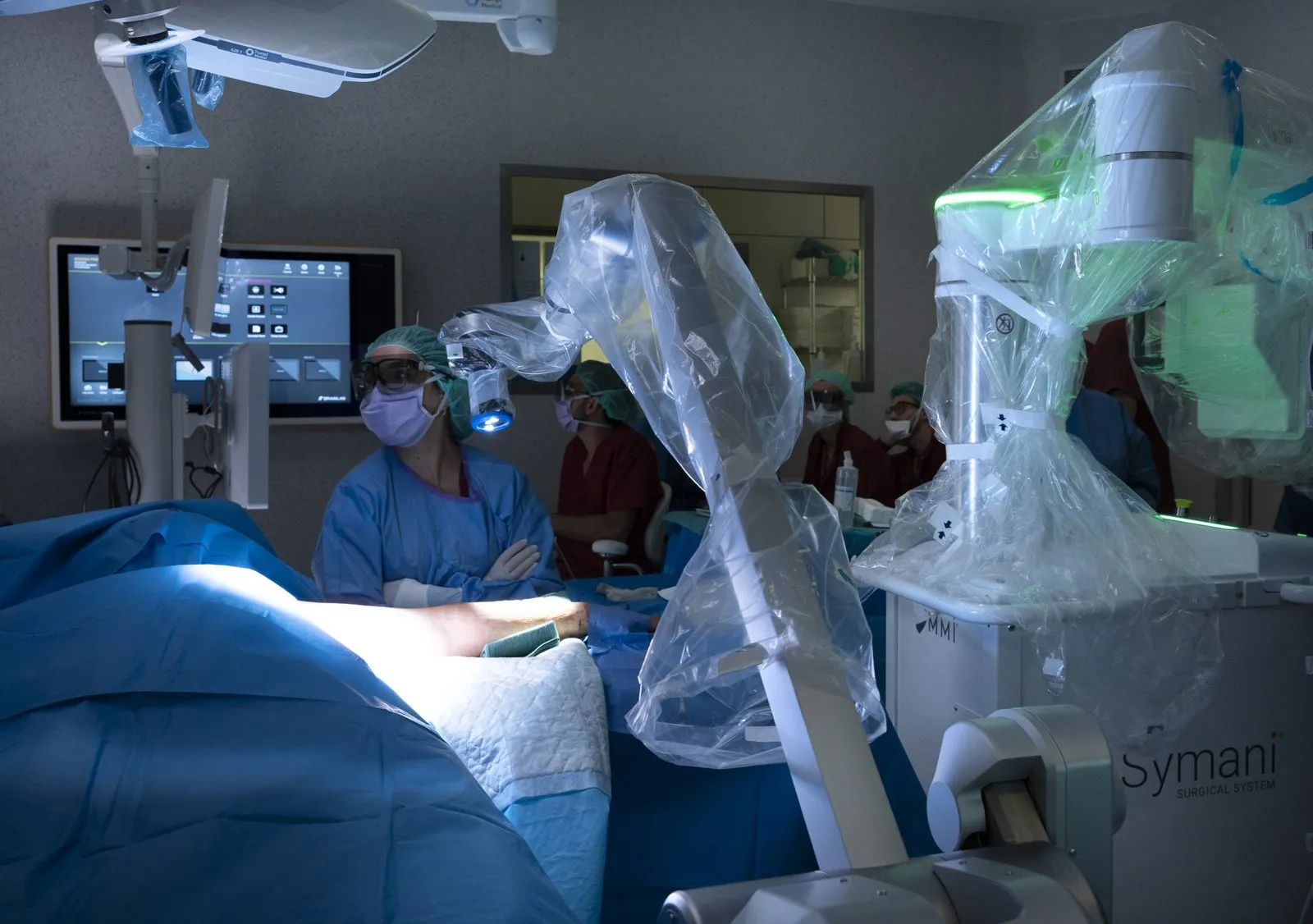
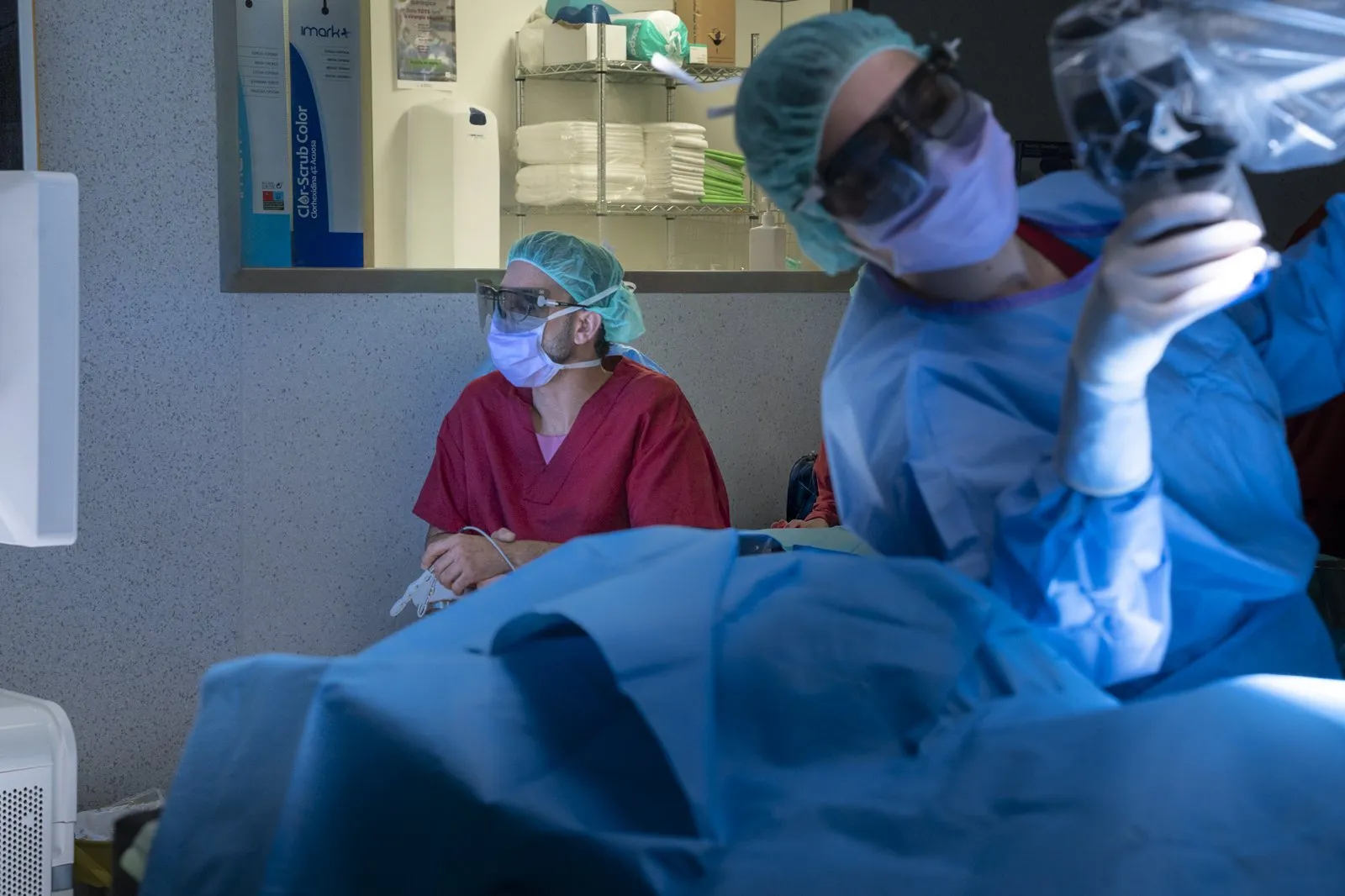 Part of the plastic surgery team during the operation. Photo: Bellvitge University Hospital.
The robot does not operate on its own: a surgeon trained to use it guides it throughout. For now it is a single case. The hospital also plans to use the robot to repair nerves and to transfer tissue after accidents or cancer surgery, and according to Forbes Spain only three hospitals in Spain, all public and all in Catalonia, currently have a microsurgery robot.
Sources
- Europa Press (Infosalus) · Bellvitge Hospital 'first in the world' to use a new robot to dissect and coagulate (18-11-2026, in Spanish)
- Forbes Spain · Microsurgery robot that can dissect and coagulate (18-11-2026, in Spanish)
- Bellvitge University Hospital · The hospital adds a sixth surgical robot for microsurgery (29-06-2026)
- Bellvitge University Hospital · photographs of the operation (email to the newsroom, 19-11-2026)