One-off gene fix frees patient from weekly alpha-1 infusions
Doctors at Hannover Medical School (MHH) and Shanghai's Renji Hospital have used base editing to correct the genetic error behind alpha-1 antitrypsin deficiency, an inherited disease that damages the lungs and liver. Katrin H., 55, is making the missing protein again and no longer needs her infusions. The treatment is experimental and not yet approved: the first published case covers a single patient and the trial is ongoing.
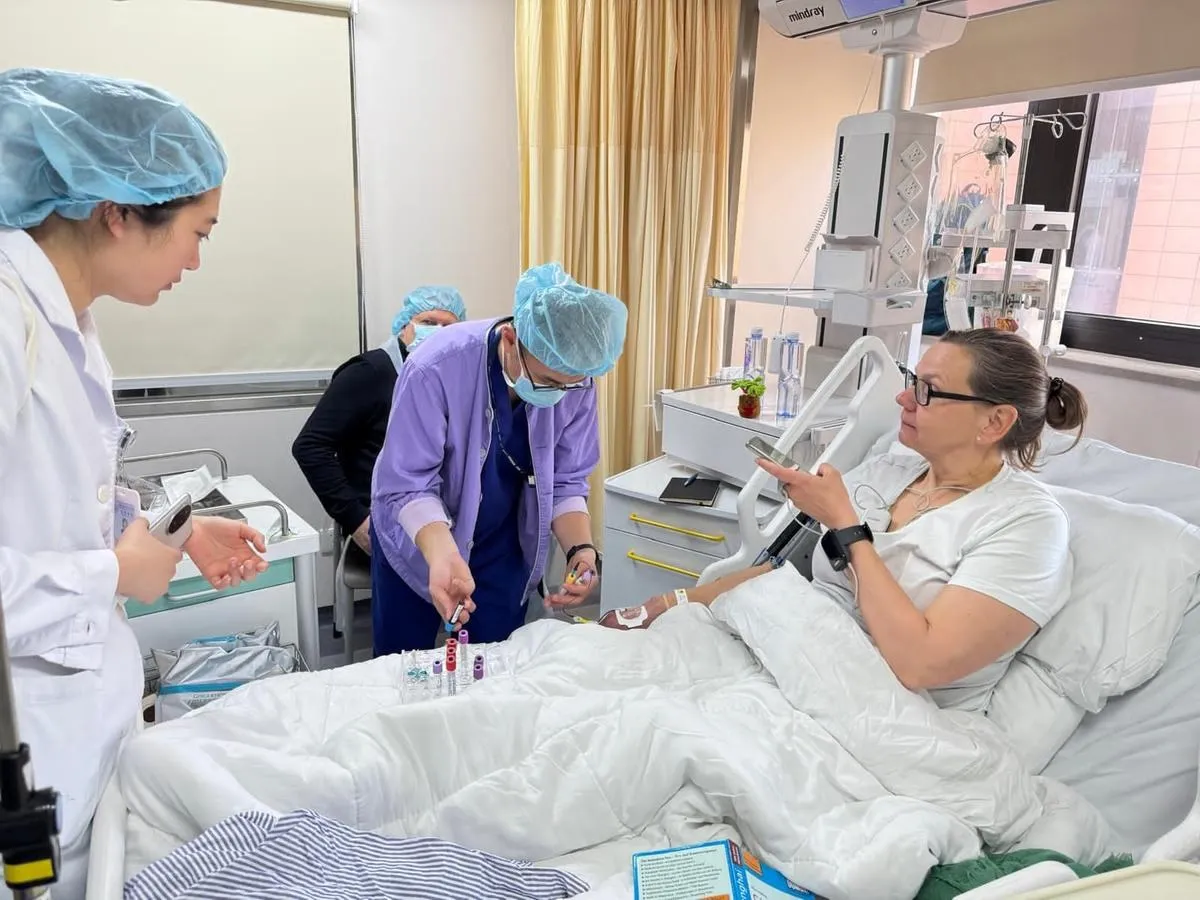
For years, Katrin H. had a protein her body could not make dripped into her veins every week. Since March she has not needed it: a single infusion of a gene treatment corrected the error behind her disease in her liver. Hannover Medical School (MHH) in Germany, which treated her together with Renji Hospital in Shanghai, announced the result this week.
The treatment is experimental and not yet approved. The first peer-reviewed case, published in the Journal of Hepatology, covers a single patient, and the trial is still running.
One wrong letter in the DNA
Alpha-1 antitrypsin deficiency is inherited. A faulty gene stops the liver from properly making a protein that protects the lungs. Over the years it can bring breathlessness, emphysema and liver damage such as fibrosis or cirrhosis. MHH says it affects about 120,000 people in Europe, and until now there was no treatment for the cause.
In most patients the problem is a single DNA “letter” in the wrong place. The team led by Michael Ott and Simon Krooss used base editing, a form of CRISPR that swaps that letter without cutting both strands of DNA. The cell then repairs the opposite strand itself, and the mutation is gone.
Four weeks in Shanghai
Because the disease is rare in Asia, MHH sent seven patients, with their doctors, to the trial in Shanghai. The costs were covered by the Chinese company that developed the method and holds its patents.
Katrin H., from Hannover, is 55 and has the most severe form of the disease. Breathlessness forced her to give up her job as an anaesthetist. In March she flew to Shanghai, received the infusion, and blood tests showed her body was making the protein again, with no side effects, according to MHH. “For me it’s like winning the lottery,” she says.
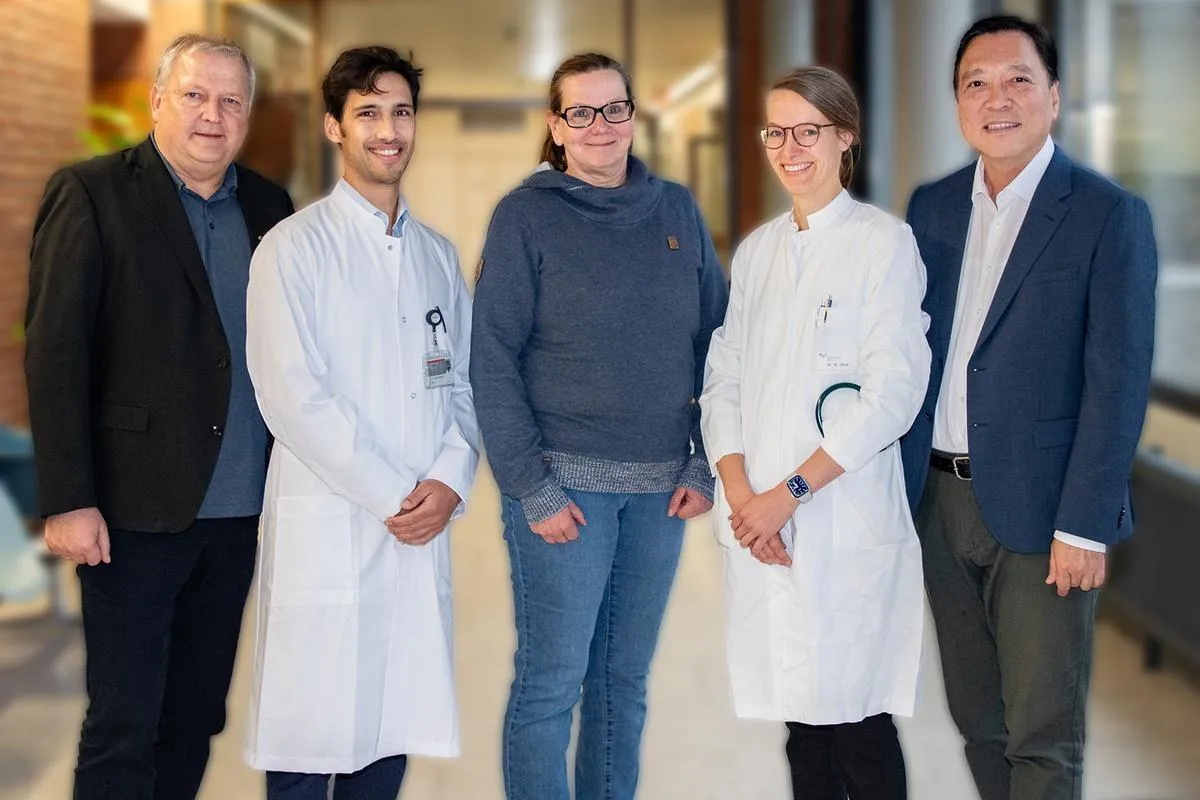
From left: Michael Ott, Simon Krooss, patient Katrin H., Nora Drick and Qinggong Yuan. Photo: Karin Kaiser / MHH, courtesy of MHH.
The treatment cannot undo the damage already done to her lungs and liver. The hope is that the disease stops getting worse.
The Journal of Hepatology paper describes another case: a 66-year-old man treated at the lowest planned dose. A liver biopsy confirmed that a large share of his cells had been corrected and found no changes elsewhere in the DNA.
Trial moves to Hannover in 2027
MHH plans to continue the study at its own hospital in early 2027, so patients will no longer have to travel to China. Ott believes the same method could work for other inherited liver diseases caused by a single wrong letter.
Sources
- MHH · Erstmals erfolgreiche Genkorrektur bei Stoffwechselerkrankung (2 Nov 2026)
- Krooss S. et al. · Liver biopsy confirms precise and efficient correction of SERPINA1 after in vivo Base Editing in a Patient with Alpha-1 Antitrypsin Deficiency · Journal of Hepatology (2026)
- News-Medical · Gene therapy successfully corrects genetic defect in alpha-1 antitrypsin deficiency (2 Nov 2026)
- Pharmaphorum · Case study backs YolTech's AATD gene therapy (3 Nov 2026)