‘Retired’ pair of critically endangered parakeets raise four chicks
Sophia and Prince Polo, two kākāriki karaka that Christchurch’s Orana Wildlife Park had retired from breeding because of their age, have hatched four chicks, and Sophia has already laid another clutch. They belong to one of New Zealand’s rarest birds: about 450 are left. Their chicks matter because both parents hatched from eggs collected in wild nests. The caveat: the wild population is not yet self-sustaining and still relies on releases.
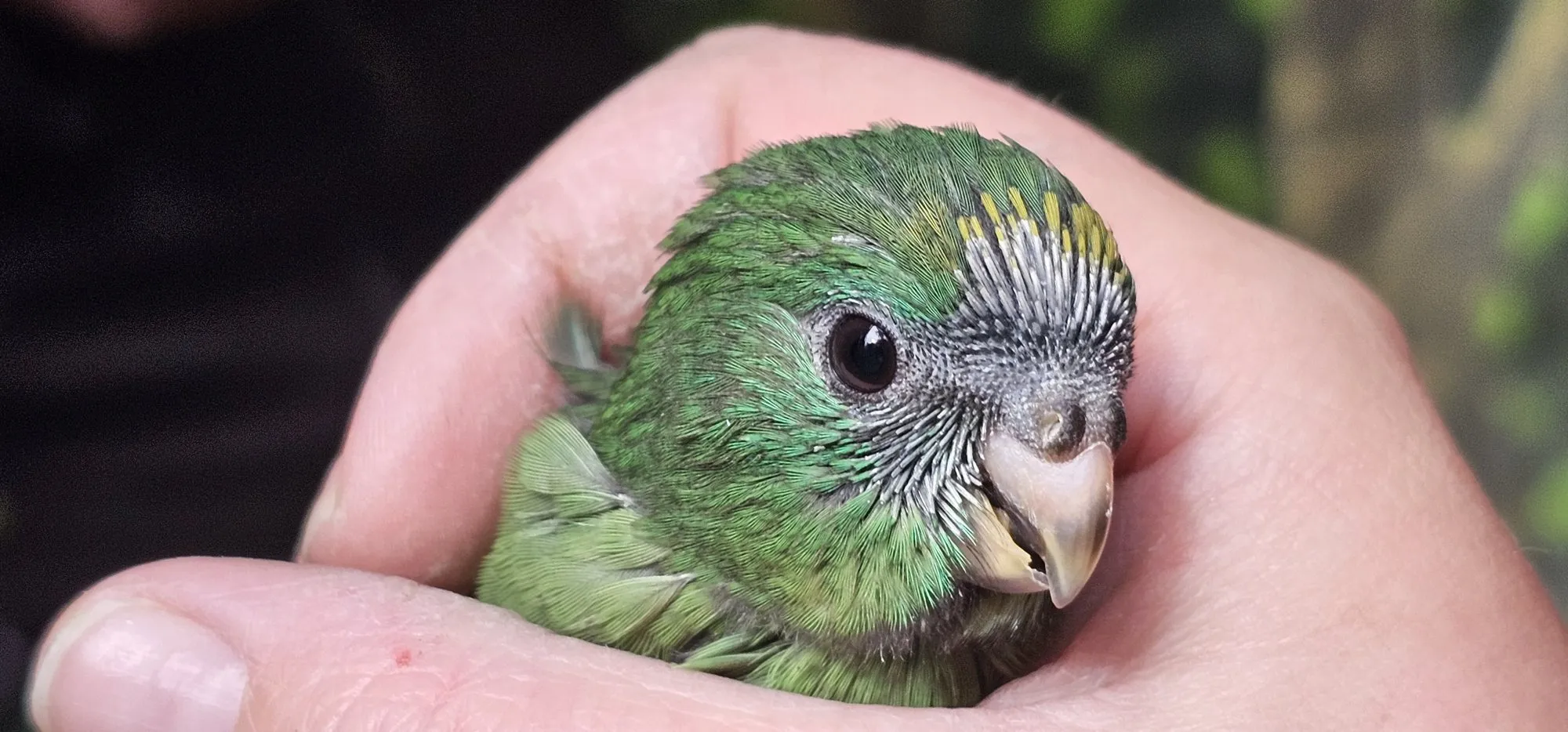
Prince Polo spends his days carrying food to four month-old chicks. He and Sophia are kākāriki karaka, or orange-fronted parakeets, who were living out their retirement on public display at Orana Wildlife Park in Christchurch, New Zealand. Their keepers no longer expected them to breed.
Sophia used to live with another male, Poldark. “Both were past the usual age for reproduction, so we had them as display birds,” says Catherine Roughton, the park’s native fauna manager. When Poldark died, the keepers gave Sophia another retired male, Prince Polo, for company. “And incredibly the magic happened and Sophia laid a clutch of eggs.” Four weeks later, with the chicks barely a month old, she went back into the nest box and laid more.
One of the chicks at Orana. Video courtesy of Orana Wildlife Park.
Parents with wild-nest genes
What the Department of Conservation (DOC) values most is not the surprise but where the pair came from. Sophia and Prince Polo hatched from eggs collected in wild nests in the Poulter Valley about eight years ago, and carry very important genetics. “This has immense value to our captive breeding programme and to the genetic diversity of wild populations where this pair’s offspring are released into,” says Wayne Beggs, who leads DOC’s recovery programme for the species.
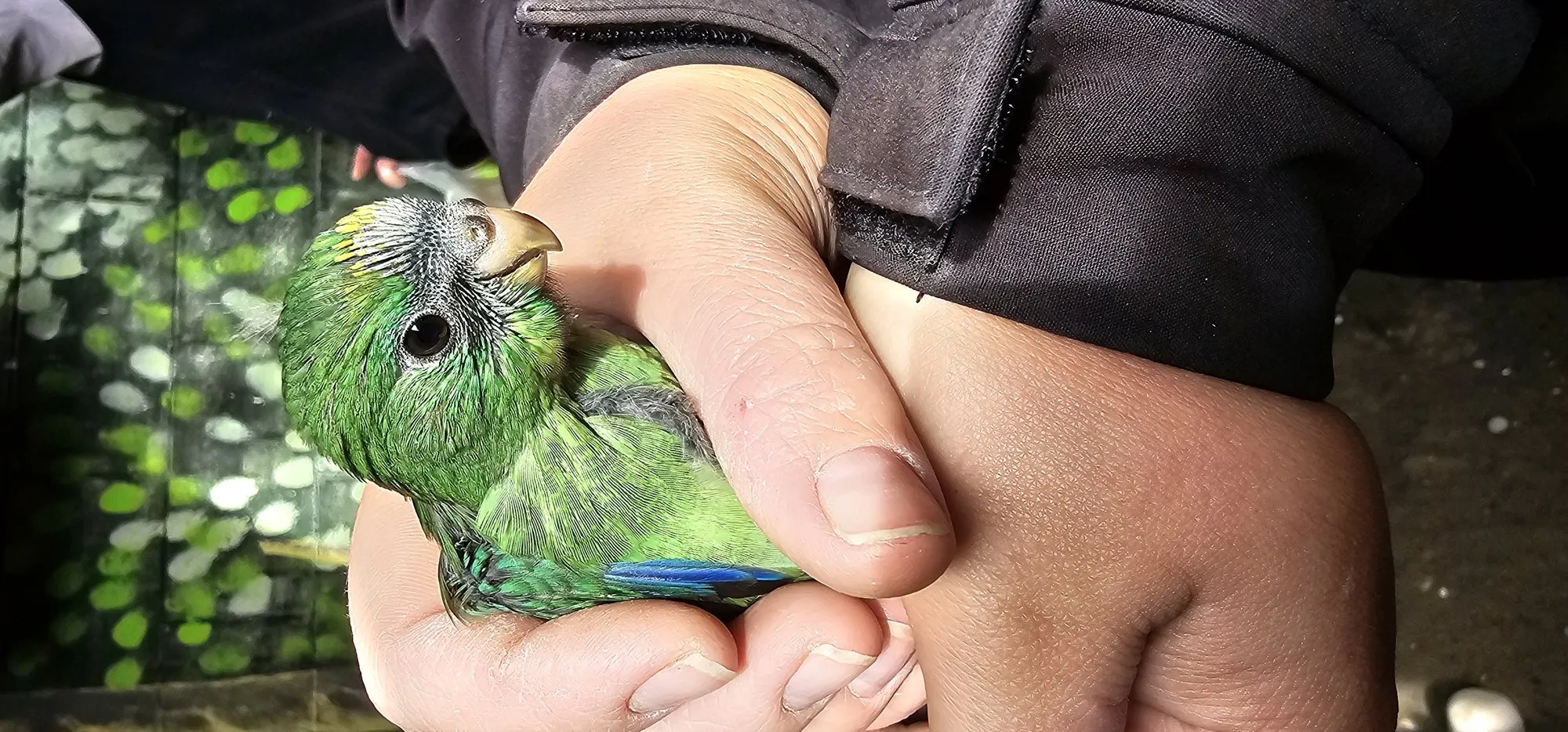 Another of the chicks. Photo: Orana Wildlife Park.
A bird declared extinct twice
The kākāriki karaka is critically endangered and has twice been declared extinct. About 450 remain, mostly on offshore islands and in the Brook Waimārama Sanctuary near Nelson, with a small remnant population in Canterbury. Orana has bred more than 150 that now live in the wild, and last week 12 were released into the Hawdon Valley, four of them hatched at the park.
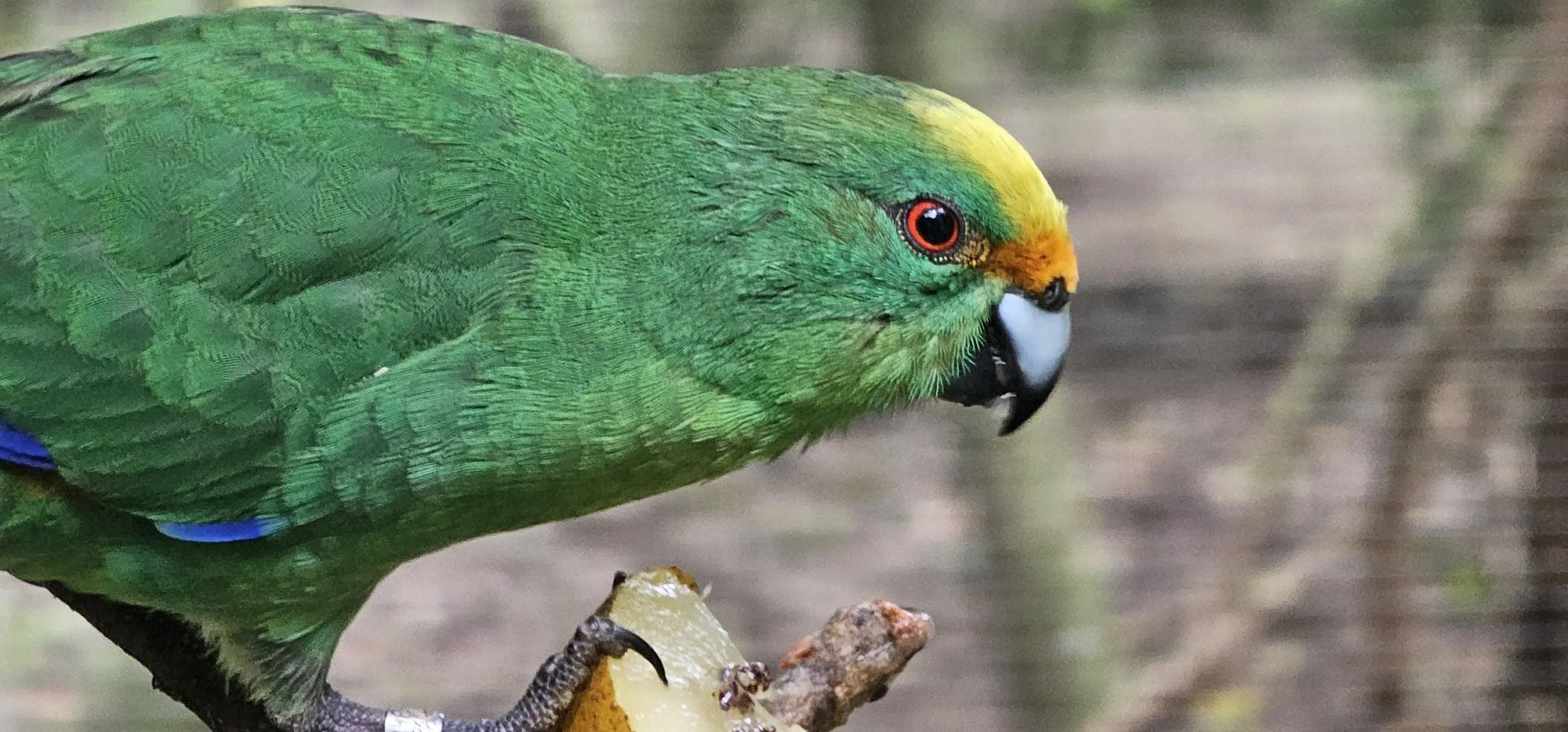 Prince Polo, father of the four chicks. Photo: Orana Wildlife Park.
Prince Polo at Orana. Video courtesy of Orana Wildlife Park.
Beggs admits there is still a way to go: “Ideally, we want to get to the stage where they can be self-sustaining but we’re not there yet.” The programme is led by DOC and Te Rūnanga o Ngāi Tahu, with Orana and The Isaac Conservation and Wildlife Trust breeding the birds. Sophia and Prince Polo’s chicks could end up in those releases.