Native oysters born in a Scottish firth for the first time in over 100 years
Heriot-Watt University scientists have found baby European oysters in the Dornoch Firth, where the species was fished out in the late 1800s. It shows the reef they have been restoring since 2017, with more than 140,000 oysters released by hand, is now reproducing on its own. The caveat: there are about 3,000 adult oysters so far, and the goal of around four million by 2031 needs more funding.
They are a few millimetres long and were clinging to shells the team had laid on the seabed to attract them. They are the first native oysters born in the Dornoch Firth, in the Scottish Highlands, in more than a century.
Gurjameer Ramday, a research associate on the DEEP project, found them during routine monitoring from Heriot-Watt University’s field lab in Dornoch. Curators at National Museums Scotland and Amgueddfa Cymru – Museum Wales checked the images and confirmed they were European oysters. On a return visit, some had grown to the size of a 50p coin: proof, the university says, that the population is reproducing.
From 300 oysters to 140,000
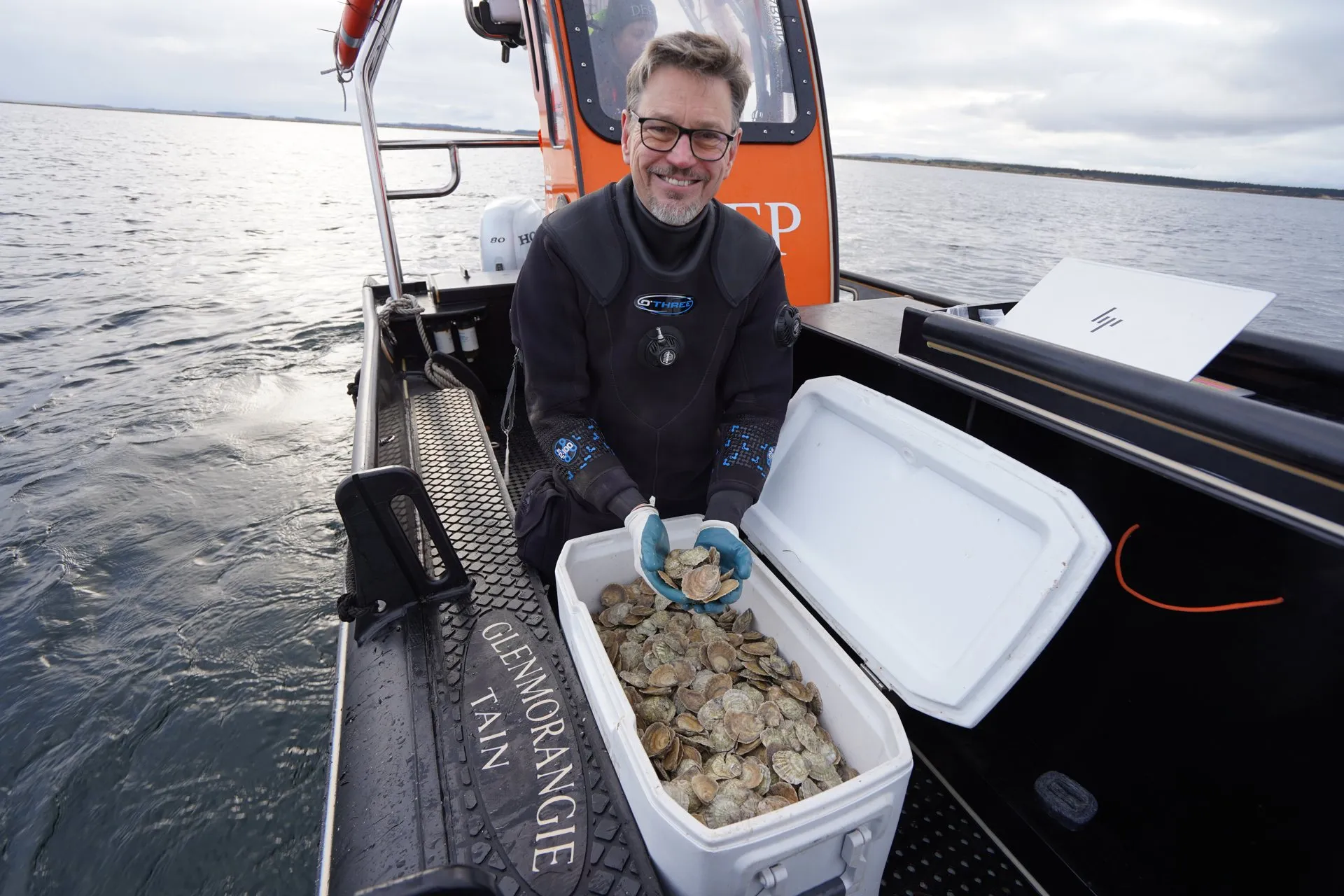
The firth’s oysters were probably fished to extinction in the late 1800s, as happened across much of Europe. In 2017 the DEEP project, a partnership between Heriot-Watt University, The Glenmorangie Company and the Marine Conservation Society, placed the first 300 on the seabed, brought from Loch Ryan.
By October 2026, volunteers and scientists had hand-cleaned and released more than 140,000 specially bred young oysters. About 3,000 are now reaching maturity across the two beds, which made spat more likely. Ramday credits warm sea conditions in 2025 and 2026.
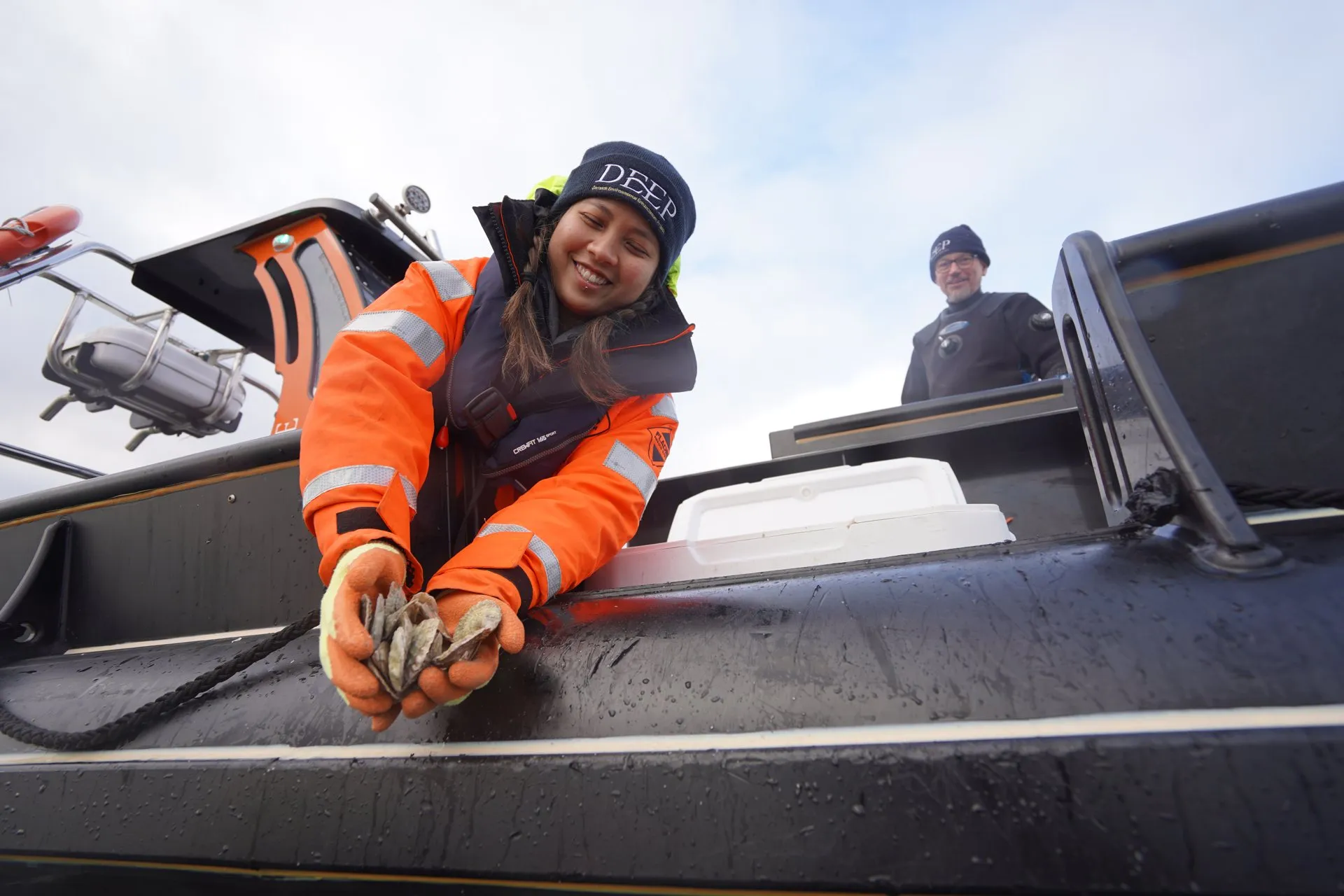 Aisyah Wan, a DEEP intern, and Professor Bill Sanderson add oysters to the Dornoch Firth. Photo: Heriot-Watt University.
“This is a moment over 12 years and 140,000 oysters in the making,” said Professor Bill Sanderson of Heriot-Watt’s School of Energy, Geoscience, Infrastructure and Society. Finding baby oysters now “is proof that targeted restoration can work,” said Ramday.
Four million oysters, if the money comes
The team’s goal is around four million oysters in the firth by 2031. To get there, it says, it needs more funding, which it is now looking for.
In the meantime the scientists will keep monitoring the site to track how the population grows and how wildlife around it changes.