Honey from an Australian stingless bee stops every bacterium it was tested against
A University of Sydney team tested honey and propolis from the stingless bee Tetragonula carbonaria against 16 disease-causing microbes. The honey inhibited all eight bacteria, with potency comparable to medical honeys such as manuka. It is a lab study, with a small number of samples, mostly from around Sydney.
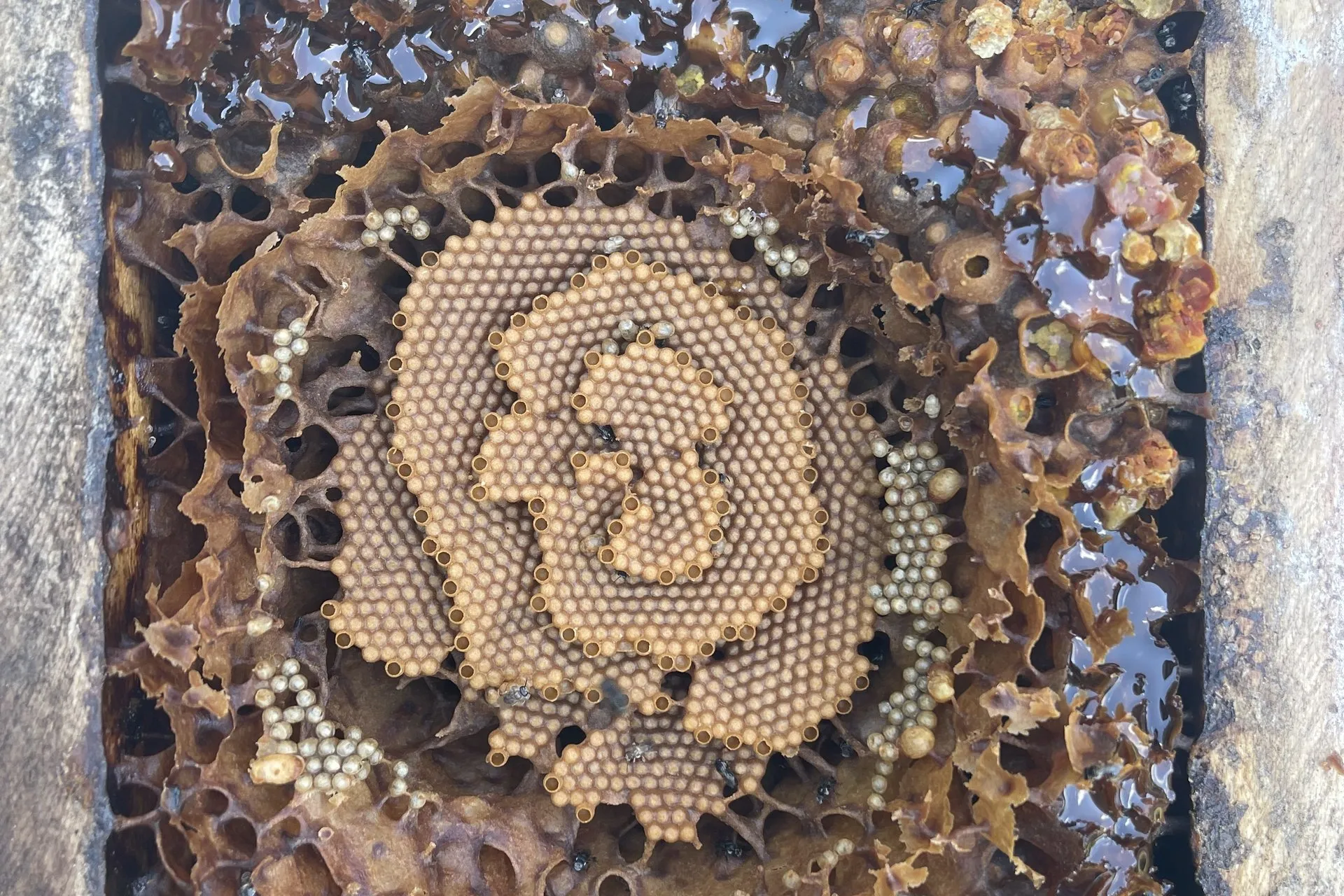
On Australia’s east coast lives Tetragonula carbonaria, a stingless bee that stores its honey in tiny wax pots. That honey inhibited all eight bacteria a University of Sydney team tested it against, according to a study published in PLOS ONE on 26 October.
The caveat comes first: these are lab-dish tests, with a small set of samples gathered mainly around Sydney, and each hive yields only about a kilo of honey a year. This is not a treatment.
Sixteen microbes on trial
Jasmin Li, Rosalyn Gloag, Dee Carter and Kenya Fernandes collected honey and propolis, the mix of plant resins and wax bees use to seal their hives, from nests in New South Wales and Queensland between 2021 and 2023. They then tested them against 16 clinically significant microbes: eight bacteria, three yeasts and five moulds.
The bacteria included Staphylococcus aureus, Escherichia coli, Klebsiella pneumoniae, Pseudomonas aeruginosa and Acinetobacter baumannii, all common in hospital infections. The honey stopped every one, at minimum concentrations comparable to two medical-grade honeys used for reference, manuka and jarrah. It also worked against two fungi that infect the skin.
The propolis was choosier: it stopped only some bacteria and certain moulds, and no yeasts.
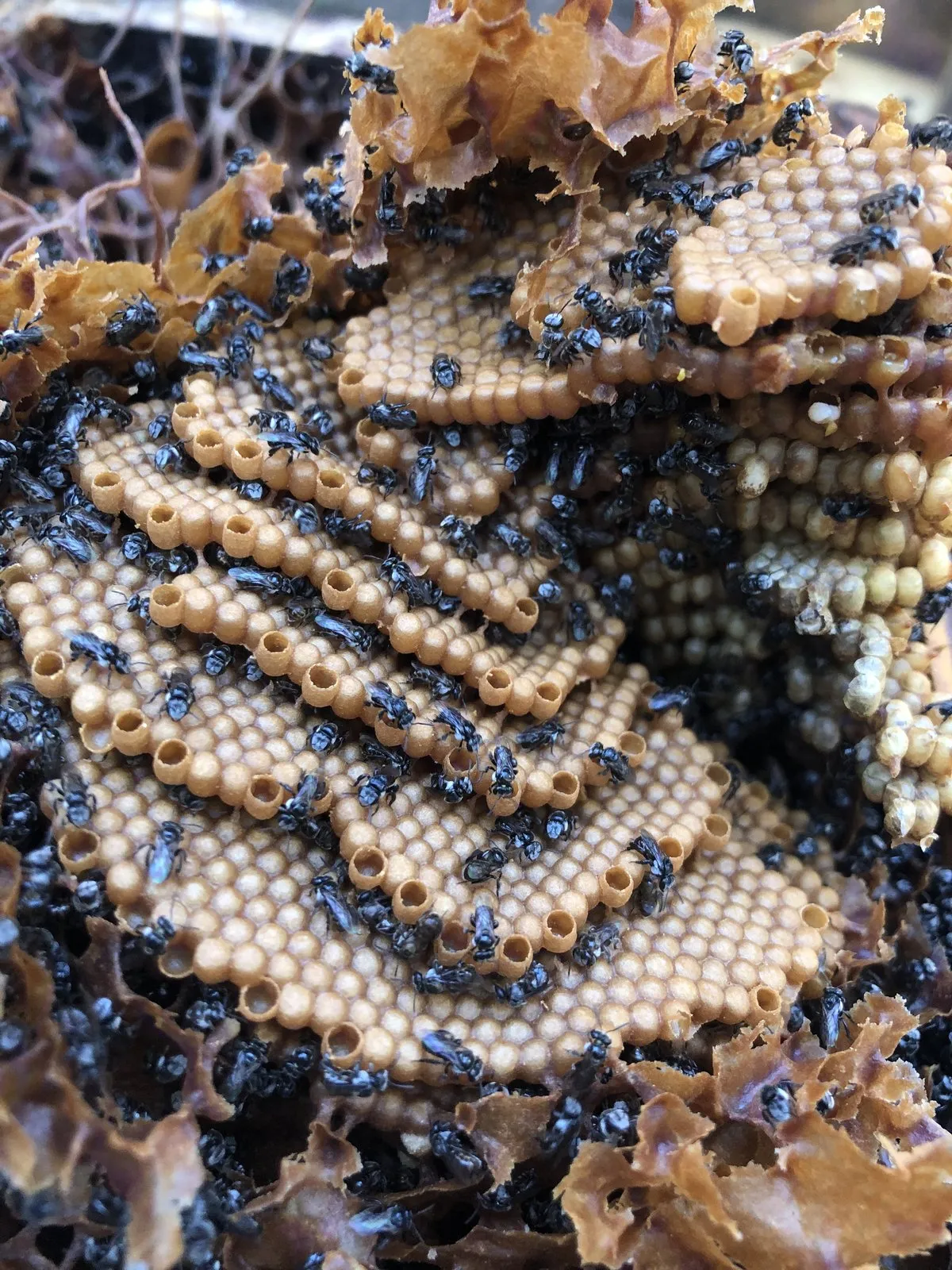
Tetragonula carbonaria bees on their brood comb. Photo: Dr Kenya Fernandes / University of Sydney.
A mystery in the hive
The authors do not yet know what explains it. The hydrogen peroxide the honey produces only partly matches its effect, and the phenolic content of the propolis does not track its potency. They suspect other bee- or plant-derived compounds, still unidentified.
Why this is good news
More and more infections resist antibiotics, and new drugs are scarce. This work points to a native, little-studied bee as a promising place to look for new compounds. The authors now want samples from across the bee’s whole range and side-by-side tests with honeybee products processed the same way.
Images courtesy of the University of Sydney.