A soft robotic arm moves with light, powered by living algae
A team at Delft University of Technology has built a two-centimetre gel strip covered in microalgae that bends when light hits it and bends back in the dark. With no wires or batteries, it hooked a ring and held a ball underwater. It is a proof of concept, published in Nature Communications.
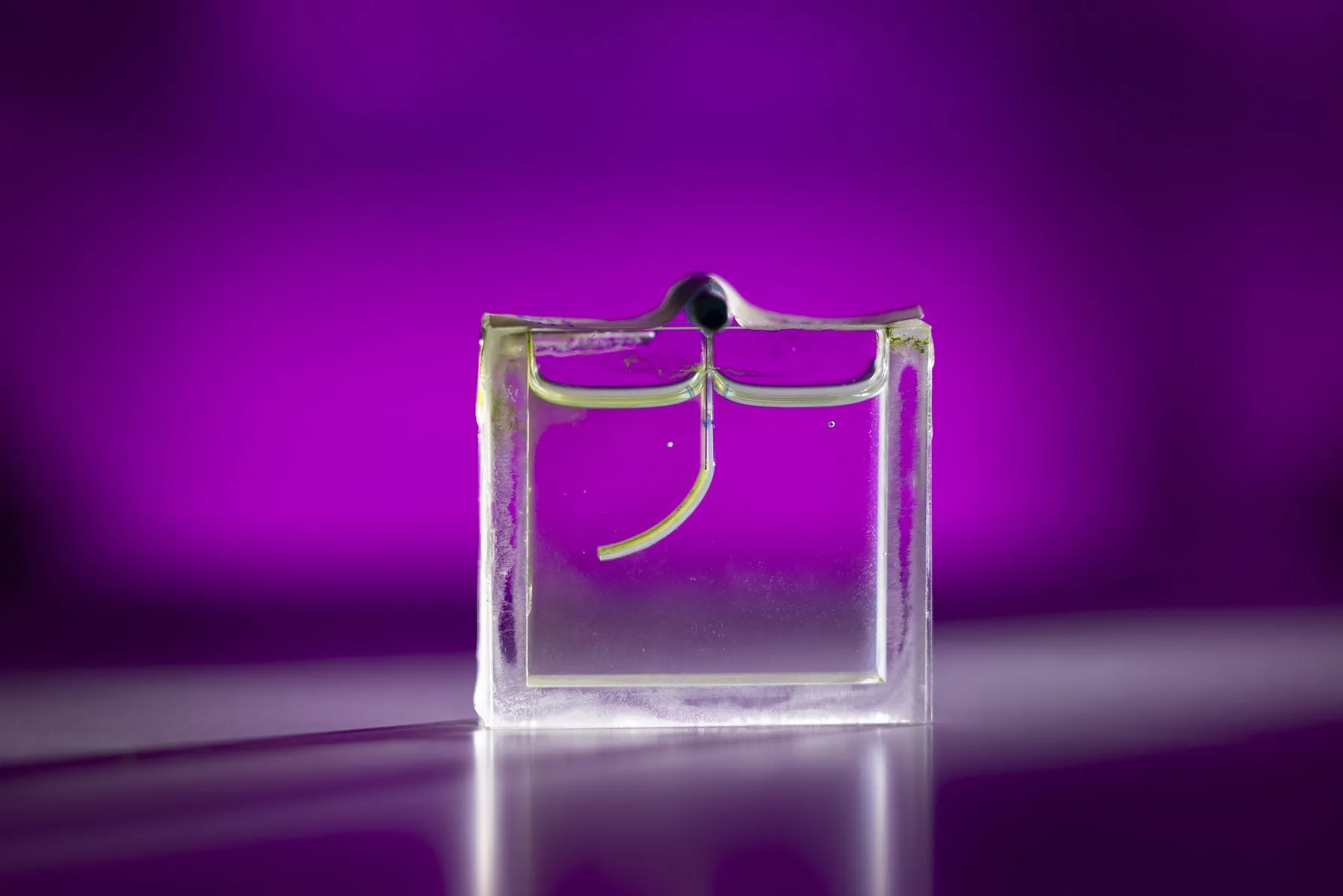
In an aquarium at Delft University of Technology (TU Delft), in the Netherlands, a two-centimetre green strip slowly bends when the light comes on. It has no motor, no wires and no battery. It is moved by the living microalgae growing on it.
The strip is two centimetres long and one millimetre thick, made of two layers of hydrogel, a soft material that soaks up water. When light hits it, the algae photosynthesise and change the acidity of the water around them. The two layers swell by different amounts and the strip curls. In the dark, the algae burn the energy they have stored, the water changes back and the strip bends the other way. “Within 10 seconds the actuator already starts bending in the opposite direction,” says Fan Jiang, PhD candidate and first author of the study.
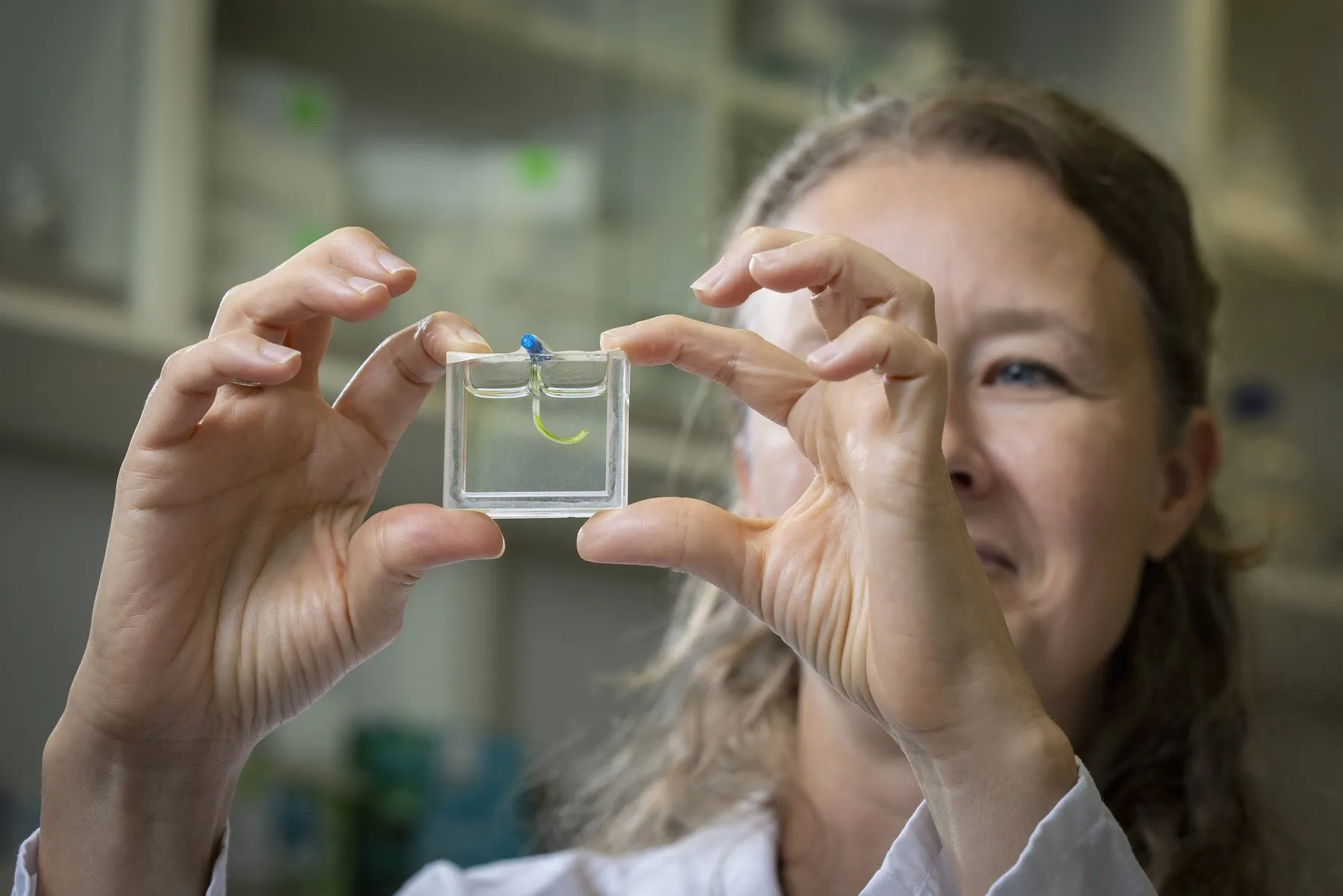 Professor Marie-Eve Aubin-Tam, who leads the team. Photo: Delft University of Technology & Studio Oostrum
It hooks a ring and holds a ball
The team tested the strip as an underwater gripper. In one trial it hooks a rubber ring and lifts it. In another it holds a small metal ball while the light is on and lets go when it is switched off.
The arm hooks and lifts a rubber ring. The video is sped up 1,800 times: the real movement is slow. Video: Delft University of Technology
The arm holds a ball in the light and releases it in the dark (sped-up video). Video: Delft University of Technology
“We didn’t start with a specific application,” Jiang admits. The team suggests a few: gently handling delicate objects underwater, blinds that respond to light on their own, agricultural devices, or small soft robots that run by themselves.
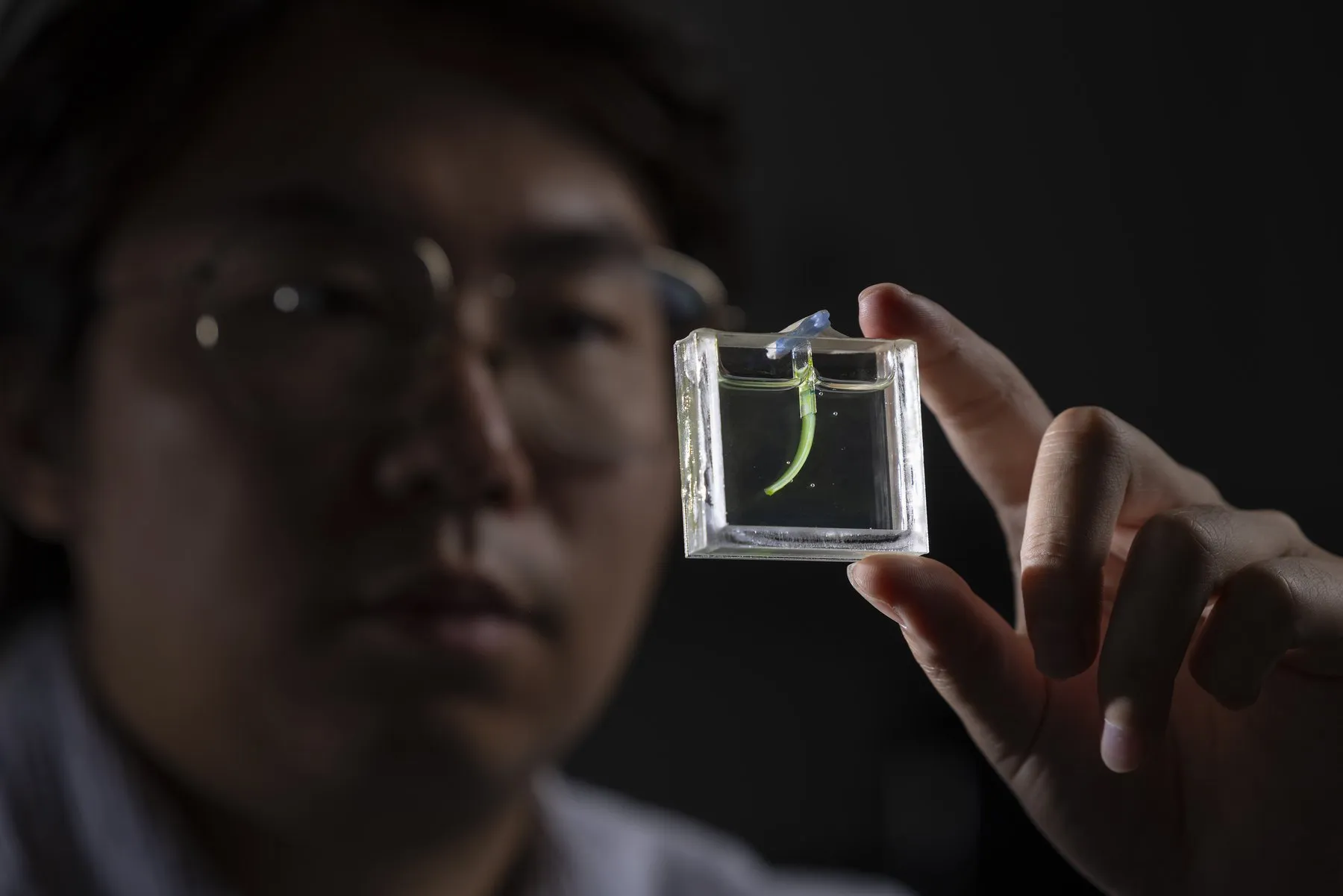 Fan Jiang, first author of the study. Photo: Delft University of Technology & Studio Oostrum
Why this is good news
It is a new way to move small machines using something as simple as light and living algae. “In theory, it wouldn’t require a lot of energy to run a system based on this technology,” Jiang says. If the idea matures, it could lead to soft devices that work without wires or batteries, powered by photosynthesis.
For now it is a lab proof of concept: the movements are slow, and the study gives no figures on force or on how long the strip keeps working.
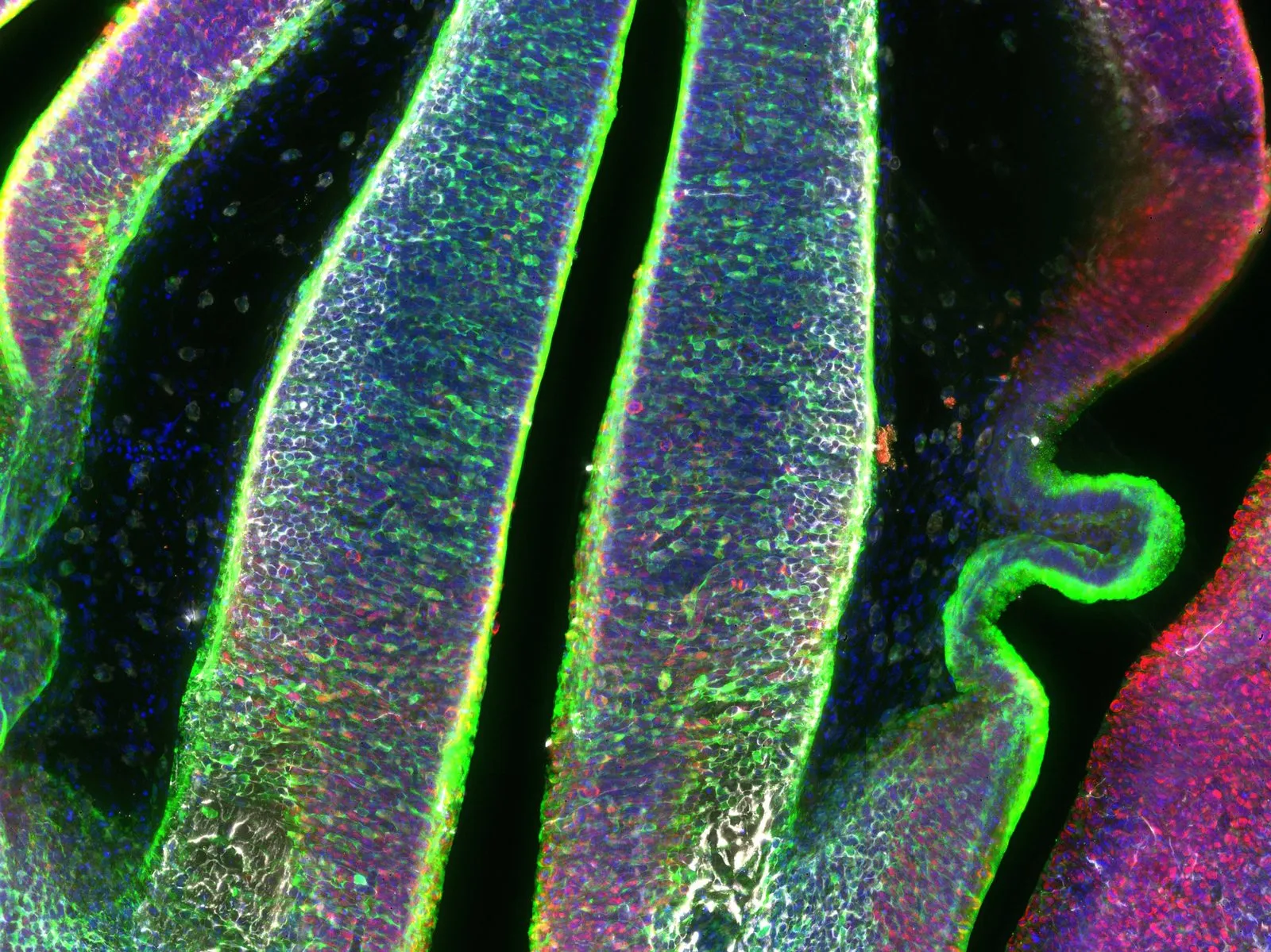
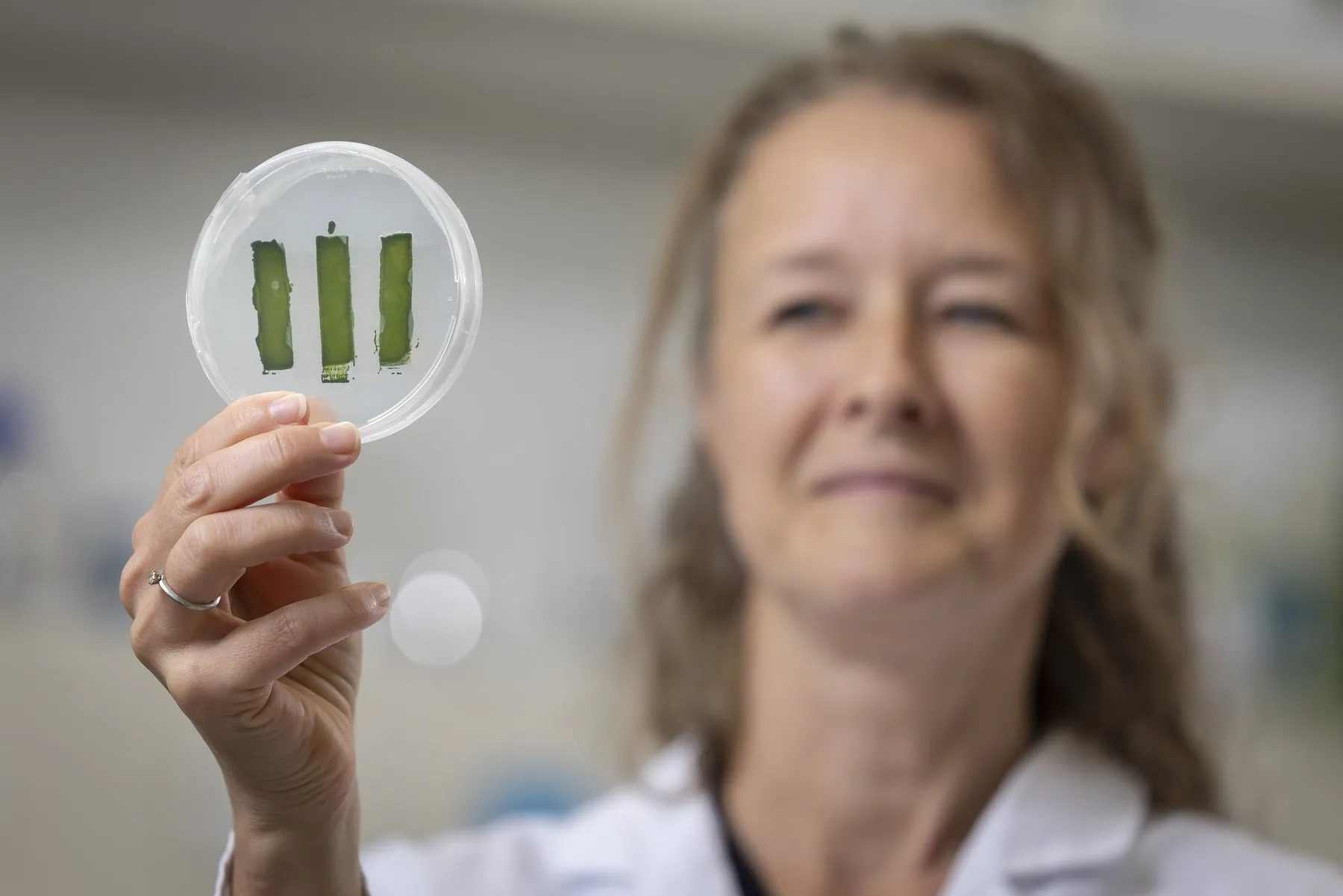 A culture of microalgae, the arm’s energy source. Photo: Delft University of Technology & Studio Oostrum