Spain gets €6m to build a data hub for the world's largest radio telescope network
The Institute of Astrophysics of Andalusia (IAA-CSIC) in Granada is receiving €6 million in EU regional development funds to expand the Spanish node that will process data from the SKA Observatory, whose two radio telescopes are being built in Australia and South Africa. The centre already runs as a prototype; the money will pay for new equipment and space.
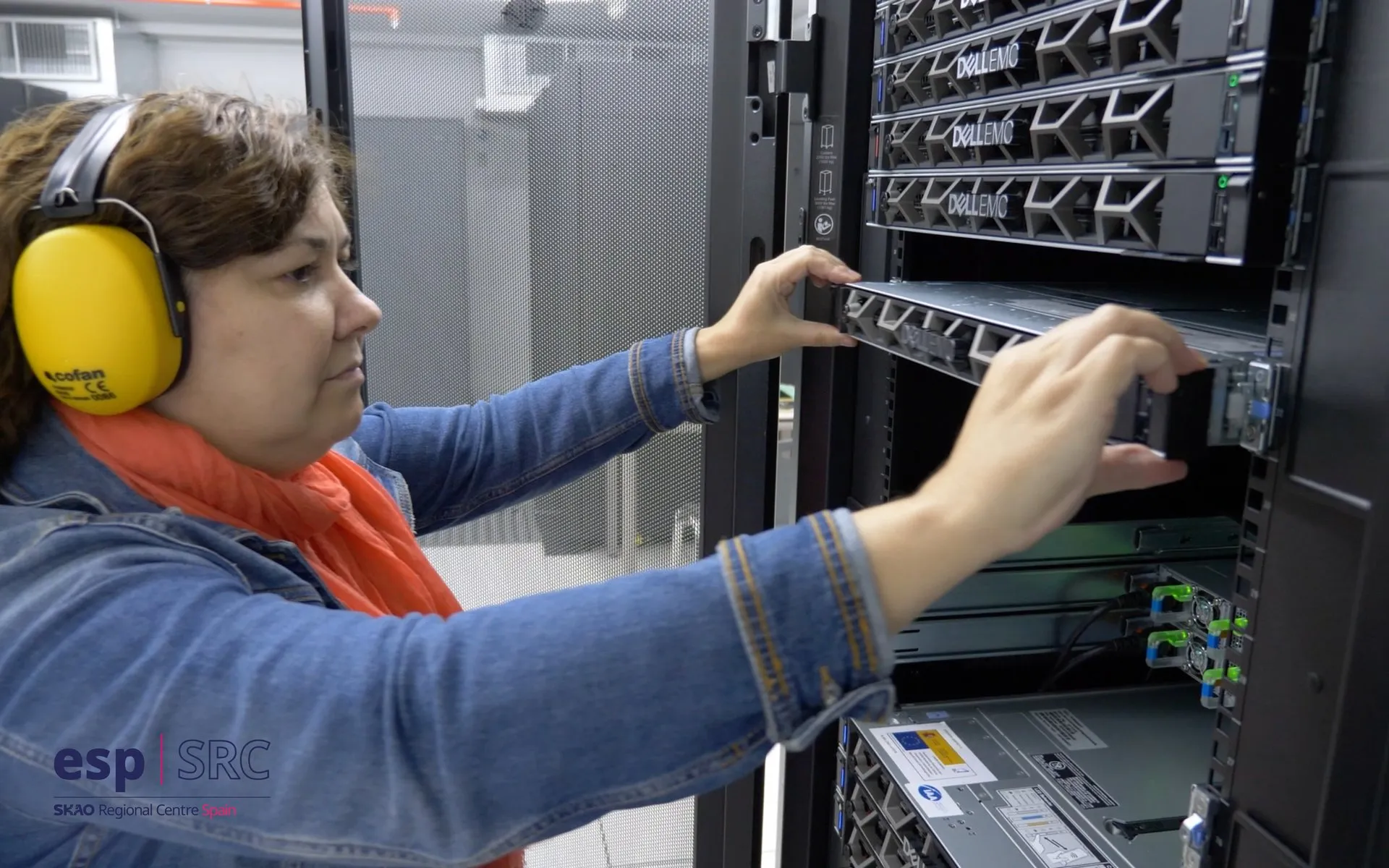
Wearing a pair of yellow ear defenders, Susana Sánchez slides a server into a computer rack. She is the technical coordinator of espSRC, the centre at the Institute of Astrophysics of Andalusia (IAA-CSIC) in Granada that will analyse, from Spain, data from what will be the world’s largest network of radio telescopes. Spain’s national research council, CSIC, announced on 22 October that it is receiving €6 million from the European Regional Development Fund (ERDF) to expand it.
The centre isn’t starting from scratch: a prototype already exists. The money will add state-of-the-art computing equipment and prepare the IAA spaces that will house the new infrastructure.
A network for 700 million gigabytes a year
The SKA Observatory (SKAO) is the international organisation that will run two radio telescopes: SKA-Low, in Western Australia, and SKA-Mid, in South Africa. According to CSIC, they will outperform today’s best radio astronomy facilities in sensitivity and survey speed.
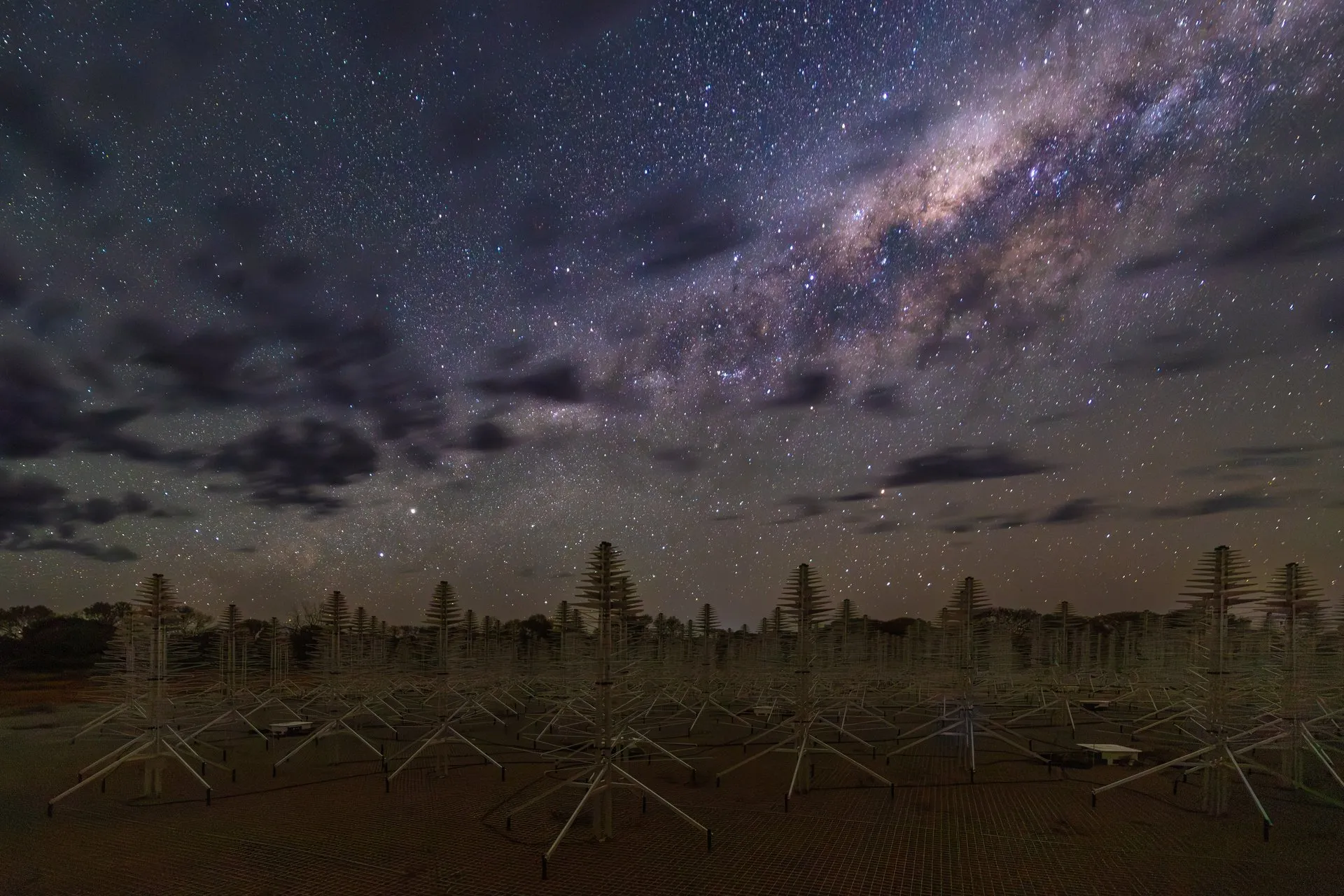
The Milky Way over the SKA-Low telescope, on Wajarri Country in Western Australia. Photo: CSIRO/Ken Lawson.
The telescopes will produce about 700 million gigabytes of data a year, to be stored and processed across the SKA Regional Centre Network (SRCNet). The Spanish node, espSRC, was the first in the world to complete the deployment and integration of the services needed to join that network.
Open science from Granada
With the expansion, Spain will have the storage, computing power and connection speed needed to receive and manage the data sent to it from the telescopes. Researchers expect SKA to help explain everything from how planetary systems form to the role of magnetism in the universe, and to show how the first stars and galaxies were born.
“This investment is essential to give espSRC new infrastructure and services that will allow the scientific community to make new discoveries in line with the principle of open science,” says Lourdes Verdes-Montenegro, a CSIC researcher at the IAA who coordinates Spain’s participation in SKA. For Olga Muñoz, director of IAA-CSIC, the project makes the institute “a magnet for talent in advanced digital technologies”.
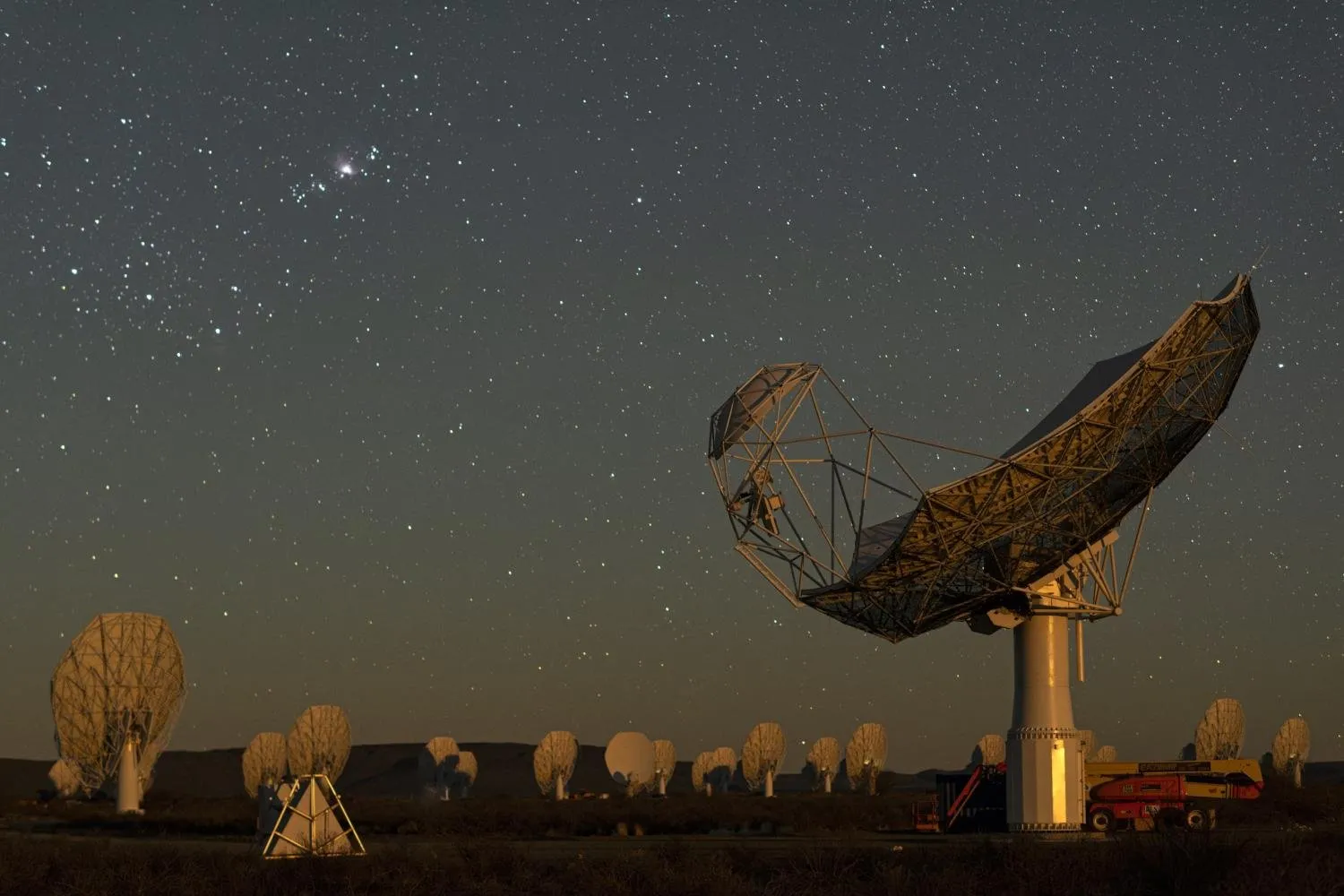
An SKA-Mid dish in South Africa’s Northern Cape province, with SARAO’s MeerKAT radio telescope in the background. Photo: SKAO/Max Alexander.
CSIC has not given a date for when the expanded centre will be up and running.
Photos courtesy of IAA-CSIC.