Seven-metre predatory dinosaur from Patagonia named after a young scientist
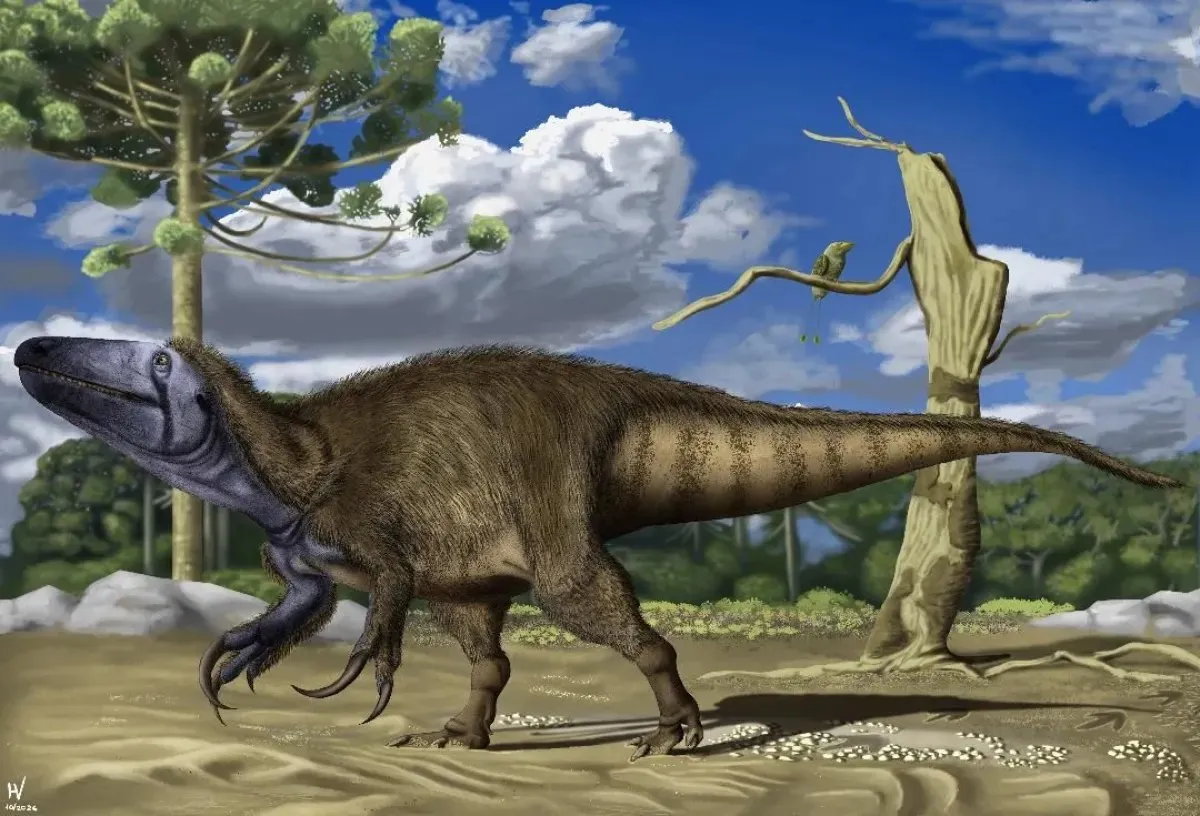
A team led by Ariel Méndez of Argentina's CONICET has described Rinconraptor pipoae in Palaeontologia Electronica: a megaraptorid about 7 metres long that lived 86 to 83 million years ago near Rincón de los Sauces, in Neuquén. Its name honours María Laura Pipo, a CONICET palaeobotanist who helped dig it up and died in 2020, aged 30. The caveat: it is known from only a few bones, and its size is an estimate.
María Laura Pipo was a palaeobotanist. She studied fossil plants from Antarctica, not dinosaurs. But in November 2019 she joined a field trip to Cerro Overo, near Rincón de los Sauces in northern Neuquén, because the team wanted to know which plants grew there and what the plant-eaters ate. She died on 29 May 2020, aged 30. The predator she helped free from the rock now carries her name: Rinconraptor pipoae.
It has been described in the journal Palaeontologia Electronica by a team led by Ariel Méndez, a CONICET researcher at the Patagonian Institute of Geology and Palaeontology (IPGP-CENPAT), with scientists from other institutions in Argentina and abroad.
A long tail and 40-centimetre claws
It is a megaraptorid, a group of carnivores with long arms and huge hand claws. According to the team it was about 7 metres long, and its claws may have reached 40 centimetres. It lived 86 to 83 million years ago, in the Late Cretaceous.
It is known from only a few remains: ten tail vertebrae, part of an upper-arm bone and the top of a shinbone. That is why its size is an estimate, based on comparing those bones with related species. Other bones from the same area point to animals between 6 and 8.5 metres long.
Ten years since the first vertebrae
The story began in 2016, when staff from the Argentino Urquiza Municipal Museum in Rincón de los Sauces found loose vertebrae while looking for another dinosaur. In 2019 they went back and recovered more bones. The pandemic held up preparation of the fossils through 2020 and part of 2021.
The find shows that two groups of large carnivores lived side by side at Cerro Overo: megaraptorids and the short-armed abelisaurids. Méndez suggests they may have competed for food or split the territory, something the fossils cannot yet tell. Some remains from the site are on display at the Bariloche Palaeontological Museum.
Sources
- Palaeontologia Electronica · Méndez et al., “Expanding the dinosaur diversity of the Cerro Overo-La Invernada area (Bajo de la Carpa Formation, Santonian), Northern Patagonia” (2026), via Sci.News
- ANBariloche · Seven-metre dinosaur named after a scientist (28 Oct 2026, in Spanish)
- Diario Jornada · New seven-metre carnivorous dinosaur (30 Oct 2026, in Spanish)