A 3,500-year-old burial cave in Palma sheds light on Bronze Age rituals in Mallorca
A team from Spain's National Research Council (CSIC) and the Catalan Institute of Classical Archaeology has excavated hypogeum SSU9, a rock-cut burial chamber found in 2024 at the Son Sunyer necropolis in Palma. They found human bones, including those of children, pottery fragments and other objects linked to funerary rites. The caveat: the age of about 3,500 years is provisional until radiocarbon results come in.
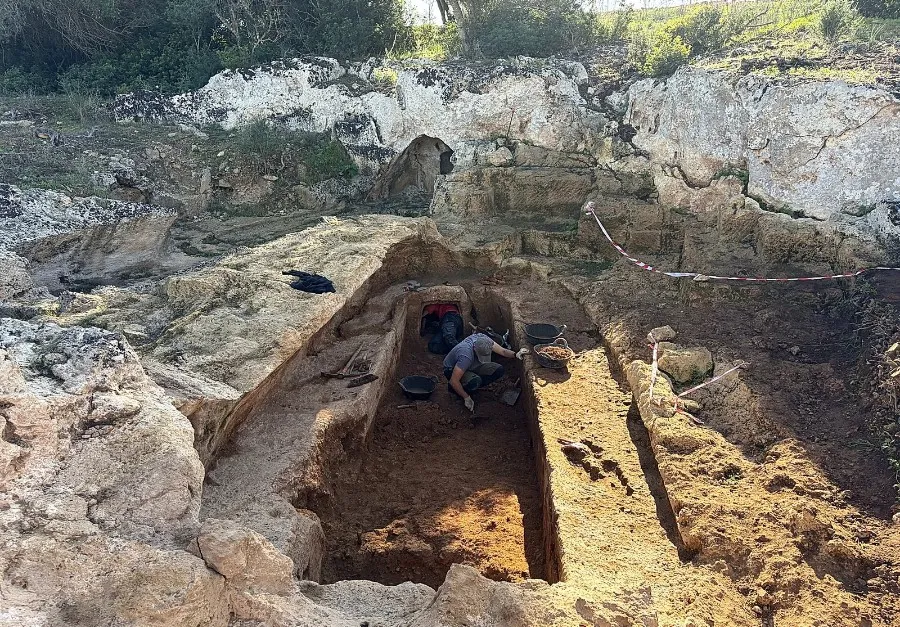
Beneath layers left by a medieval settlement in es Pil·larí, a few kilometres from the centre of Palma, archaeologists have found what they were looking for: Bronze Age burial layers. They lie in hypogeum SSU9, one of nine artificial caves that make up the Son Sunyer necropolis.
Hypogea are chambers cut into the rock, with corridors, stone benches and niches, which Mallorca’s early inhabitants used to bury their dead. SSU9 was discovered in 2024 and has been excavated since 2025. This autumn’s season, which ended on 30 October, was co-directed by Pau Sureda of the Institute of Heritage Sciences (Incipit-CSIC) and Jordi Hernández of the Catalan Institute of Classical Archaeology (ICAC-CERCA).
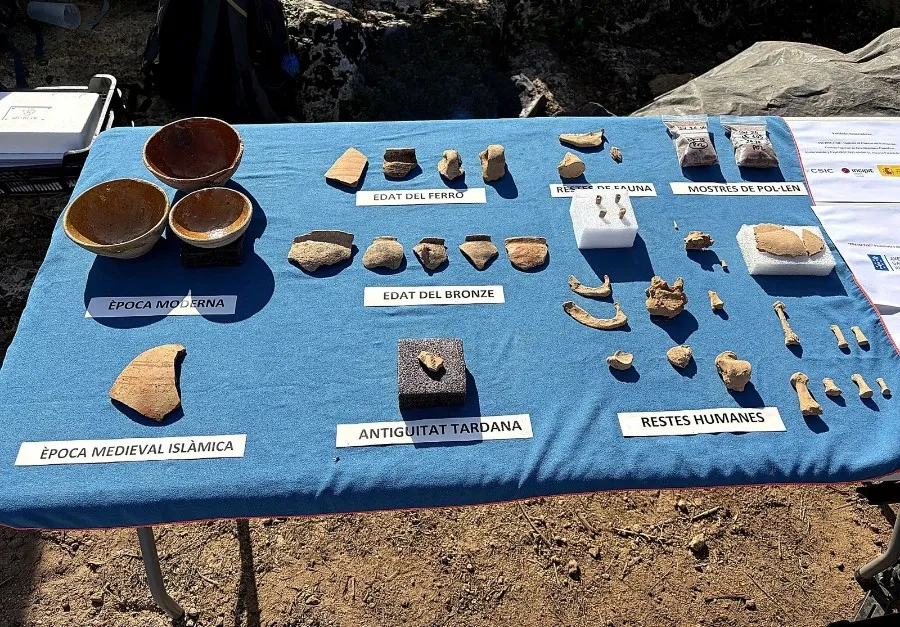
Some of the material recorded at Son Sunyer, arranged by period, with the human remains on the right. Photo: CSIC.
Bones of adults and children
The team recorded human bones, pottery fragments and other objects linked to funerary rituals. The remains include child burials, which could help reveal what the community looked like and who took part in these rites, according to CSIC.
The bones were scattered and disarticulated. Hernández says this “could be related to the way burials were managed”. The team’s hypothesis is that bodies were first laid on the stone benches or in wall niches, and that some remains were later moved to the central space to make room for new burials.
A niche under the bench
One surprise is a niche beneath one of the stone benches, a layout rarely seen in other Mallorcan hypogea. Many of those studied so far had been reused or altered over the centuries, and at Son Sunyer, sandstone quarrying in the 16th and 17th centuries destroyed part of the structures. That is why original burial layers are so hard to find.
The material shows “some degree of alteration”, Sureda says, but it can still be studied.
What comes next
The next step is the lab. Radiocarbon dating will pin down when the necropolis was in use, and analysis of the bones will reveal the age, diseases, diet and genetic traits of the people buried there.