Chilean chemists break down nylon at lower heat so it can be recycled
Susan Lühr's team at the University of Chile's Faculty of Sciences breaks down nylon 6, the plastic in many fishing nets, using formic acid and alcohols at 150-180 °C, less heat than standard methods. The result is aminoesters, compounds the chemical industry can reuse. It is a lab result, published in Macromolecules: the team is now trying it on discarded fishing gear, but it does not yet work at industrial scale.
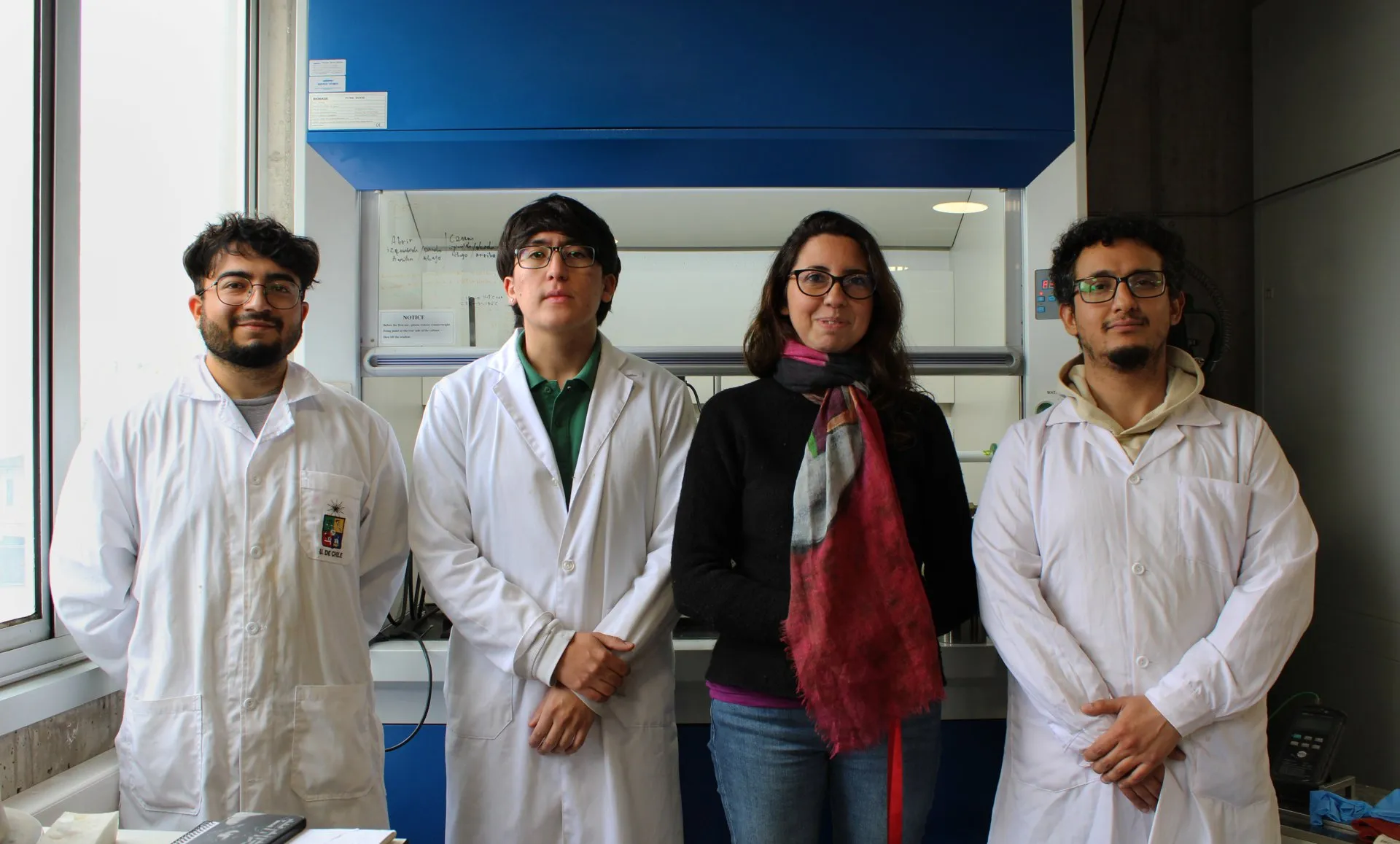
Strips of plastic, an acid that comes from organic matter and a little alcohol. With those, at 150-180 °C, chemist Susan Lühr’s team at the University of Chile’s Juan Gómez Millas campus breaks the long chains of nylon 6 into smaller molecules that can be put to use.
Nylon 6 (polyamide 6) is found in textiles, engineering parts and many fishing nets. Recycling it chemically usually takes more heat. The group uses formic acid with alcohols such as n-butanol, and has published the method in the journal Macromolecules, in a paper led by Marcelo Vilches-Herrera.
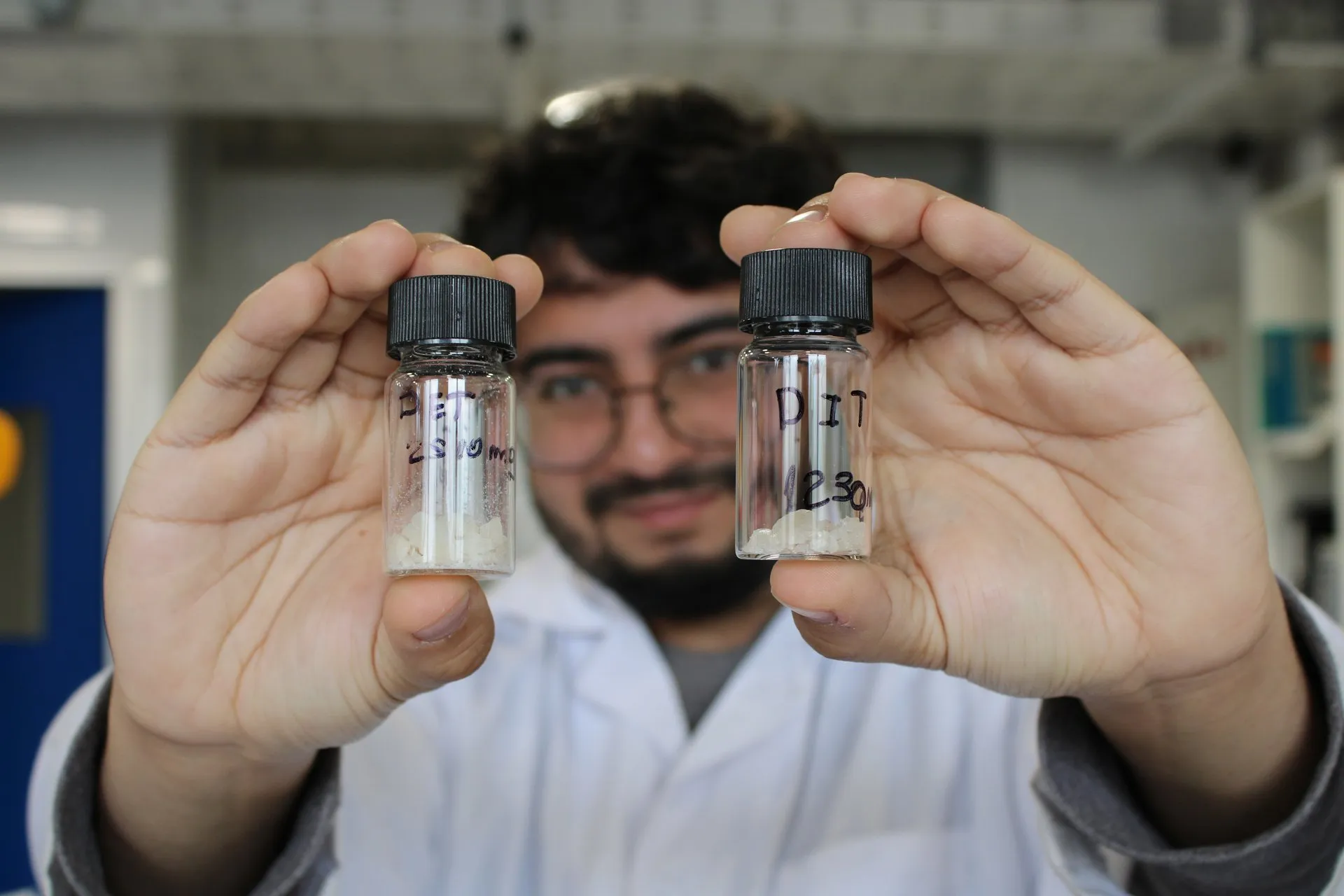
Samples from Susan Lühr’s lab at the Faculty of Sciences. Photo: Matilde Pacheco Cárdenas / University of Chile.
Aminoesters instead of waste
What comes out is not new nylon but mainly aminoesters, chemical compounds with industrial value. Caprolactam, the building block used to make nylon 6, takes part in the reactions.
“Our research is much more sustainable because we use an acid that comes from organic matter,” says Martín Santander, an environmental chemistry student in the group. He works with chemistry PhD Matías Concha, who took over the project in 2024, and environmental chemists Yulissa Pino and Paula Briones. Sebastián Gallardo Fuentes of the Pontifical Catholic University of Valparaíso collaborated.
From old nets to factory scale
The team has started applying the method to discarded fishing gear, one of the plastic wastes of most concern at sea, though it has not yet published results. The next challenge is scaling up: for now this is lab chemistry.
Cost matters too. “Chemical recycling makes the full cycle possible,” says Lühr, but today it is more expensive than mechanical recycling, the most common kind in Chile, and her work aims to bring the price down. In the same lab, Matías Fuenzalida is testing faster, lower-heat ways to break down PET from bottles.
Chile uses about 1.3 million tonnes of plastic a year, according to the industry association Asipla, and recovered 10.3% of it in 2024. Its extended producer responsibility law requires 55% recovery of non-household packaging from 2031.