Chemical traces of red blood cells found in 115-million-year-old Brazilian dinosaur
A team led by Kliti Grice of Curtin University in Australia has detected heme molecules, the oxygen-carrying part of haemoglobin, inside red-blood-cell-shaped structures in the bones of Aratasaurus museunacionali, a feathered dinosaur found in north-east Brazil. These are mineralised structures, not intact cells, and some experts, including Mary Schweitzer, doubt they are red blood cells at all.
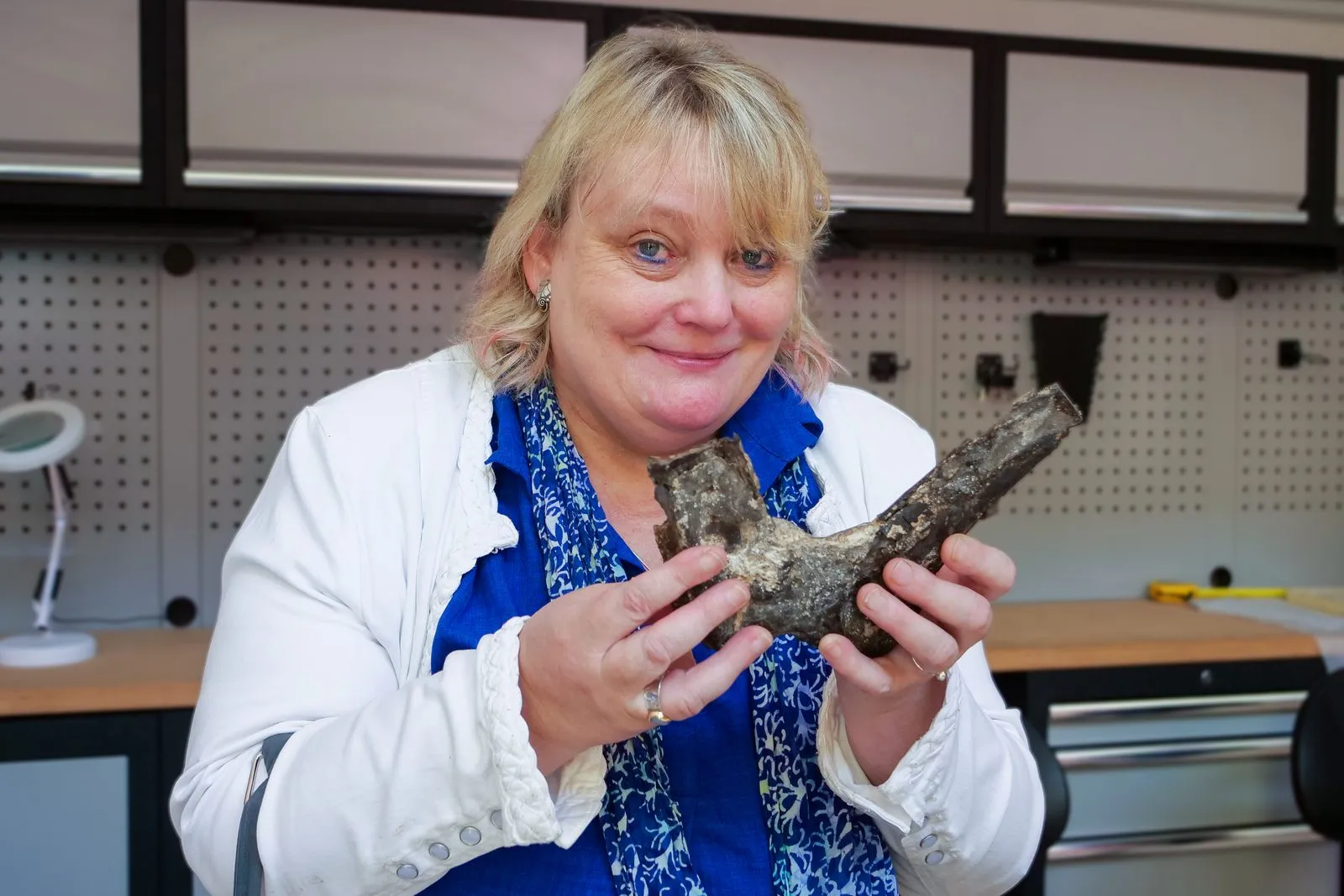
In 2008, part of a leg from a feathered dinosaur that died young, at about four years old, some 115 million years ago, turned up in a mine in north-east Brazil. Eighteen years later, a team led by geochemist Kliti Grice of Curtin University in Australia has found chemical traces of its blood in those bones.
The caveat comes first: these are not intact red blood cells or preserved haemoglobin, but tiny mineralised structures containing molecules derived from heme, the part of haemoglobin that carries oxygen. And not every expert accepts they are red blood cells.
Tiny ellipses inside the bone
The study, published in PNAS, looked at bones of Aratasaurus museunacionali, a theropod about 3 metres long found at the Pedra Branca mine in the Araripe Basin. Inside the canals where blood vessels once ran, the team found many ellipse-shaped structures about 20 microns across. In them it detected heme B and an altered form of the molecule.
“No-one’s actually found heme inside a fossil blood cell ever,” Grice told the ABC. She says it helped that the animal died on a microbial mat and that the bones mineralised while microbes were breaking it down.
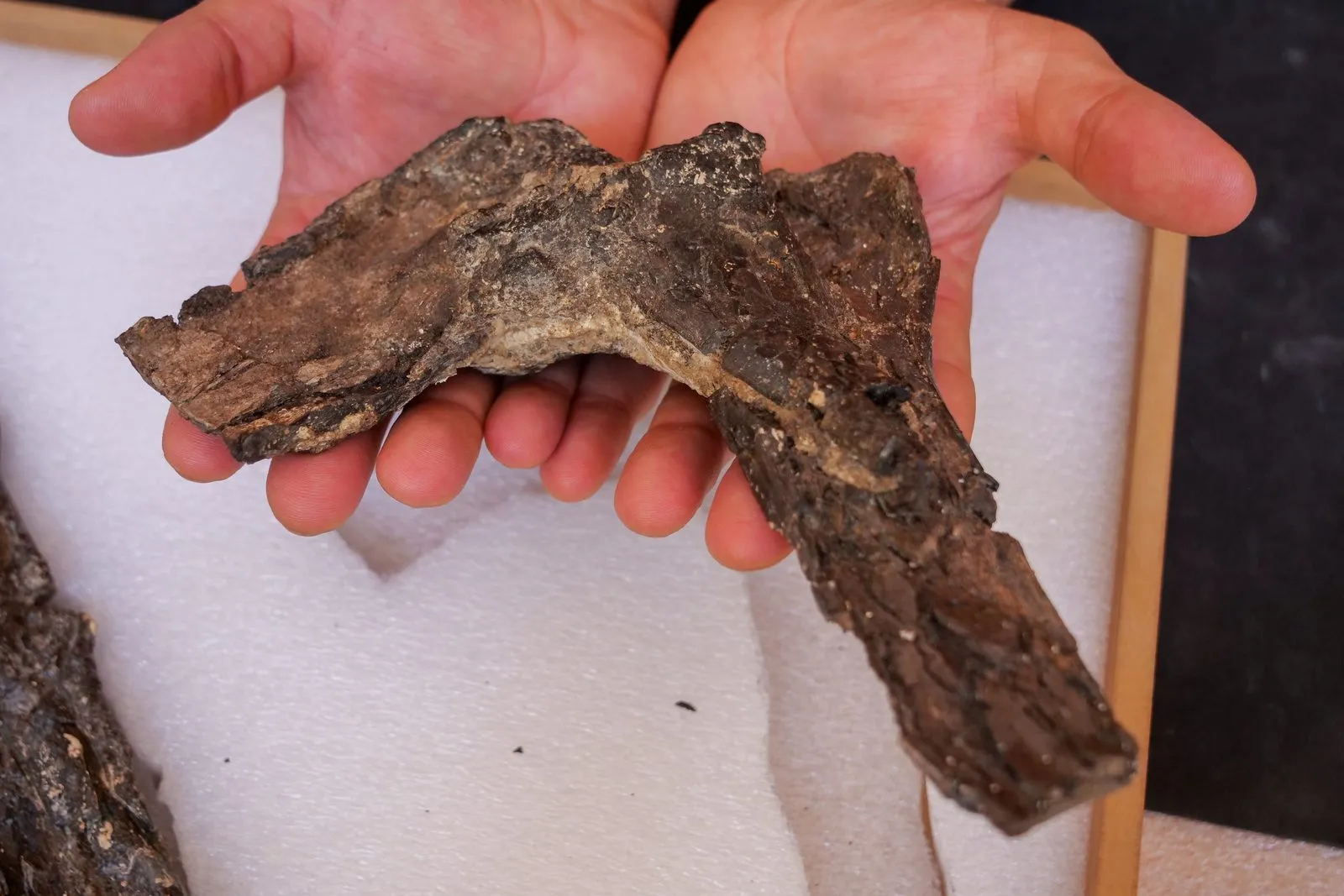
Part of the fossilised right hind limb of Aratasaurus at the Plácido Cidade Nuvens Palaeontology Museum in Santana do Cariri, Ceará, Brazil. Photo: Curtin University.
Convincing to some, not to others
Mauricio Barbi of the University of Regina in Canada, who was not involved, finds the evidence convincing, but notes that identifying the structures “still involves some interpretation”. Mary Schweitzer of North Carolina State University, a pioneer in the study of soft tissue in dinosaurs, accepts there is heme in the bone but not that these are red blood cells: one structure measures about 15 microns, smaller than almost all red blood cells of non-mammals.
Brazil’s National Museum and the Regional University of Cariri also took part. The Curtin team is now testing whether human blood mineralises in the same way on microbial mats from Shark Bay, Western Australia.