Chilean expedition finds deep-sea life in the Atacama Trench is busier than expected
The NIMOx expedition, led by Chile's Millennium Institute of Oceanography, is back in Valparaíso after three weeks over the Atacama Trench, one of the deepest places on Earth. On the trench floor, tiny scavenging crustaceans ate 1.5 kilos of jack mackerel in an hour to an hour and a half, showing its food chains are far more active than thought. The catch: the results are preliminary and the samples are still being analysed.
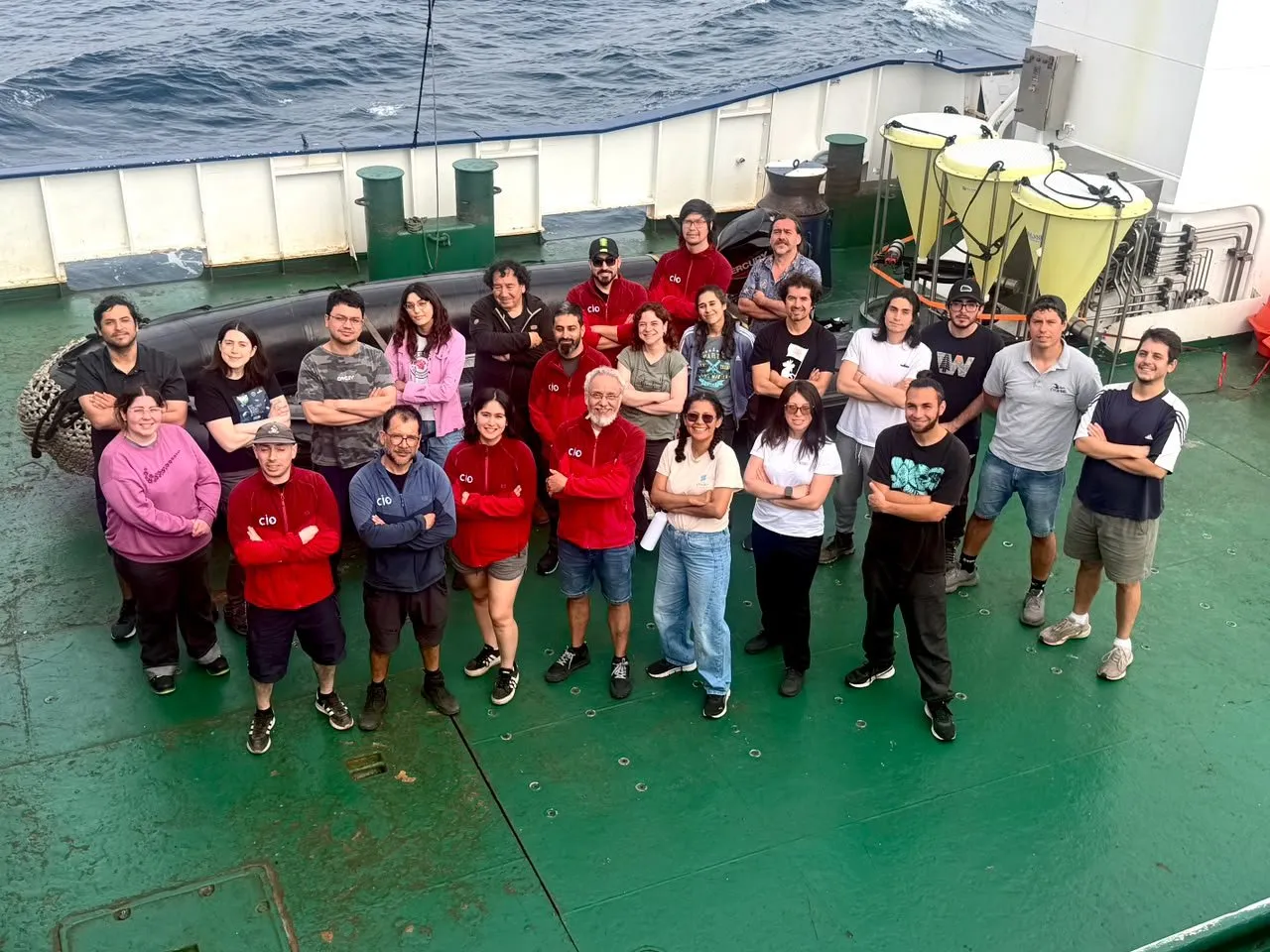
The Chilean Navy ship AGS-61 Cabo de Hornos docked in Valparaíso on 27 October after three weeks over the Atacama Trench, one of the deepest and least explored places on the planet. On board was the NIMOx expedition, led by the Millennium Institute of Oceanography (IMO) and funded by Chile’s research agency, ANID. The findings are preliminary: samples and data will be analysed over the coming months.
A feast thousands of metres down
Mauricio Urbina, a researcher at IMO and the University of Concepción, led feeding experiments on the trench floor itself, using baited traps. Most of the visitors were amphipods, small scavenging crustaceans.
Food chains in the trench were thought to be sparse and slow. The team saw the opposite: the animals ate 1.5 kilos of jack mackerel in an hour to an hour and a half. The ecosystem recycles the organic matter falling from above very quickly.
Urbina also floats a more speculative idea: these animals go long stretches without food, which could point to new cellular repair mechanisms.
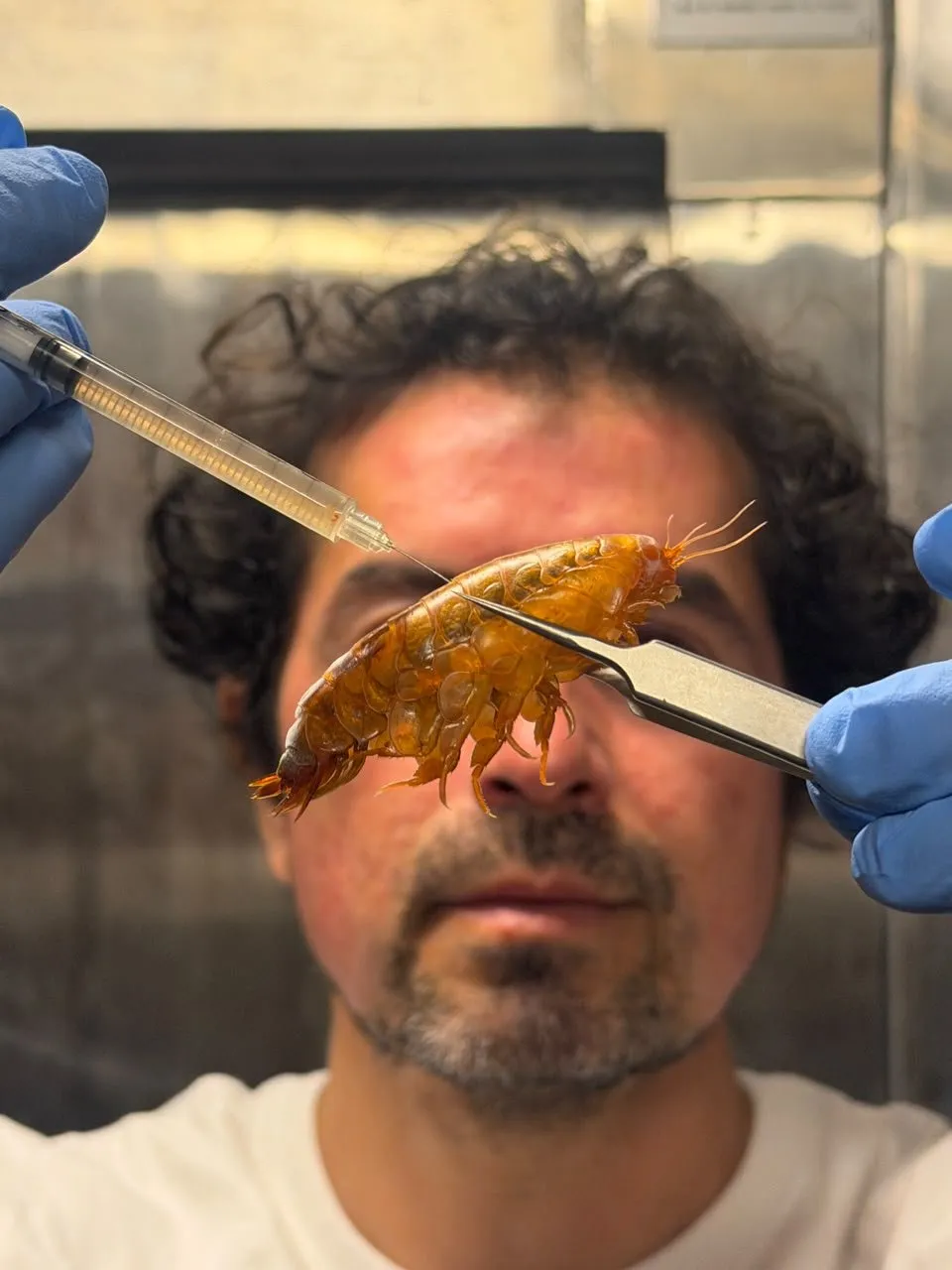
An amphipod, the small scavenging crustacean that filled the expedition’s traps. Photo: Millennium Institute of Oceanography.
A seamount in sharp detail
A second team, led by researcher Valeria Cortés, mapped the seafloor between Taltal and Chañaral, an area that has not had a major earthquake for a long time. It produced high-resolution images of a seamount never recorded in such detail and looked for recent faults and landslides. Many of the team were students.
A third group, led by Rubén Escribano, studied how El Niño affects the deep ocean using a lander and an autonomous underwater glider. Early observations suggest surface warming reduces or scatters plankton, which could change the food that reaches the trench.
Cortés says the data will start feeding into the team’s models and papers in a few months.