Pompeii opens a woman's cupboard sealed for nearly 2,000 years: perfume, make-up and a necklace of charms
Archaeologists at the Archaeological Park of Pompeii have reconstructed a cupboard from a house on the Via dell'Abbondanza: make-up tools, a perfume bottle, a bronze lamp, 38 coins and a necklace of at least 24 children's charms. Who lived there remains uncertain.
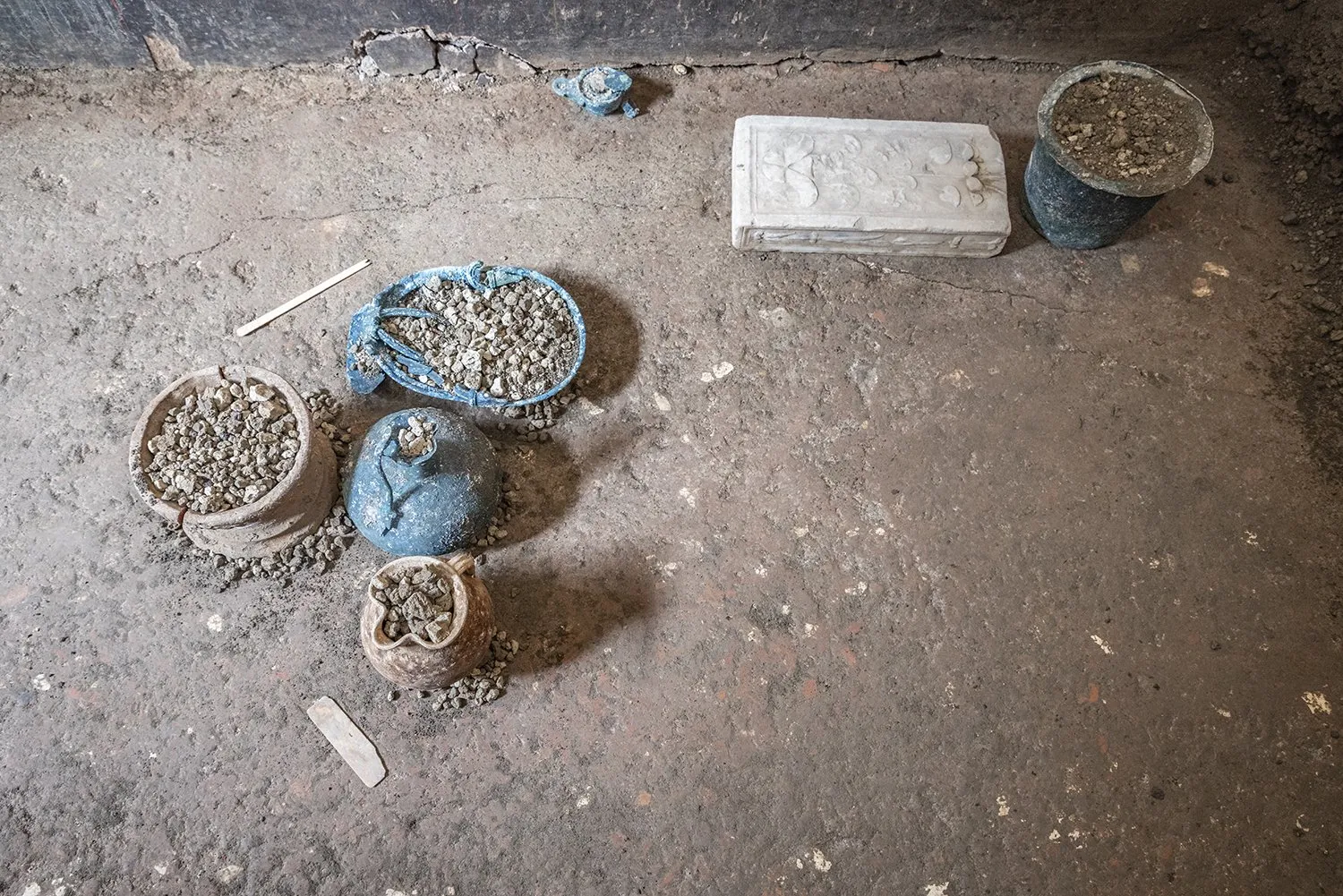
Tweezers and a spatula for make-up, a glass perfume bottle, an incense burner to scent the house and a bronze lamp. They were all in the same wooden cupboard in a house in Pompeii when Vesuvius buried the city in AD 79. Archaeologists at the Archaeological Park of Pompeii have reconstructed it from the excavation records and presented it this week.
The house stands on the Via dell’Abbondanza, one of the ancient city’s busiest streets, and is tentatively attributed to a man called Cornelius Maximus, based on inscriptions that are no longer visible. Its façade was dug out in 1912, but the rooms behind it had never been studied until now, as part of the restoration of the neighbouring Insula of the Chaste Lovers.
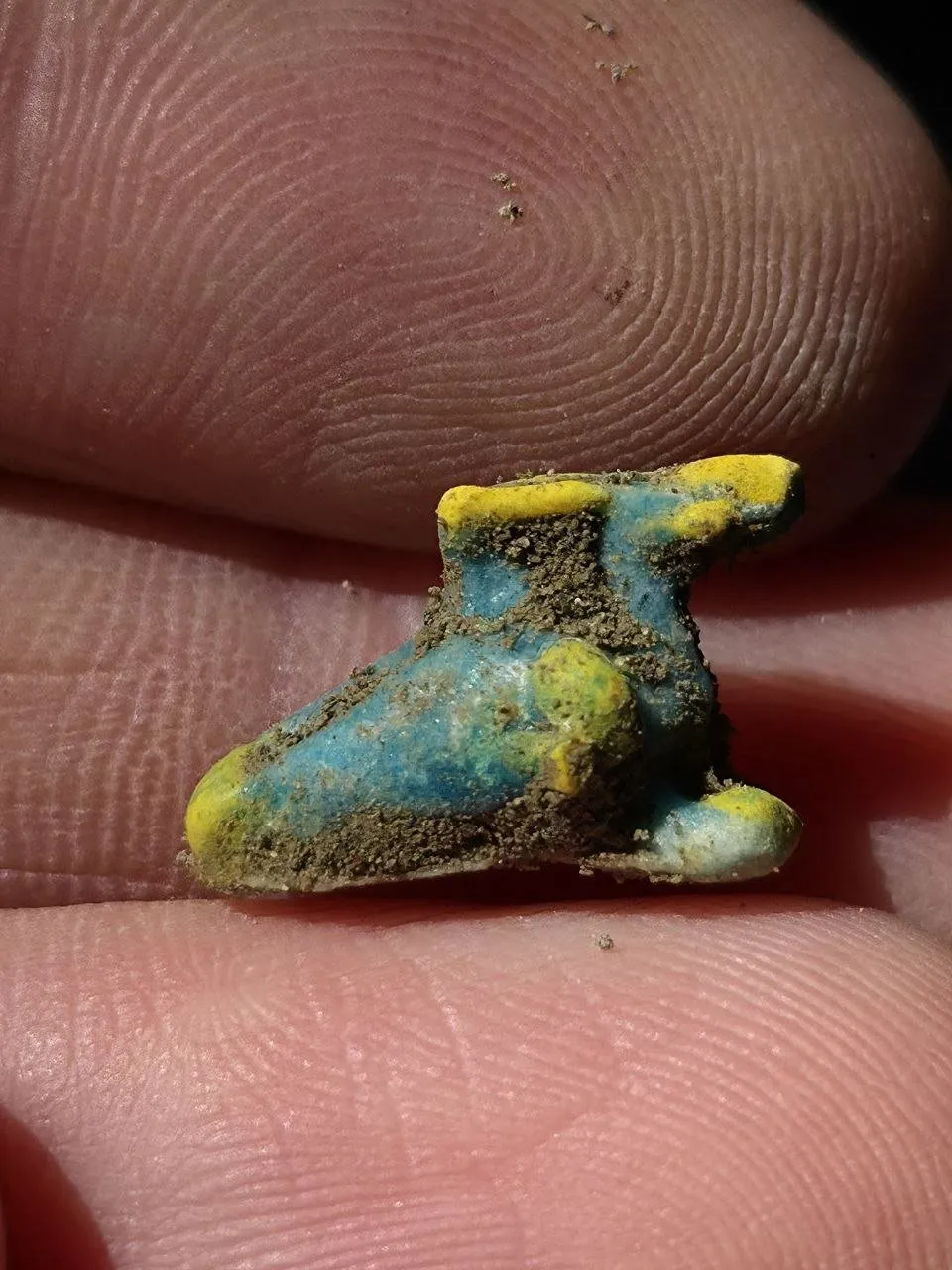
One of the necklace’s charms, shaped like a winged sandal. Image: Parco Archeologico di Pompei.
A necklace that let parents hear their children
The most personal find is a necklace of at least 24 miniature charms in faience, bone, glass paste and rock crystal: gods such as Bes and Mercury, feet, hands, pine cones and bunches of grapes. Such objects were once thought to be used for spells. They are now known as crepundia, or “rattles”: necklaces given to children to protect them and to hear them when they moved.
Some adults kept them for life as a memory of childhood. Many people in the Roman world lived far from their families and birthplaces, and a necklace like this could be all they had left of those years.
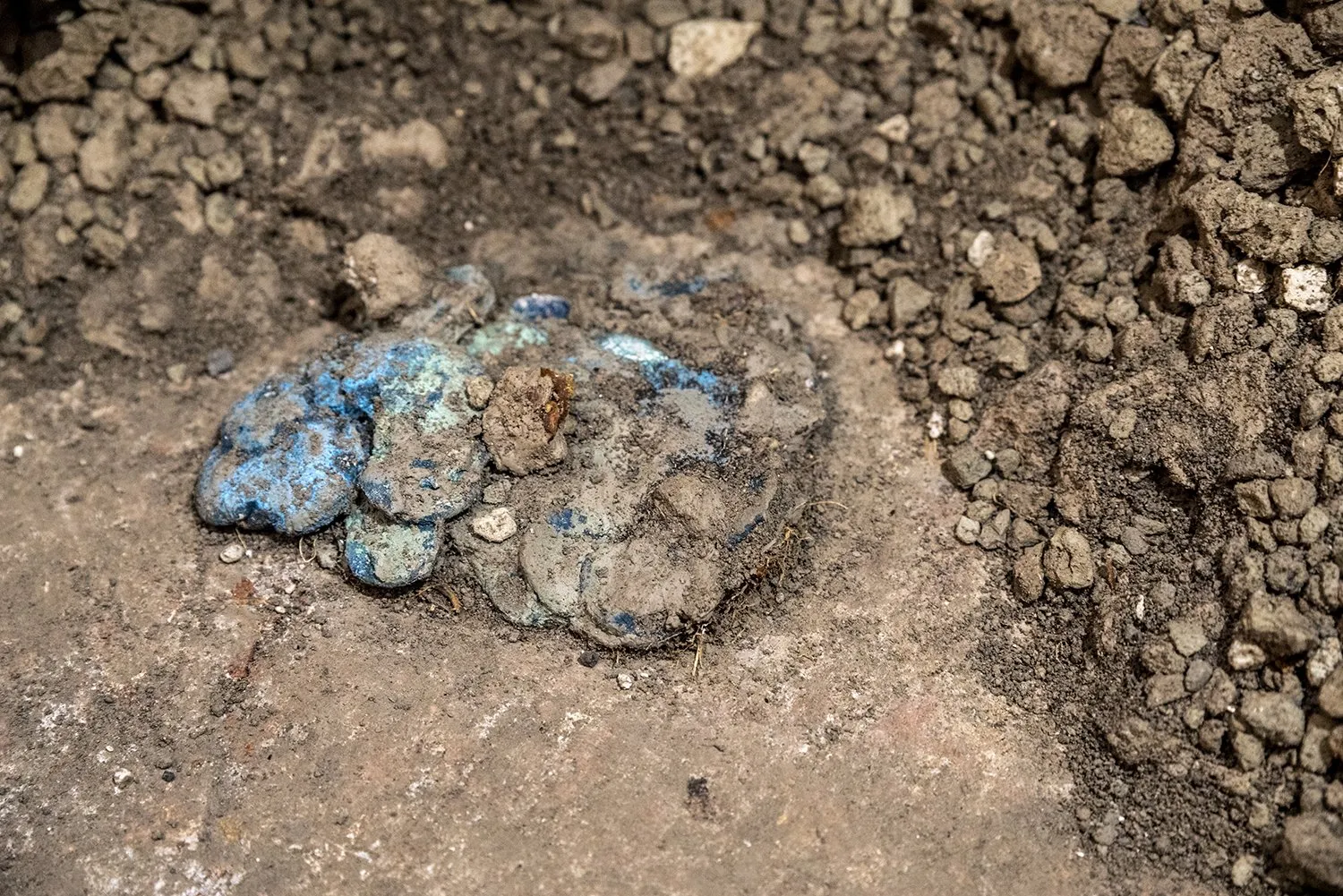
The 38 bronze coins, which were kept in a small woven basket. Image: Parco Archeologico di Pompei.
Lead weights and 38 coins
The cupboard also held lead weights, probably for a small trading business, bronze, glass and pottery pots and cups, and a little woven basket with 38 bronze coins. That the coins were left behind suggests whoever lived there had no time to take their valuables.
“Pompeii is not only a place of great works of art: it is also a place where the most ordinary objects give back the human dimension of the past,” says the park’s director, Gabriel Zuchtriegel. He adds the caveat: it is impossible to say for certain who lived in the house, or whether they escaped.
The dig also turned up the skeletons of two young wood mice inside an amphora on a mezzanine: Pompeii’s residents had uninvited guests too. The park will publish more details in its online excavation journal.