A pulse of light helps solve a superconductor mystery
A team from INRS in Canada and the Flatiron Institute in New York briefly switched off superconductivity in a cuprate with a pulse of light and watched what took its place: the pseudogap, a quantum state debated for decades. The two compete rather than help each other, according to the study in Nature Physics. This is basic science: understanding the rivalry could help design better superconductors, but there is no way to use it yet.
A flash of laser light, and for an instant the material stops being a superconductor. In that gap, Professor Fabio Boschini’s team at the Institut national de la recherche scientifique (INRS) in Quebec saw another quantum state appear: the pseudogap. When superconductivity came back, the pseudogap faded.
The result, published in Nature Physics with researchers from the Flatiron Institute’s Center for Computational Quantum Physics in New York, answers a question that has been open for decades: does the pseudogap pave the way for superconductivity, or compete with it? According to the study, it competes.
Loss-free electricity, but at −196 °C
Superconductors carry electricity without losing energy. Cuprates, copper-based compounds discovered in 1986, manage it at temperatures as “high” as that of liquid nitrogen, −196 °C, according to INRS. Nobody fully knows why, and the pseudogap is one of the missing pieces.
“The pseudogap is one of the greatest mysteries in condensed-matter physics,” says Boschini, Canada Research Chair in Quantum Materials Dynamics.
The missing frames of the film
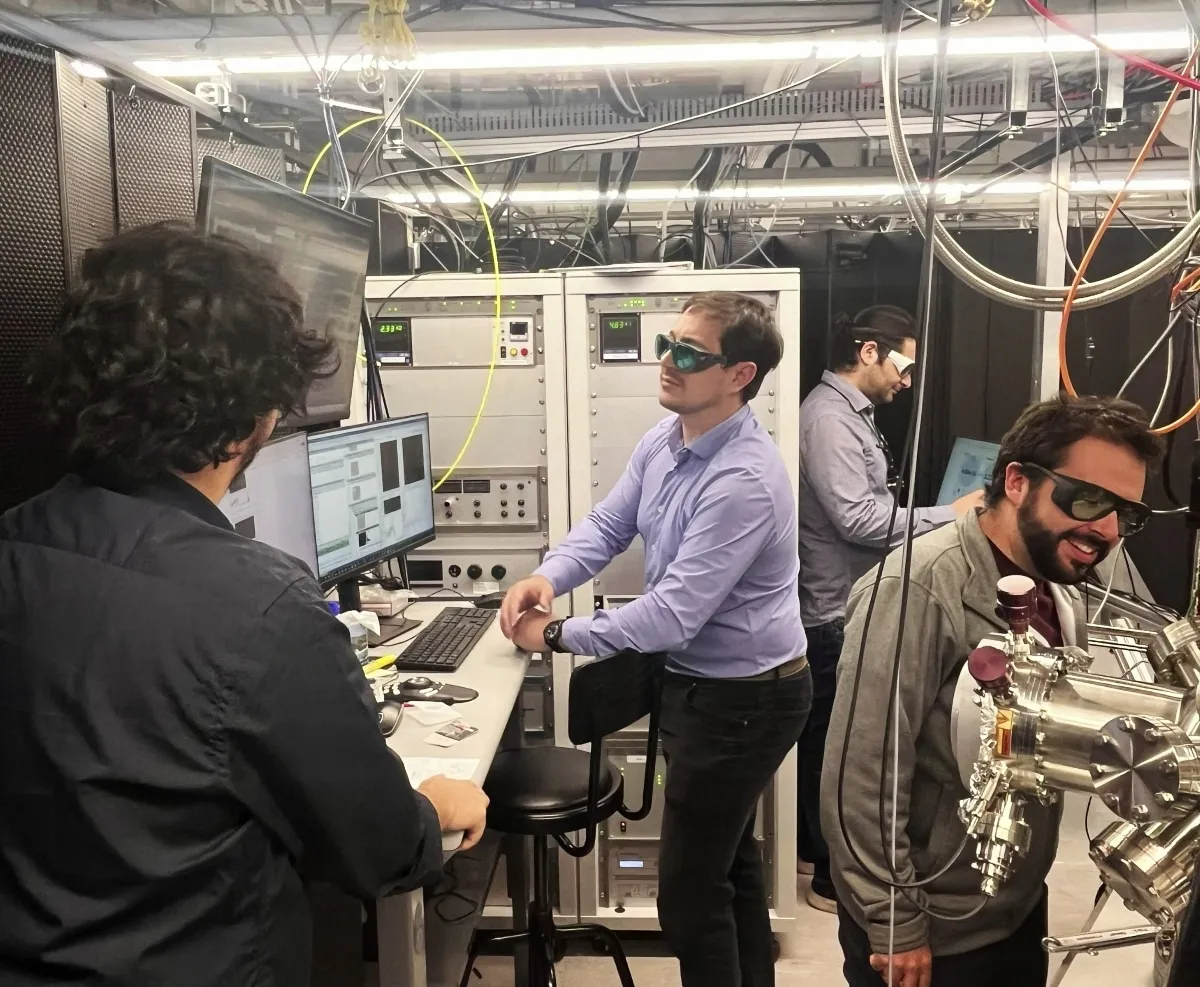
To see it, the team used time- and angle-resolved photoemission spectroscopy (TR-ARPES) at INRS’s ALLS laboratory, which measures the energy of the material’s electrons in real time. “It is a bit like uncovering missing frames from a film that scientists have been trying to piece together for decades,” says Dario Armanno, INRS PhD student and first author.
“We’re really showing that these states are competing,” Olivier Gingras of the Flatiron Institute, the corresponding author, told the Simons Foundation.
Still a long way off
If the rivalry is real, suppressing the pseudogap while keeping superconductivity could let these materials work at higher temperatures, according to the Simons Foundation. But Gingras sees that as something far in the future: the researchers do not yet know how to do it.
INRS points to possible long-term uses in power grids, medical imaging and quantum technologies. The next step, the team says, is to find a way to suppress the pseudogap and preserve superconductivity.
Sources
- INRS · Quantum Physics Research Results (20-10-2026)
- Nature Physics · Armanno, Gingras, Boschini et al., “Light-induced asymmetric pseudogap below the critical temperature in cuprates”, original study
- Simons Foundation · Experiment Reveals Quantum Tug-of-War Limiting Higher-Temperature Superconductivity
- Education News Canada · INRS researchers uncover a hidden rivalry between two quantum states at the heart of superconductors