Two teeth reveal a 30-kilo giant rodent that roamed Thailand 34 million years ago
An international team has described Yakamys sirindhornae in Scientific Reports, a rodent from the late Eocene found in a lignite mine in Krabi, southern Thailand. Only one molar and one incisor are known, and the weight is an estimate: between 21 and 47 kilos depending on the method, about 30 on average. Even so, it was twice as heavy as other known rodents of its time, and it pushes rodent gigantism back much earlier than thought.
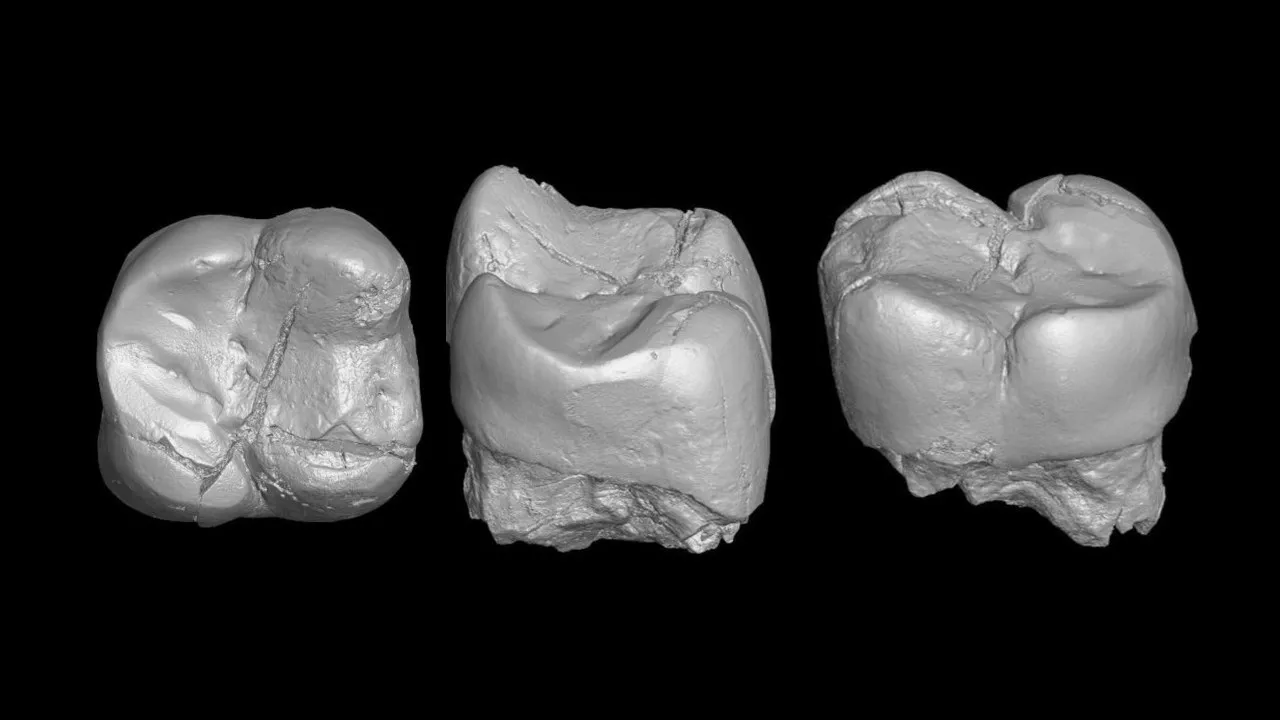
One molar and one incisor. That is all that is left of an animal that lived about 34 million years ago in southern Thailand. But those two teeth, dug out of the Bang Mark Pit at the Krabi lignite mine, are enough to describe a new species: Yakamys sirindhornae, a giant rodent that probably weighed around 30 kilos.
The study is published in Scientific Reports. The first author is palaeontologist Yaowalak Chaimanee, working with a team from McGill University in Canada, Thailand’s Department of Mineral Resources, France’s CNRS and the University of Poitiers.
A weight worked out with seven formulas
You cannot weigh an animal from two teeth, so the team used seven equations that link tooth size to body mass. The results range from 21.4 to 47.3 kilos, with a mean of 31.6. The authors round it to about 30 kilos and acknowledge in the paper that the uncertainty is large.
On that estimate, Yakamys was twice as heavy as Hulgana, until now the largest known Asian rodent of its family.
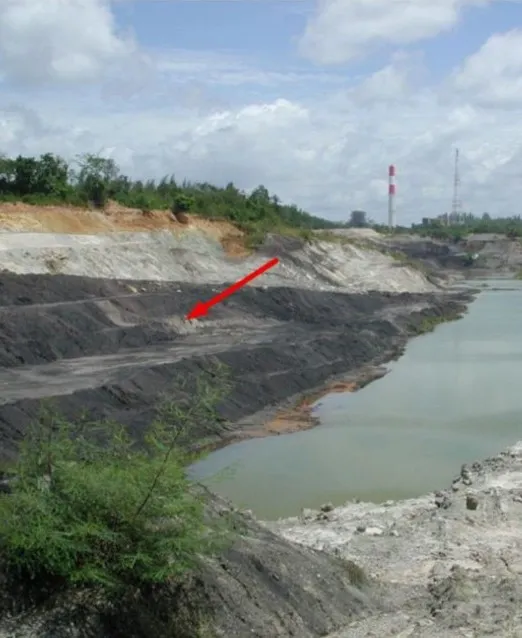 The Bang Mark Pit at the Krabi mine. The arrow marks the layer where the teeth were found. Image: Chaimanee et al., Scientific Reports, 2026 (CC BY 4.0), cropped.
Giants far earlier than expected
Today the world’s largest rodent is the capybara, and the best-known giant rodents lived in South America millions of years later. “This discovery suggests that Southeast Asia also played an important role in the early evolutionary history of large-bodied rodents,” said Virginie Millien, a biology professor at McGill and co-author of the study.
The researchers suggest, as a hypothesis, that it lived along a lake shore, in a way of life similar to the capybara’s.
A name with two tributes
Yak means “giant” in Thai and mys means “mouse” in Greek. The species name, sirindhornae, honours Princess Maha Chakri Sirindhorn for her support of palaeontology in Thailand. The team keeps digging in the Krabi Basin, and every new fossil could help explain how and why these rodents grew so big.