Climate patterns could flag Ebola outbreak risk months ahead, Spanish study finds
A University of Málaga team has linked 49 Ebola outbreaks in Africa (1976-2025) to large climate oscillations, some thousands of kilometres away, and estimates a warning window of 6 to 12 months. Climate does not cause Ebola, and the authors stress that predictive power is still limited: this is a first step to help health services prepare, not a finished early-warning system.
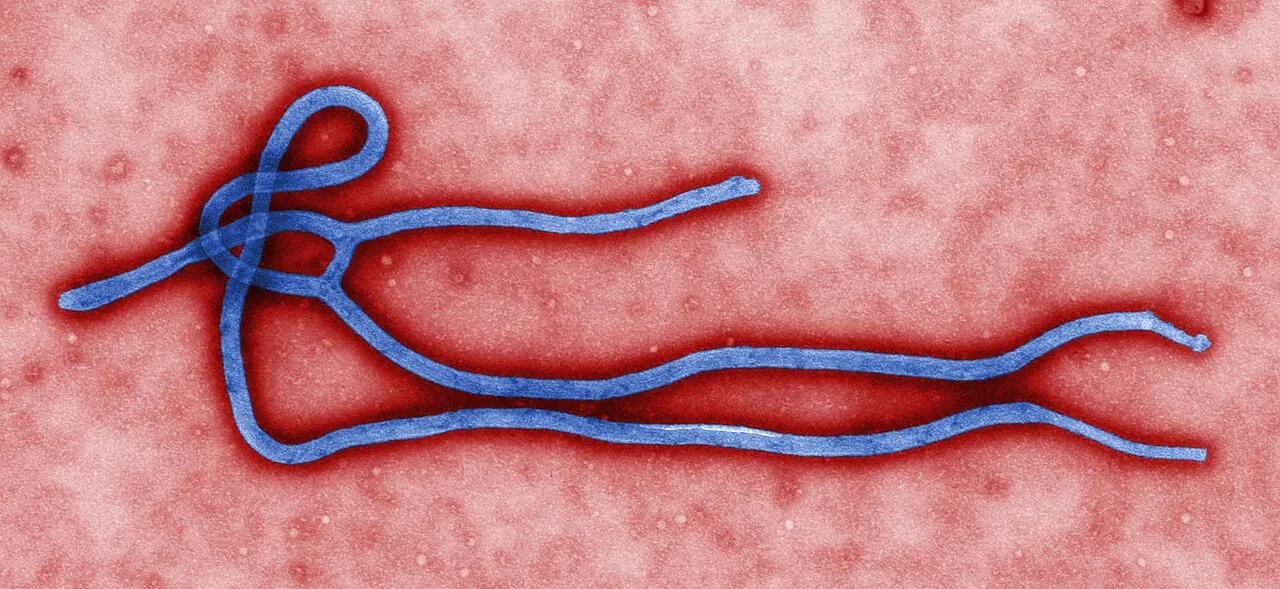
Ebola outbreaks do not strike at random. That is the conclusion of a University of Málaga (UMA) study that compared all 49 outbreaks recorded in Africa between 1976 and 2025 with 26 climate oscillation indices, the large swings in temperature and pressure across oceans and atmosphere.
To test whether the approach could look ahead, the team built its models using data only up to 2018, then checked them against outbreaks from 2019 to 2025. Four indices were most closely linked to outbreaks: Caribbean sea surface temperature, the Indian Ocean Dipole, the Quasi-Biennial Oscillation and the Pacific Decadal Oscillation, which was the most frequent signal.
A clue, not a cause
“Our proposed interpretation is that these large oscillations modify meteorological patterns,” says Raimundo Real, professor of zoology at UMA. Those shifts would affect environmental conditions linked to the virus in Central Africa, but climate does not cause Ebola: it is a signal that may show when and where risk rises.
The authors estimate a useful window of 6 to 12 months before a potential outbreak and stress that predictive capacity is still limited. One of the four indices, the Caribbean one, has not been published since February 2020. “Early warning systems are essential for combating infectious diseases,” says Jesús Olivero, professor of biogeography at UMA; spotting those windows early could give health systems time to prepare.
Published during an outbreak
The study comes during the epidemic in the Democratic Republic of the Congo, which began in May and, according to the country’s National Institute of Public Health, had passed 8,000 confirmed infections and 3,901 deaths by 26 September.
The work, published in Stochastic Environmental Research and Risk Assessment, also involved the Spanish Institute of Oceanography, Manchester Metropolitan University and the Center for International Forestry Research (CIFOR). The team says more research is needed before it could work as a stand-alone warning system.