Spanish scientists join EU project to farm fish, mussels and seaweed that need less feed
Two institutes of Spain's National Research Council (CSIC) are part of AQUALICIOUS, a four-year, €6.2 million European project with 14 partners. It aims to make fish farming less dependent on feed made from wild-caught fish by combining species that eat little or none of it. The project has only just begun: results will come over the next few years.
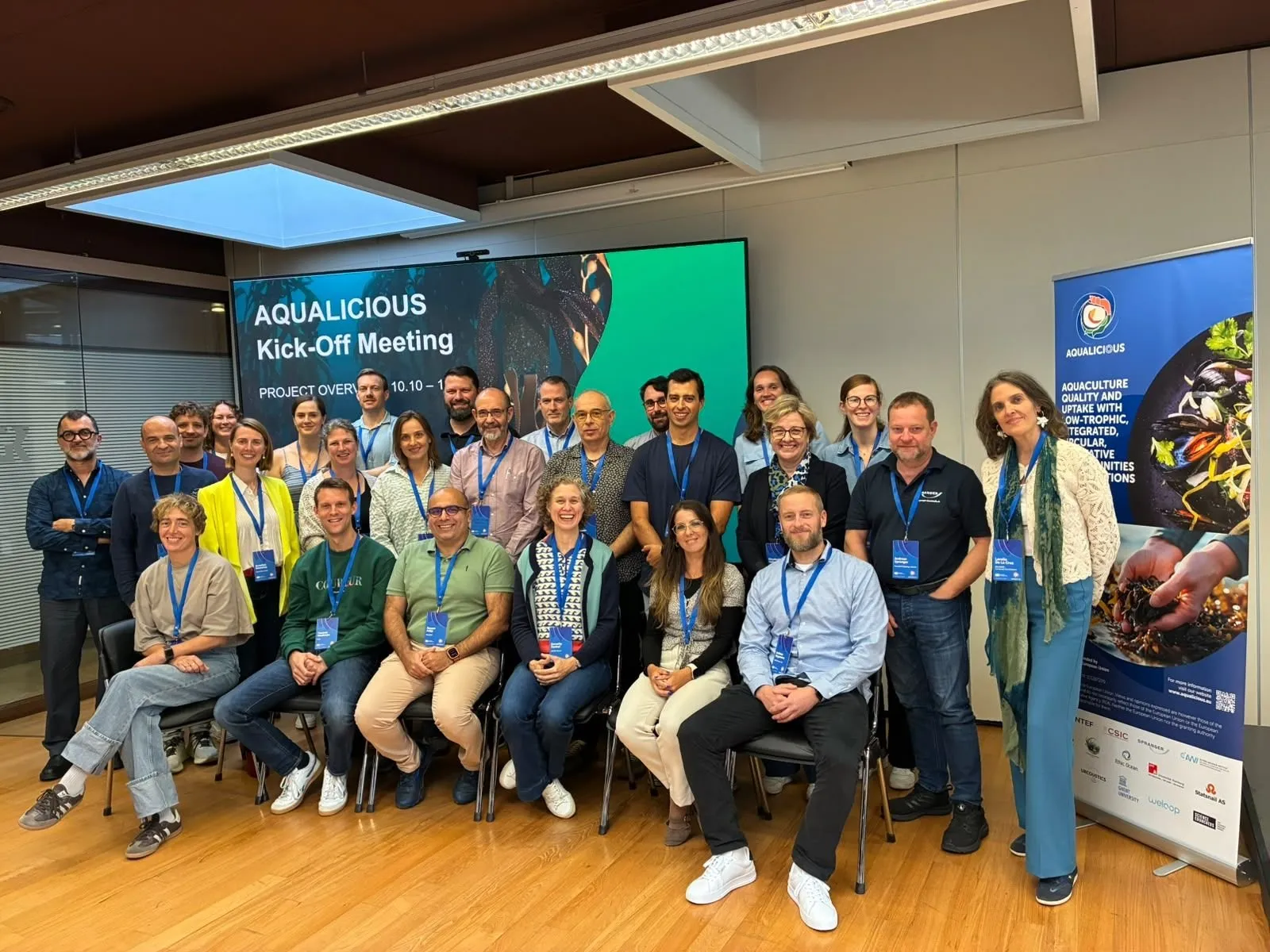
A mullet, a mussel and a handful of seaweed in the same system. That is the idea behind AQUALICIOUS, a European project that includes two institutes of Spain’s National Research Council (CSIC): the Torre de la Sal Aquaculture Institute in Castellón and the Spanish Institute of Oceanography. It sets out to show that fish and shellfish can be farmed with less reliance on feed made from wild-caught fish.
The project started on 1 September 2026 and runs until August 2030, according to CORDIS, the European Commission’s research database. It has a budget of about €6.2 million, almost all of it EU funding, and is coordinated by SINTEF Ocean in Norway. CSIC is the only Spanish partner and receives about €925,000.
Species that eat little or no feed
“Low-trophic” aquaculture focuses on animals and plants near the bottom of the food chain. According to CSIC, the project will work with the thicklip grey mullet (Chelon labrosus), an omnivorous fish, as well as mussels, periwinkles, oysters, seaweed and marine worms.
The trick is to combine them. In integrated multi-trophic aquaculture, what one species leaves behind becomes food for another, so more of what goes into the system is used and less waste ends up in the water.
Three pilot farms, one in Santander
There will be demonstration sites in Norway, Belgium and Spain. The Spanish one, at the Spanish Institute of Oceanography’s centre in Santander, will bring together fish, worms, microalgae and oysters in a closed loop.
The consortium will also test environmental sensors and digital production tools, and study whether shoppers would be willing to pay for these products.
The project is just getting started, so there are no results yet. The first data from the pilot farms will come over the next few years.