Argentine scientist turns brewery and coffee waste into a material that could replace plastic
Melina Nisenbaum, a CONICET researcher at the National University of Mar del Plata, has won the 2026 Franco-Argentine Innovation Award (junior category) for a process that feeds brewery waste, coffee grounds, yerba mate and gin pomace to bacteria that make cellulose, the basis of a kind of bio-leather. The caveat: the process works in the lab and still has to be scaled up.
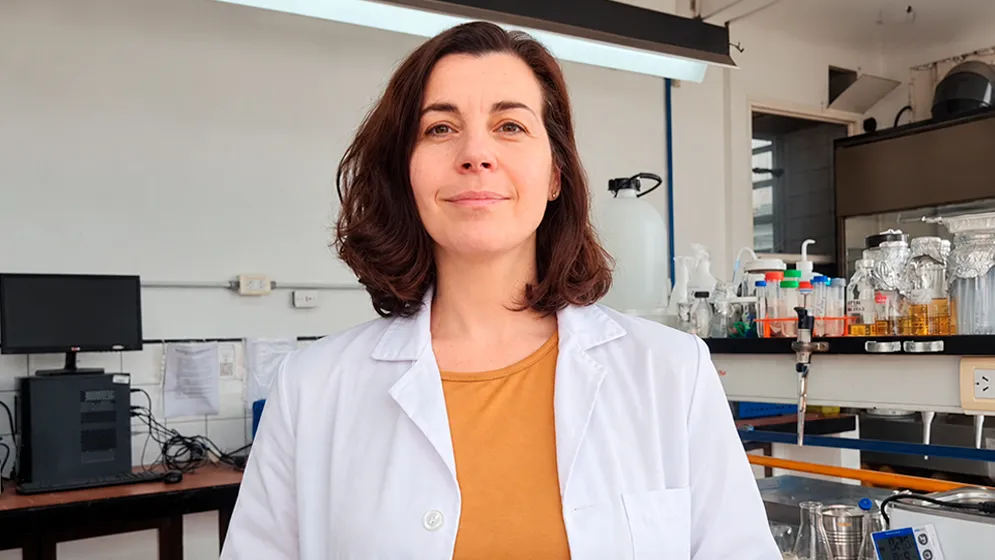
Brewer’s spent grain, coffee grounds, yerba mate and gin pomace. Industries in Mar del Plata throw them away every day, and Melina Nisenbaum uses them to feed bacteria that make cellulose: the basis of a flexible material that could replace plastic in textiles and packaging.
Nisenbaum is a researcher with Argentina’s science agency CONICET in the Bioprocess Engineering Group at INCITAA, part of the Engineering Faculty of the National University of Mar del Plata (UNMdP). Her project has won the 2026 Franco-Argentine Innovation Award in the junior category, organised by CONICET, the French Institute of Argentina and TotalEnergies. The prize is €3,000 plus a research stay in France.
Bacteria that weave a sheet
The method is similar to kombucha fermentation: a mixed culture of microbes forms a cellulose membrane on the surface of the liquid. Dried and treated, that sheet becomes a kind of bio-leather.
Mar del Plata start-up +USO already uses bacterial cellulose to make a material called Revium, which it turns into wallets and coloured sheets. In the project it acts as a partner that will test the process and could adopt it. “We want to turn low-value materials into a technological resource,” Nisenbaum told CONICET.
From the flask to the factory
Early tests show that the region’s waste can sustain cellulose production, and that temperature and oxygen affect how much the bacteria make. It is still lab work: CONICET gives no figures on yield or on the material’s properties.
The next steps are to prepare culture media from brewery waste, especially spent grain, improve productivity and see how the cultures behave at larger volumes. Then come physical and mechanical tests of the material and trials in real textiles.