Artificial mangrove roots slow erosion on the coast near Bangkok
Where the Chao Phraya meets the sea, the coast loses 20 to 60 metres of land a year. In a 15-month trial at 11 sites in Samut Prakan, Chulalongkorn University placed structures that mimic mangrove roots: at 10 of them they trapped between 16 and 88 centimetres of sediment. An independent expert warns it is not a permanent fix, but a way to help the mangroves come back.
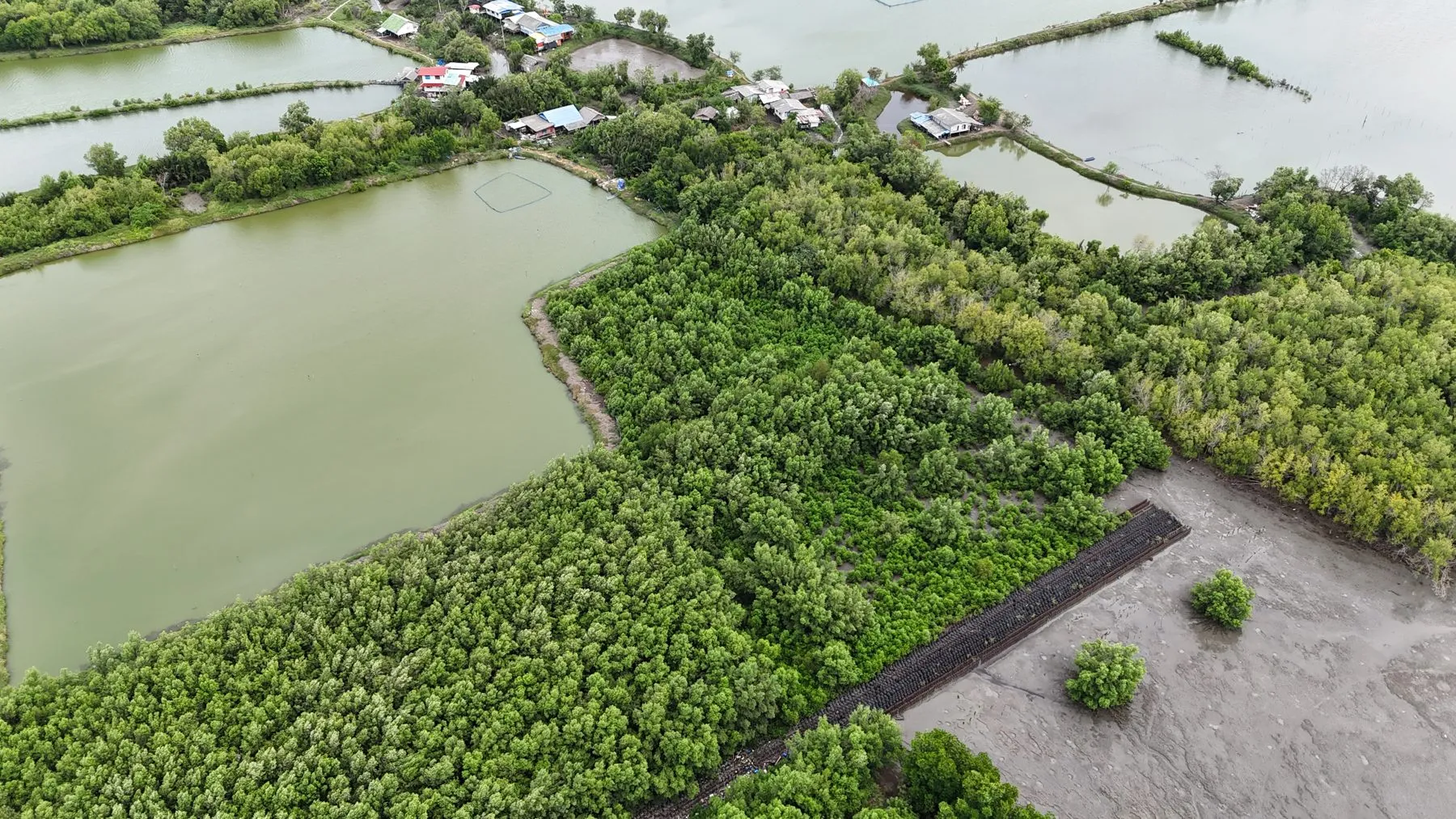
In Phra Samut Chedi, where Bangkok’s great river, the Chao Phraya, meets the Gulf of Thailand, the sea eats away 20 to 60 metres of coast every year. Waves break the mud dikes and flood the shrimp ponds.
A team from Chulalongkorn University has tested a defence that copies nature: structures shaped like mangrove roots, made of wood-plastic composite and rubber. They let water through but create turbulence, so the mud carried by the sea settles behind them.
The caveat comes from an expert who was not involved, Sompratana Ritphring, associate professor of water engineering at Kasetsart University: it is neither a universal nor a permanent fix. “At best, it should be a temporary or enabling engineering component,” he told Mongabay.
Mud where the sea used to take it
The trial ran for 15 months at 11 sites in Samut Prakan province. According to the study, published in Ocean & Coastal Management, the structures trapped between 16 and 88 centimetres of sediment behind them at 10 of those sites.
That new mud made a practical difference: at one site, shrimp farmers were able to rebuild their dikes; at another, landowners went back to planting mangrove seedlings.
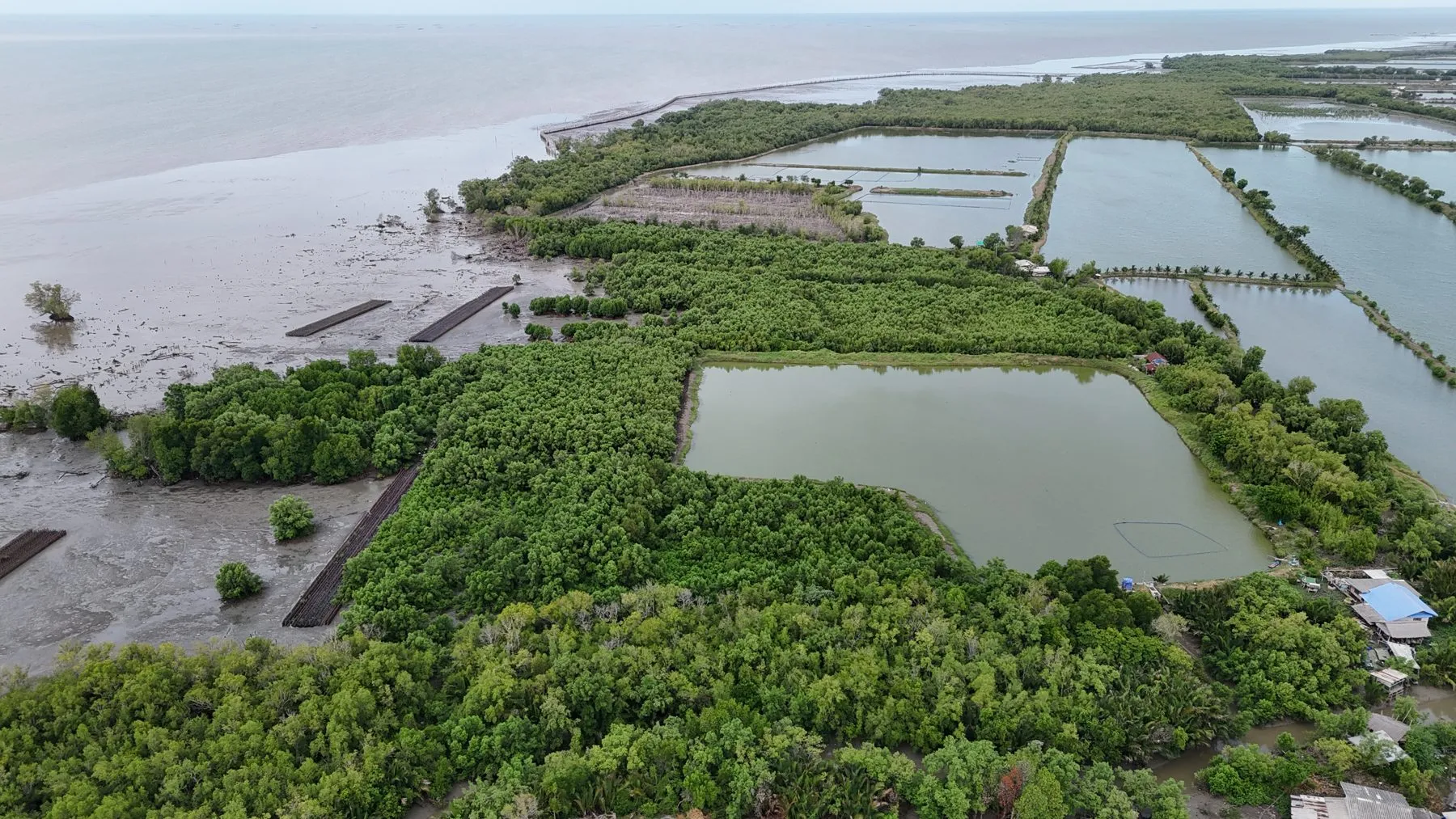
The Samut Prakan coast from the air, with mangroves, ponds and the artificial roots on the mudflat. Photo courtesy of Warit Charoenlerkthawin (Chulalongkorn University).
Copying what roots do, not how they look
The structures imitate the function of roots, not their exact anatomy, Butsawan Bidorn, assistant professor of coastal engineering at Chulalongkorn University and the study’s senior author, told Mongabay. Earlier approaches on that coast, such as mangrove restoration on its own and bamboo fences, had not worked.
Sompratana adds one more point: the structures need monitoring for years so that their materials do not end up as marine litter. The end goal, he says, is a working natural system, with mangroves that protect the coast by themselves.