Barcelona scientists find a weak spot in liver cancer cells
Some liver cancer cells rely on two proteins, CDK16 and CDK18, which cover for each other to repair their DNA. Remove both and the damage builds up, tumour cells stop multiplying and, in mice, tumours shrink. It is a preclinical result from Marcos Malumbres's group at the Vall d'Hebron Institute of Oncology (VHIO), published in PNAS: there is no drug or patient trial yet.
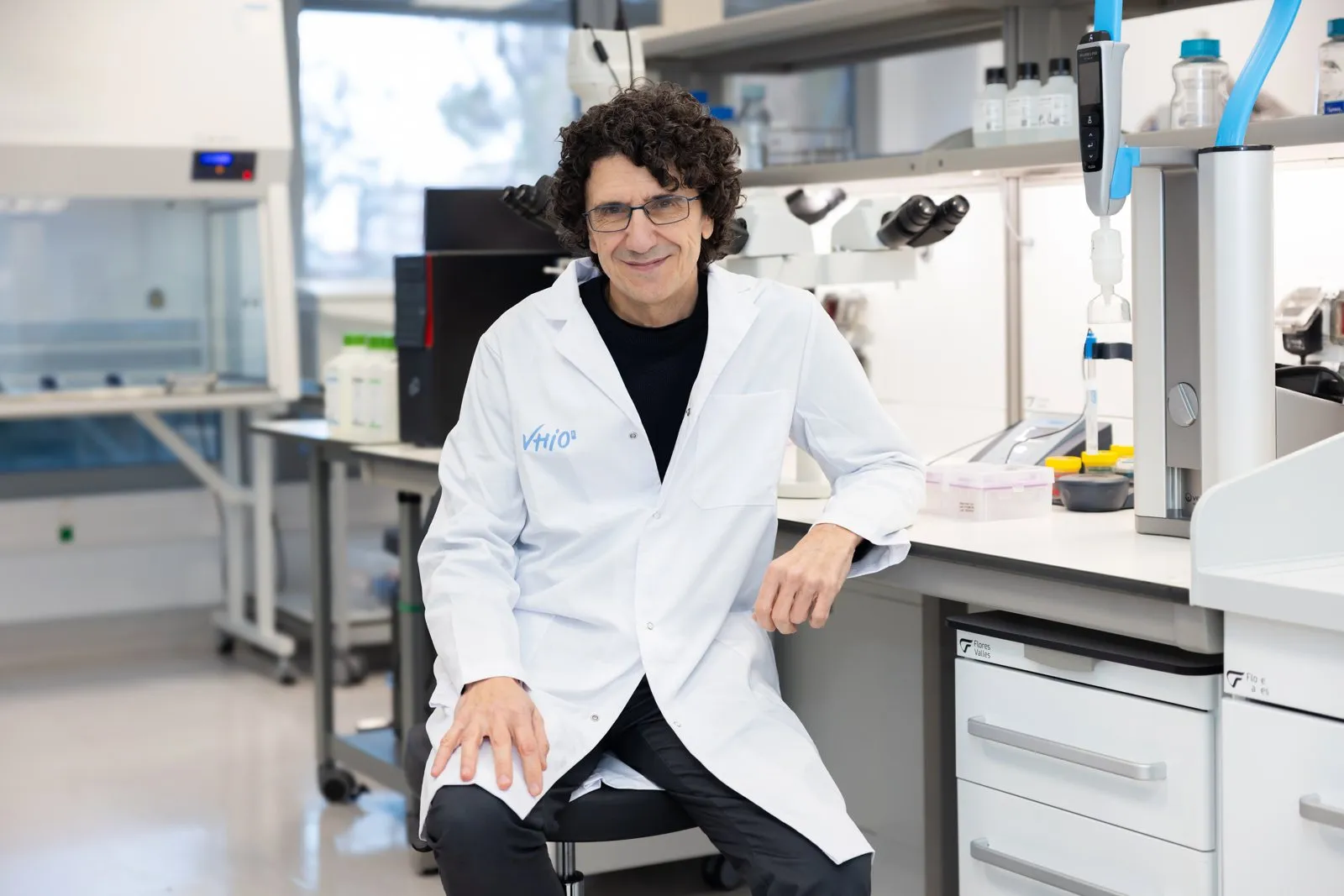
When the researchers took just one of these two proteins away from liver cancer cells, almost nothing happened. The other one stepped in. Only when both were removed did the weak spot appear.
The work, by the Cell Cycle and Cancer Group led by Marcos Malumbres at the Vall d’Hebron Institute of Oncology (VHIO) in Barcelona, is published in PNAS. It was done in cells and mice: there is no drug yet that blocks both proteins, and nothing has been tested in patients.
Two proteins that cover for each other
CDK16 and CDK18 modify parts of the nuclear pores, the gateways that control what goes in and out of the cell’s nucleus. Those changes help DNA repair proteins reach the nucleus and gather where there is damage, according to VHIO.
Without both, repair fails. «Inactivating both removed that protection and led to persistent defects in DNA repair», says Diego Martínez-Alonso, postdoctoral researcher and first author. Tumour cells survive less and stop multiplying. In mice, genetically switching off both proteins halted liver tumour growth and made established tumours regress.
«Analysing them together reveals a dependency that was hidden», says Malumbres. Screens that switch genes off one at a time, the team notes, can miss weak spots like this when a related protein compensates.
What it will take to reach patients
Hepatocellular carcinoma is the most common primary liver cancer in adults, and advanced forms remain hard to treat, according to VHIO. The group has received funding from the “la Caixa” Foundation’s CaixaImpulse programme to develop the idea.
The next step is drugs. «We need to develop better inhibitors and evaluate their efficacy and safety before considering clinical application», Malumbres says.