Six-gene score could help predict survival in acute myeloid leukaemia
Researchers in Barcelona have built a score from the activity of six genes that sorts patients by how their leukaemia is likely to progress. It comes from mouse experiments and records of patients already treated: it is not yet a clinical test and still has to be validated.
Anyone suspected of having acute myeloid leukaemia (AML) already gives a bone marrow sample for testing. A team at the Centre for Genomic Regulation (CRG) in Barcelona suggests looking at just six genes in that sample to get a clearer idea of how each patient will fare. Their score, published on 23 October in Science Advances, is built from mouse experiments and data from patients who have already been treated: it is not yet a test that hospitals can order.
Three genes up, three genes down
AML is a blood cancer whose course varies widely from one patient to the next. The team, led by ICREA research professor Luciano Di Croce and Gianni Gamarra, moved back and forth between mice and patient records, looking for genes that behaved the same way in both. They found six: CARMIL1, HOPX and ALDH1A1 were more active in patients with poor outcomes, while CALR, STAR and PHF19 were less active.
Together they form what the researchers call the PHFScore, which divided patients into groups with sharply different survival prospects. “PHF19 on its own already tells us something about how patients will fare, but combining it with five other genes is a dramatic improvement,” says Di Croce. Measuring six genes, the team notes, is simpler and cheaper than reading a broader genetic profile.
What happens without PHF19
The work began with PHF19, a gene that helps keep other genes switched off as blood cells mature. In mice, cells lacking it stayed stuck in an immature state, took hold more easily when transplanted and largely ignored drugs commonly used to push leukaemia cells to mature.
In data from younger adults treated for AML, those with the lowest PHF19 levels survived for less time and were less likely to go into remission after standard chemotherapy: fewer than half did, compared with up to 85% of those with the highest levels.
Genes nobody had linked to leukaemia
Some of the six genes had never been connected to blood cancer and could become new targets for treatment. “We don’t yet know what they are doing there, which is exactly what makes them worth exploring,” says Gamarra, the study’s first author.
The study took five years, with support from Lars Velten’s group and the CRG’s Genomics and Flow Cytometry units. Before it reaches the clinic, the score will need to prove its value in patients and be turned into a diagnostic test.
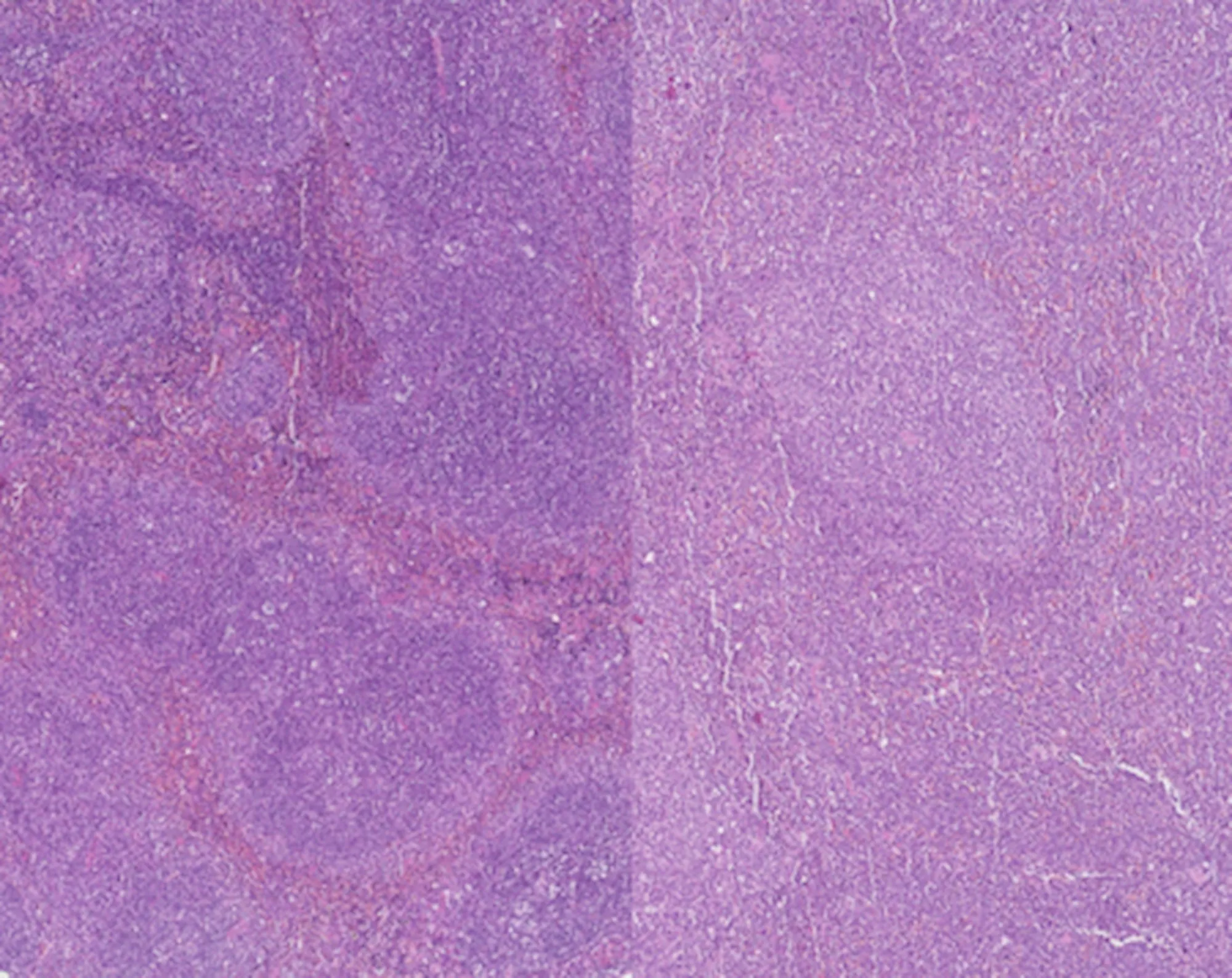
Image courtesy of the Centre for Genomic Regulation (CRG).