Experimental Huntington's drug cuts harmful protein by more than half in early trial
A single injection of brezosiran lowered mutant huntingtin by an average of 60% to 64% in the highest-dose groups, with no signs of inflammation. These are initial data from drugmaker Alnylam's small Phase 1b trial: whether it slows the disease is still unknown.
A single injection into the spinal fluid lowered the protein that damages nerve cells in Huntington’s disease by an average of 60% to 64% in patients given the highest doses of brezosiran. The figures are the first from a Phase 1b trial of 48 people, presented on 23 October by US drugmaker Alnylam at the European Huntington’s Disease Network (EHDN) congress in Krakow. They measure a biological marker: the trial cannot yet show whether the drug slows the disease.
Cutting the message before the protein is made
Huntington’s disease is inherited and gradually destroys nerve cells in the brain, affecting movement, thinking and mood. It is caused by a faulty version of the huntingtin gene, which produces a harmful protein.
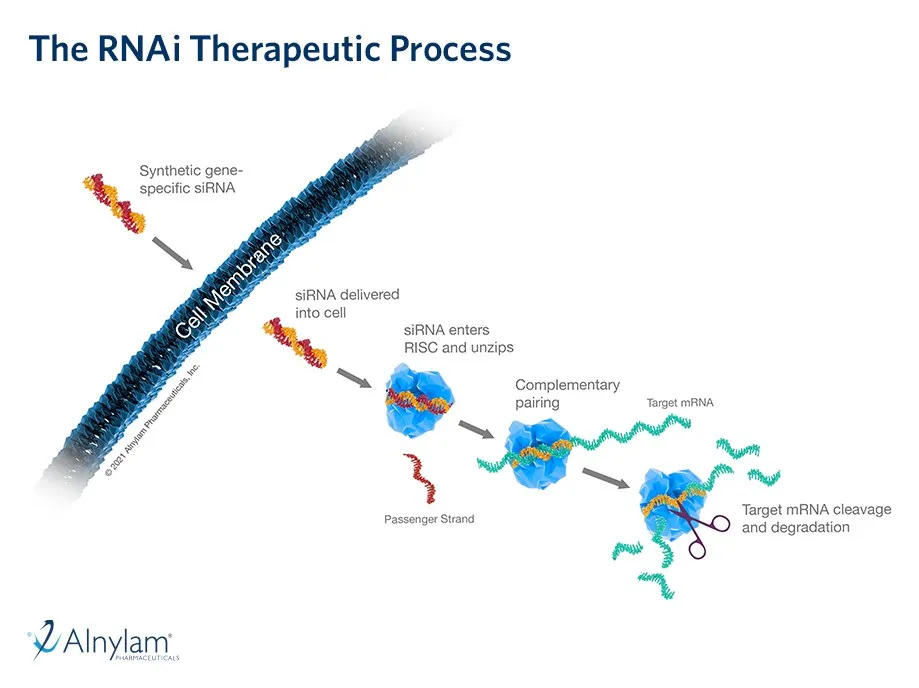
Brezosiran (formerly ALN-HTT02), which Alnylam is developing with Regeneron, is an RNA interference drug: a small molecule that enters cells and triggers the destruction of the messenger RNA carrying the instructions to make huntingtin. It is given by lumbar puncture, into the fluid around the spinal cord.
Up to 83% in one patient
The randomised, placebo-controlled trial is running in Canada, Germany and the UK in adults aged 25 to 70 at early stages of the disease. According to the company’s presentation, the reduction in mutant huntingtin grew with the dose. In the two highest-dose groups (nine patients on the drug in each), the average drop was 60% to 64% three months later, depending on which of two measurement methods is used. The biggest drop in a single patient was 83%.
There were no dose-related increases in inflammation markers, in neurofilament light (a sign of nerve damage) or in the size of the brain’s ventricles. None of the serious adverse events recorded was attributed to the drug; one severe headache was linked to it and resolved.
What we still don’t know
Blair Leavitt, a neurologist at the University of British Columbia and the trial’s principal investigator, called the results “a very promising advance for this program”. But these are early data from a small number of patients, released by the company and not yet published in a scientific journal.
Participants can keep receiving a dose every six months in an open-label extension. Alnylam plans to start a larger placebo-controlled trial in 2027 to test whether brezosiran slows the progression of the disease.
Illustration courtesy of Alnylam Pharmaceuticals.