mRNA therapy helps mouse hearts repair heart attack damage
Adult heart muscle cells barely divide, so the ones lost in a heart attack are never replaced. A University of Cambridge team used an mRNA treatment that wakes them up for a few days so they divide again. In mice, treated hearts pumped around 10% more blood per beat and the improvement lasted at least 12 weeks. So far it has only been tested in mice: it still needs studies in larger animals and a delivery method that would work in people.
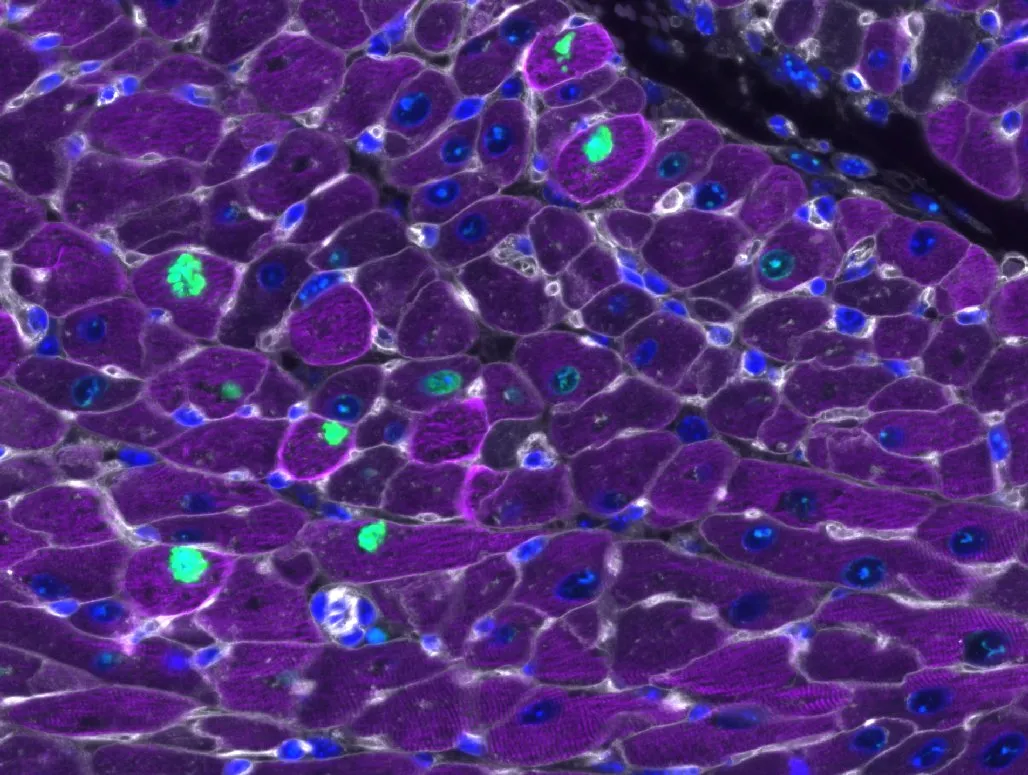
A heart attack can kill up to a billion heart muscle cells, according to the University of Cambridge. In adults they are not replaced: the heart is left weaker, a scar forms and, over the years, heart failure can follow. A Cambridge team has now got those cells dividing again for a few days in mice, repairing part of the damage.
The study, published in Nature Cardiovascular Research, is led by Catherine Wilson at the University of Cambridge and James Hudson at QIMR Berghofer in Brisbane, Australia, with researchers from Bologna, Trieste, King’s College London and AstraZeneca, among others.
Two proteins switched on for just a few days
Heart cells can divide before birth but lose the ability. The team used a modified messenger RNA, the same kind of molecule as mRNA vaccines, carrying instructions to make two proteins: Myc and Cyclin T1. Together they restart cell division.
The trick is that the effect is short-lived. In the study, keeping Myc switched on for too long was lethal for mice after a heart attack; mRNA breaks down on its own, so the signal fades within days and stays in the injected area.
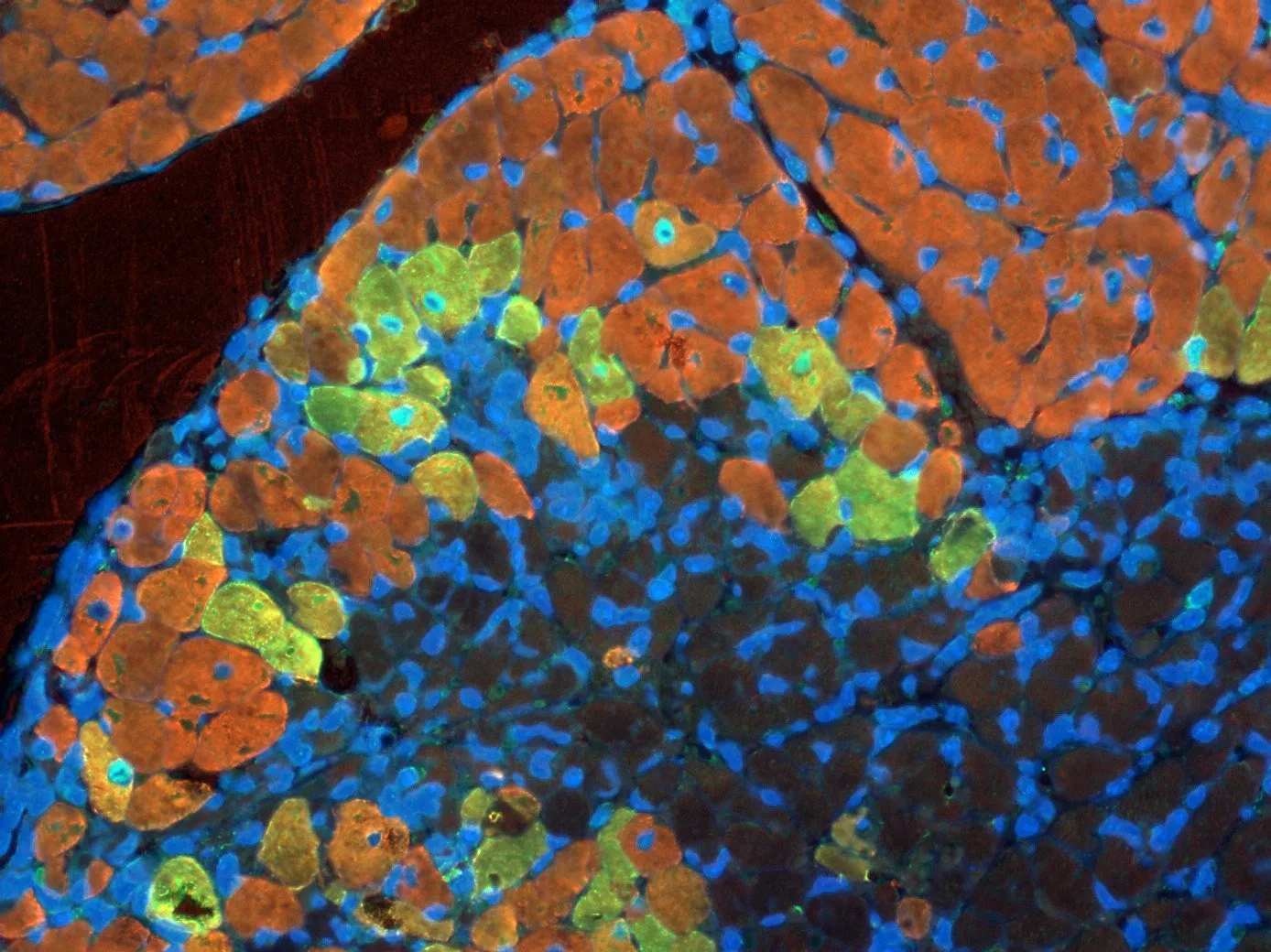 Close-up of a mouse heart 24 hours after injecting the mRNA therapy, modified to glow green: it surrounds the damaged heart cells at the bottom right. Image: University of Cambridge (shared with Happy News of the Day).
Ten points less lost after 12 weeks
After an induced heart attack, the researchers injected the treatment straight into the mice’s hearts. At 12 weeks, ejection fraction (the share of blood the heart pushes out with each beat) had dropped by 16.1 points in control mice and by 7.1 in treated ones. The university sums it up as around 10% more blood pumped per beat. They saw no tumours or abnormal growth in other organs at 12 weeks.
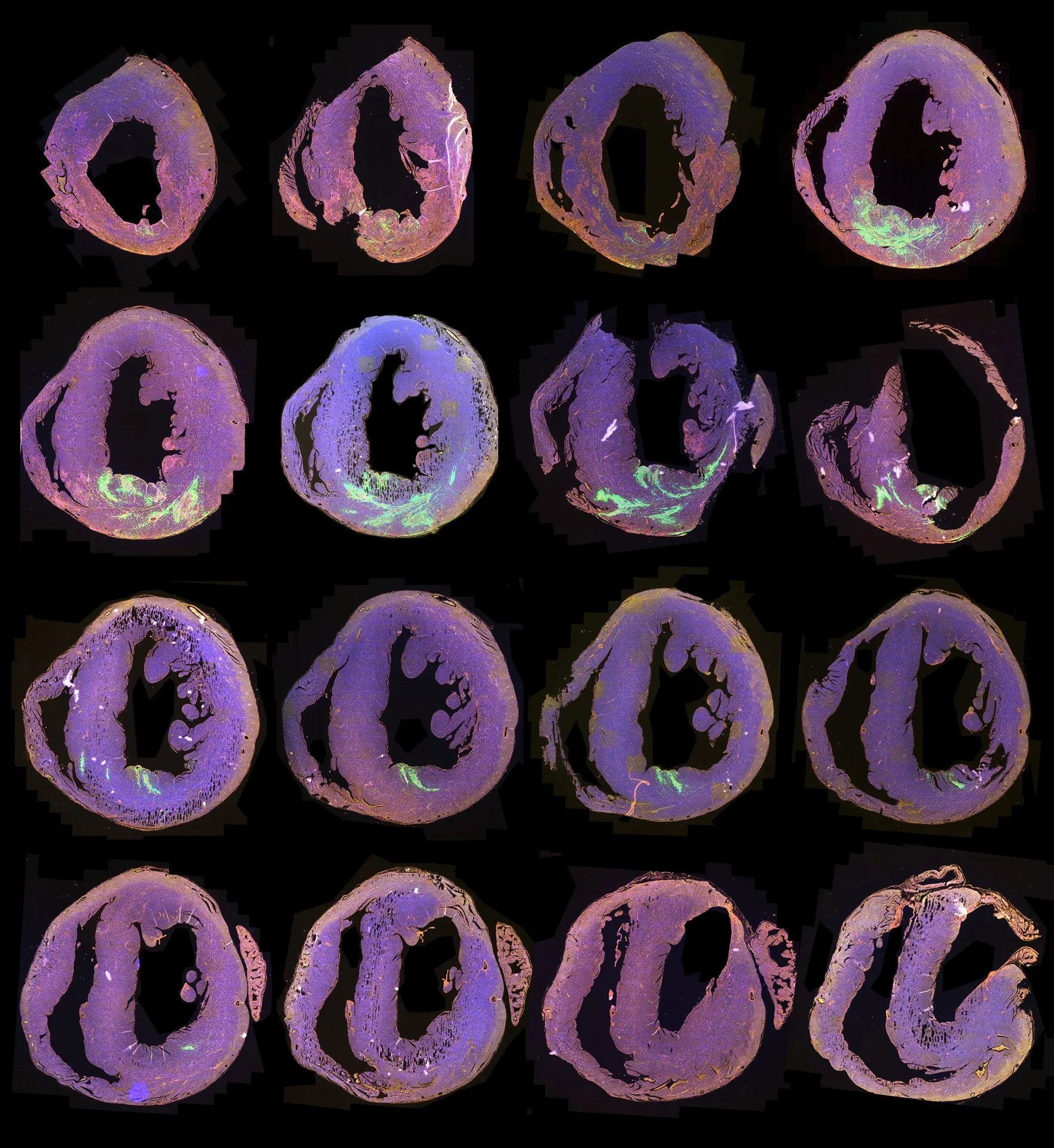 Cross sections of a whole mouse heart after injection with the mRNA therapy modified to glow green, giving a 3D view of where it reaches. Image: University of Cambridge (shared with Happy News of the Day).
“We’re not just treating the symptoms of heart failure — this approach could help the heart to repair itself,” says Wilson. Professor Bryan Williams, chief scientific and medical officer at the British Heart Foundation, calls getting the heart to repair itself “the holy grail for cardiologists”, while noting that “the research is in mice, and still at an early stage”.
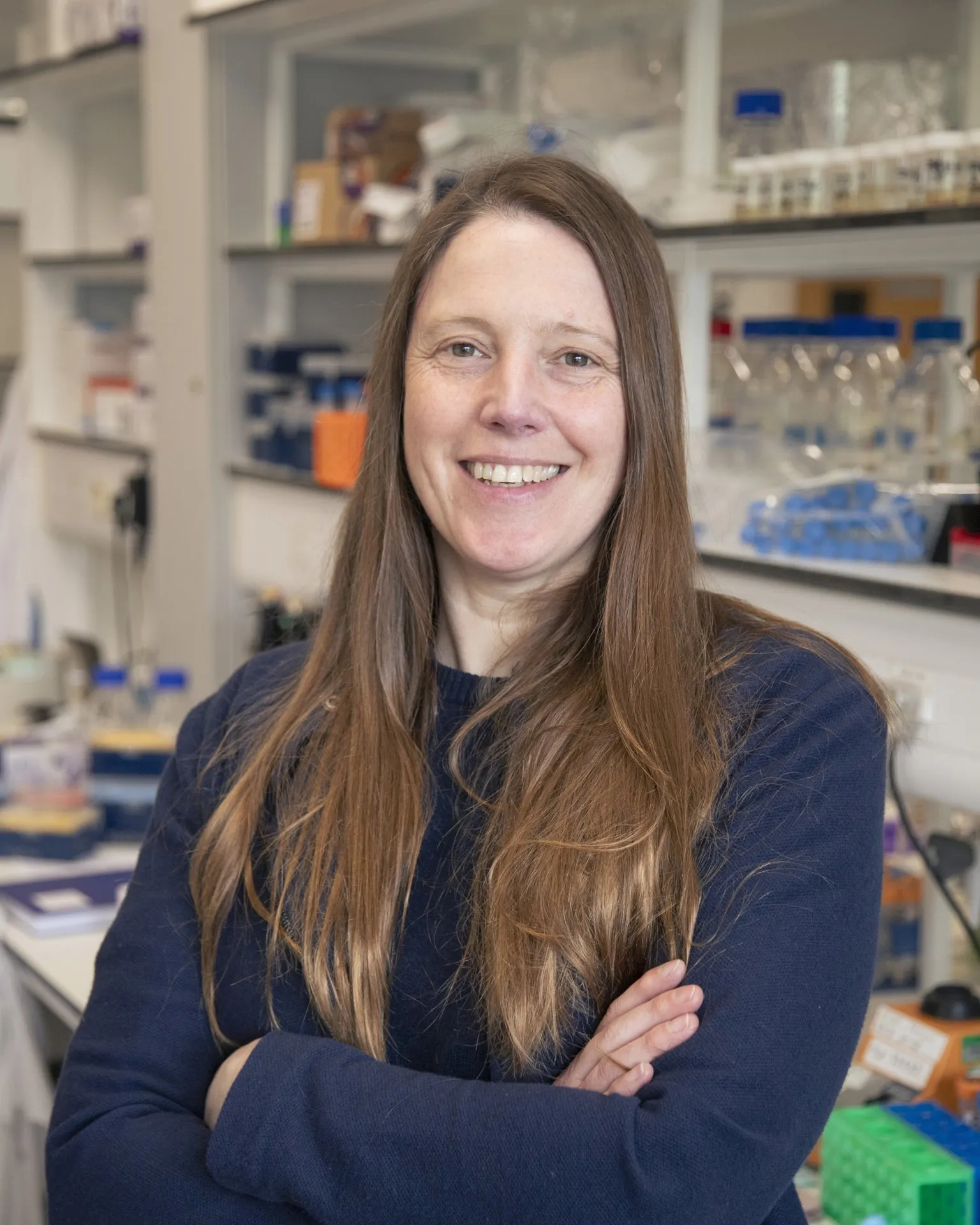 Dr Catherine Wilson, Associate Professor at the University of Cambridge’s Department of Pharmacology and Gurdon Institute, co-senior author of the study. Photo: University of Cambridge (shared with Happy News of the Day).
What is still needed before patients
The paper sets out the next steps itself. The reagent used to get the mRNA into the heart could not be used in patients, so a new delivery method is needed. Before any clinical trial, long-term safety, especially the risk of heart rhythm problems, has to be tested in animals whose hearts resemble ours, such as pigs. The British Heart Foundation is funding the team to carry on with that work.
Sources
- Boikova, Wilson et al. · A transient modified mRNA encoding Myc and Cyclin T1 improves cardiac function after myocardial injury · Nature Cardiovascular Research (2026)
- Talker News · Treatment ‘reawakens’ heart cells to repair damage after attack (9 Nov 2026), with the Cambridge release and British Heart Foundation comments
- News-Medical · New mRNA therapy reawakens heart muscle cells to repair damage (9 Nov 2026)