First international guideline for phage therapy gives doctors a playbook against superbugs
Twenty medical societies, 18 international experts and two patient organisations have signed more than 60 recommendations in Nature Medicine on using phages, viruses that only attack bacteria, when antibiotics fail. Phage therapy is a case-by-case option, not a standard treatment: its effectiveness has not yet been proven in controlled trials, although 77% of patients improved in a Belgian series of 100.
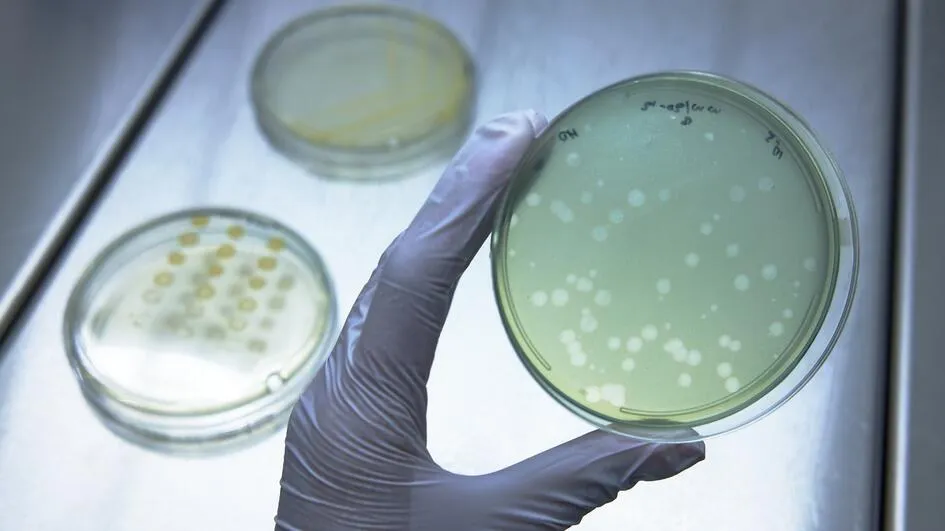
When an infection no longer responds to any antibiotic, some patients still have a little-known option: bacteriophages, or phages, viruses that infect and kill bacteria and leave human cells alone. Until now, each hospital that used them followed its own rules. Now there is a shared rulebook.
More than 60 recommendations from 20 medical societies
The guideline has been published in Nature Medicine. It was led by the German Society for Infectious Diseases (DGI), with 20 scientific societies, 18 international experts, including representatives of regulators, and two patient organisations, according to the German Center for Infection Research (DZIF). It sets out more than 60 recommendations on choosing and testing the right phage, manufacturing it under quality control, giving it to patients and following up each case.
A key step is the “phage match”. Phages only work against certain species or strains of bacteria, so before treatment begins doctors must check, as close to the start as possible, that the chosen phage kills the bacteria that patient has at that moment. The guideline also asks for every treated case to be logged in registries so the field can learn from them.
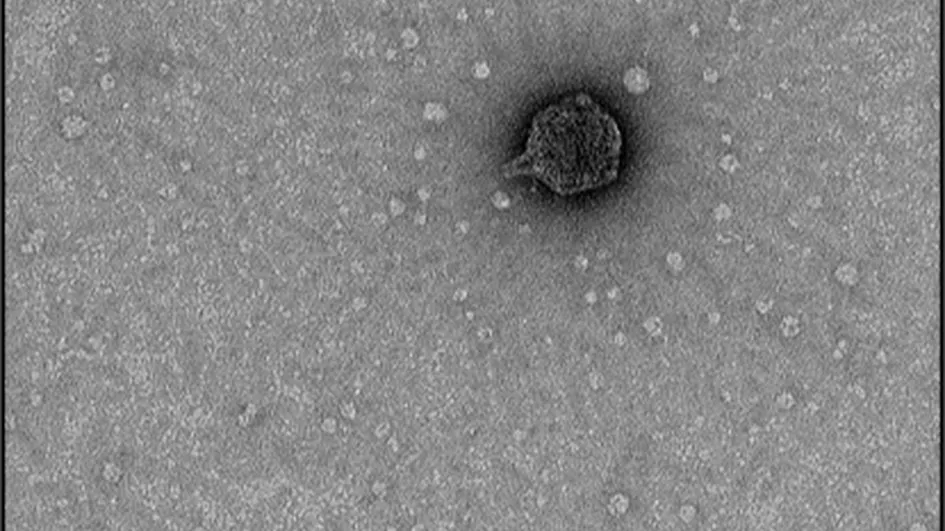 A phage that attacks the bacterium Pseudomonas aeruginosa, seen under an electron microscope. Image: © Würstle S. et al., Scientific Reports 14, 2657 (2024), CC BY 4.0 (courtesy of DZIF).
What still has to be proven
The authors are clear: phage therapy is an option to be weighed for each patient when standard treatments do not work or cannot be used, not a standard treatment. Studies so far suggest it is safe when phages are made to proper quality standards, but its effectiveness has not been proven in controlled clinical trials.
There are encouraging signs. In a series of 100 patients treated in Belgium, 77% improved and in 61% the bacteria could no longer be detected, according to the DZIF, which stresses that such data do not replace trials.
Ten patients treated in Frankfurt since February
Frankfurt’s university hospital already works this way. Since February 2026 it has successfully treated ten patients in line with the guideline, using phages chosen for each case against bacteria such as Pseudomonas aeruginosa and Staphylococcus aureus. According to the DZIF, phages can be given intravenously, inhaled, as a nasal spray or as a sterile gel.
“The guideline gives doctors, pharmacies and regulators a common basis for bringing phage therapy into clinical practice safely and responsibly,” says Silvia Würstle, the paper’s corresponding author. It is valid until June 2030, and a committee will check every year whether it needs updating.