Rural Brazilian student wins Mostratec with paving blocks made from recycled paper and coconut fibre
Thiago Santos Ferreira, 18, from rural Água Fria in the Brazilian state of Bahia, took first place in Engineering and Urban Planning at Mostratec 2026, the International Science and Technology Fair in Novo Hamburgo. His project, Biocimento, developed with three classmates at a state vocational school, has already been used to build a free pavement for a neighbour. The prize earns him a place at ISEF in Los Angeles in May 2027.
“I’m from rural Água Fria, and this means an enormous amount to me, my school and my community.” That was Thiago Santos Ferreira, 18, after winning first place in Engineering and Urban Planning at Mostratec 2026, the International Science and Technology Fair held every year in Novo Hamburgo, in the southern state of Rio Grande do Sul, according to Bahia’s State Department of Education.
Thiago is studying for a technical qualification in business administration at CETEP Sisal, a state vocational school in Serrinha, in inland Bahia. His prize is a credential for the Regeneron International Science and Engineering Fair (ISEF), the world’s largest pre-university science fair, in Los Angeles in May 2027.
Waste paper, leftover coconut fibre
The project, called Biocimento, aims to make cheap building materials, such as paving blocks, from recycled paper and coconut fibre waste mixed with cement. Thiago developed it with classmates Guilherme Chagas Paiva, Felipe Macedo Oliveira and Maria Eduarda Costa Meireles and their teacher, Thales Lima do Nascimento.
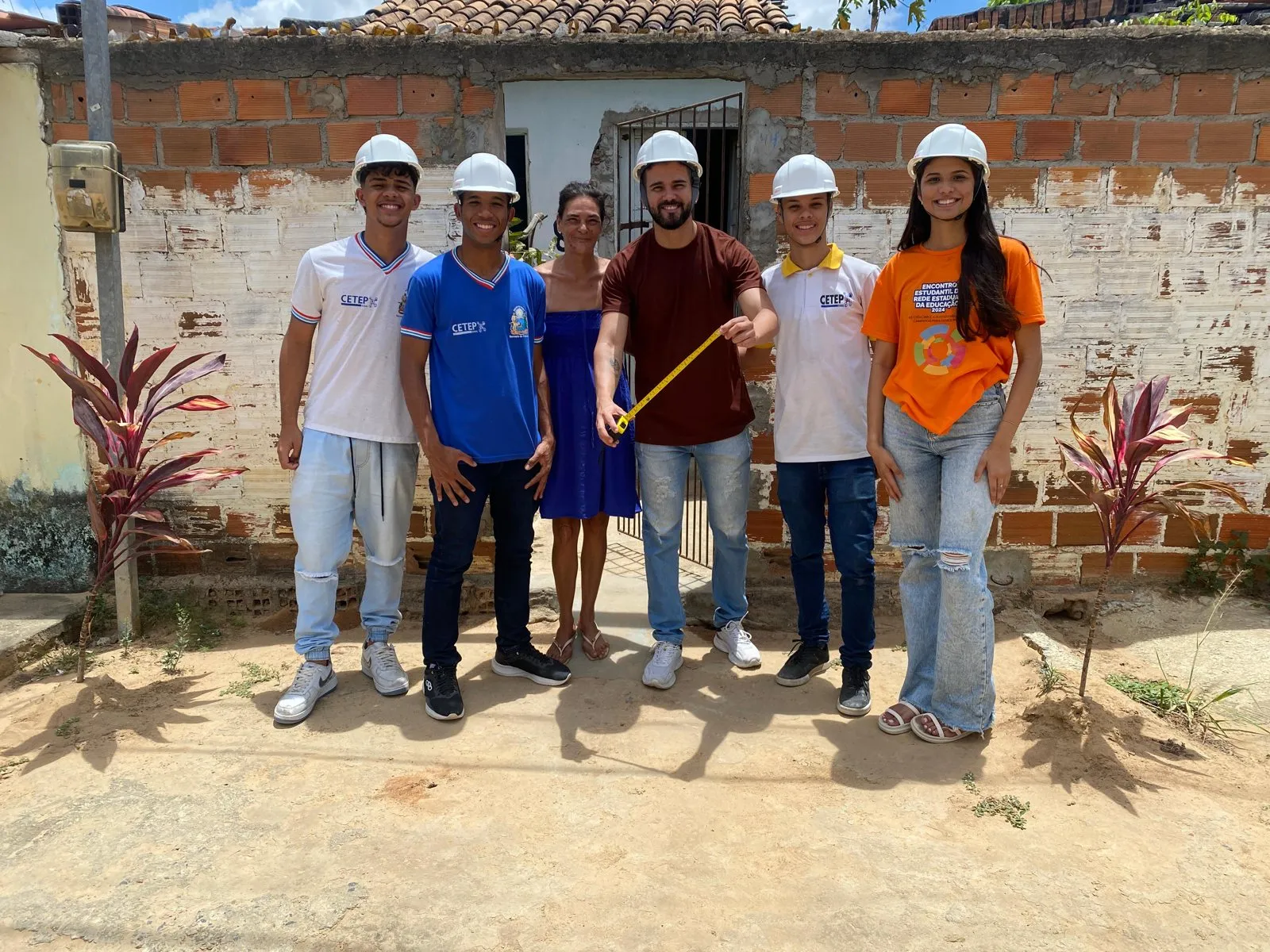
The Biocimento students and their teacher, Thales Lima do Nascimento, with the neighbour whose pavement they built in 2025. Photo: Thales Lima / Bahia State Department of Education.
A free pavement for Dona Unha
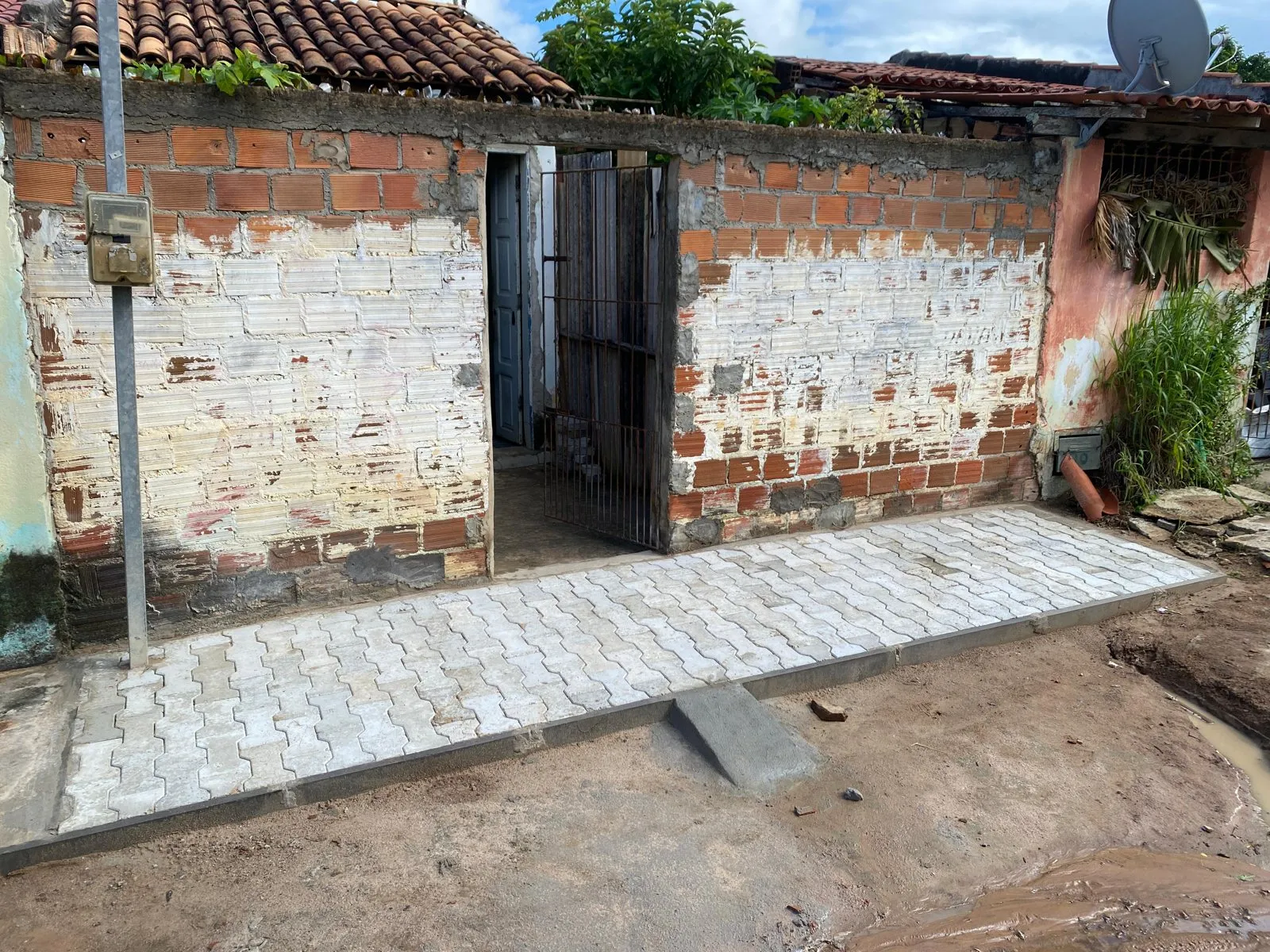
The blocks have not stayed at science fairs. In 2025 the four students made 400 blocks in two months in the school’s construction lab, and they were used to build a free pavement for Uhnatamara Evangelista Damião, who lives near the school. Only the cement was bought, with the school’s help; the school also hired a bricklayer, the department said at the time.
“Dona Unha was so happy. Her eyes were shining,” Thiago recalled. The team planned to build more pavements for local families who cannot afford them.
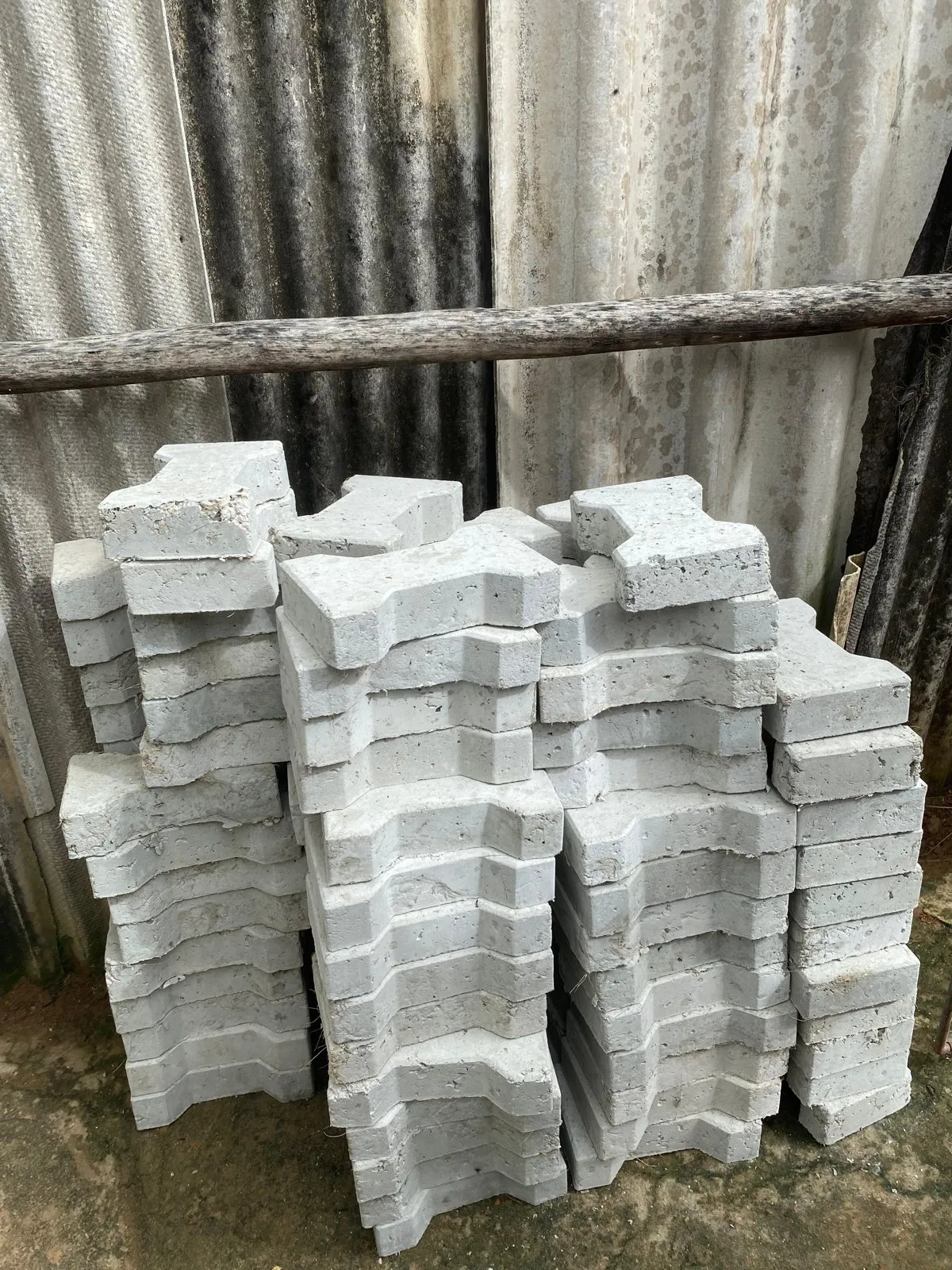
Biocimento blocks made from recycled paper and coconut fibre. Photo: Thales Lima / Bahia State Department of Education.
A growing list of prizes
The project started at Bahia’s school science fair (FECIBA). In 2026 it has also won second place at FEBRACE, the Brazilian science and engineering fair, the Educators category of the LED prize, and first place in Applied Social Sciences at the Milset Brasil national expo. A Sebrae entrepreneurship award has earned it a place at Exporecerca Jove 2027 in Barcelona.
For his teacher, taking a student from Bahia’s semi-arid backlands to a fair like this shows that “the science produced in our schools can transform lives and cross borders”. Next stop: Los Angeles, in May.
Sources
- Bahia State Department of Education · Rural Serrinha student wins first place at Mostratec 2026 (3 Nov 2026, in Portuguese)
- Bahia State Department of Education · CETEP Sisal students turn waste into free eco-friendly pavements (23 Jun 2025, in Portuguese)
- Correio · Student from inland Bahia wins first place at international science fair (in Portuguese)
- Só Notícia Boa · State school student from Bahia wins international fair with sustainable cement (6 Nov 2026, in Portuguese)