Ibero-American countries back charter to make studying across the region easier
Higher education ministers from across Ibero-America approved the Ibero-American Academic Mobility Charter in Alicante, aiming for faster recognition of degrees and credits. Take-up is voluntary: each country will decide how far and how fast to go. Heads of state are due to adopt it at the Madrid summit on 4–5 November.
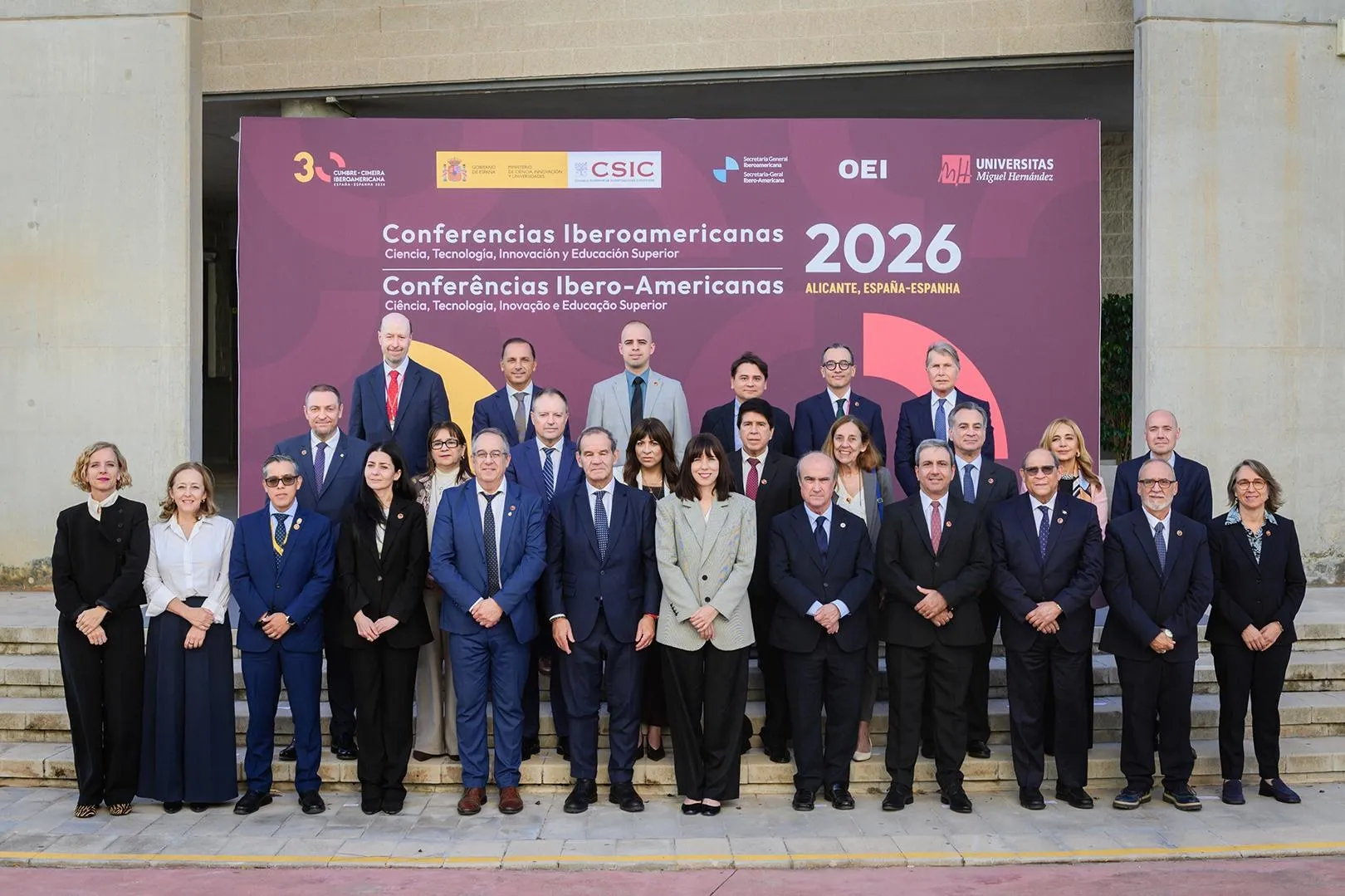
For many students in Ibero-America, studying in a neighbouring country means more paperwork than heading outside the region altogether. To change that, higher education ministers and senior officials from across Ibero-America approved the Ibero-American Academic Mobility Charter on 21 October 2026, at a meeting in the Alicante Institute of Neurosciences, a centre run by Spain’s CSIC research council and Miguel Hernández University.
The charter sets out shared principles and commitments so that students can enrol at university, go on exchange, transfer their records, take a double degree or a postgraduate course in another country of the region with “swift and secure” recognition, according to Spain’s Ministry of Science, Innovation and Universities. But it binds no one: each country will decide voluntarily how far, with whom and how fast to go, in line with its own laws and university autonomy.
Agree on credits before packing your bags
The tools it proposes include:
- Presuming that degrees from recognised institutions are equivalent, unless there is a substantial, justified difference.
- A study agreement signed before departure, so recognition is not negotiated on return.
- Reference deadlines for recognising credits when students transfer.
- An Ibero-American diploma supplement and shared tables for converting grades.
- A regional digital platform with information on academic mobility.
Lots of students, little movement
According to 2019 UNESCO figures cited by the ministry, Ibero-America has 34.1 million higher education students, 30% more than in 2013. Yet only around 1.3% of students in Latin America and the Caribbean study abroad, less than half the global average, and many of those who do go to North America or Europe.
“A university can change a life, but when that opportunity reaches thousands of people, it also changes a country,” said Spain’s science and universities minister, Diana Morant, who hosted the meeting.
What comes next
The charter goes to the 30th Ibero-American Summit of Heads of State and Government in Madrid on 4–5 November, where it is due to be adopted as one of the summit’s main outcomes. The Organisation of Ibero-American States (OEI) will oversee follow-up, with the Ibero-American General Secretariat (SEGIB). The Alicante Declaration also sets up two working groups, on micro-credentials and on staff mobility and joint degrees, which will report at the next ministerial meeting.
Photo: Ministerio de Ciencia, Innovación y Universidades.