Two new howler monkey species found in the Amazon, the first since 1941
A team led by the University of Salford in the UK compared the DNA of 83 howler monkeys with museum specimens and described two species no one had told apart: Alouatta iroi and Alouatta matogrossensis. The Amazon's great rivers kept them apart for millions of years. The caveat: neither has had its extinction risk assessed yet, and the second lives in southern Amazonia, one of the fastest-deforesting regions in the world.
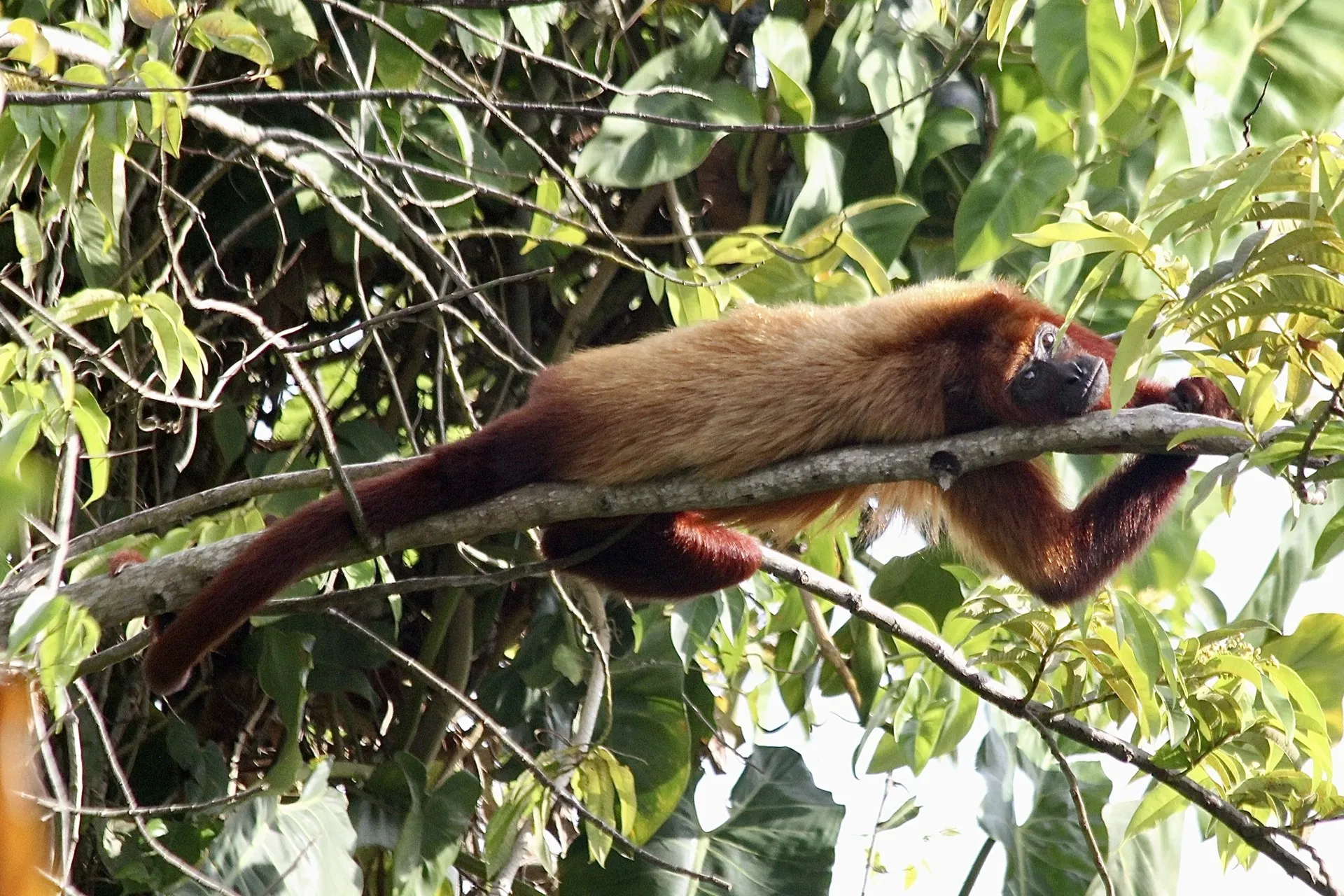
Not since 1941, when Alouatta puruensis was described, had anyone named a new howler monkey. Now there are two at once: Alouatta iroi and Alouatta matogrossensis, two Amazon populations that had been mistaken for other species.
They were described by an international team led by biologist Romina Batista and Professor Jean Boubli of the University of Salford, in a study published this month in Communications Biology. The researchers compared the DNA of 83 howler monkeys from across the Amazon basin and studied the anatomy of museum specimens. With the two new species and a former subspecies raised to species level, the genus now has 16 species.
Rivers that split monkeys apart
According to the University of Salford, the Amazon, the Rio Branco and the Xingu have acted as barriers for millions of years. Monkeys on each bank stopped mixing and became separate species. A. iroi lives in the northern Brazilian Amazon, Guyana and Venezuela, according to wissenschaft.de, and A. matogrossensis in Brazil, south of the lower Amazon.
“Our study shows that the Amazon still holds remarkable biological secrets,” says Batista. “Understanding the different species in existence is the first step towards protecting them.”
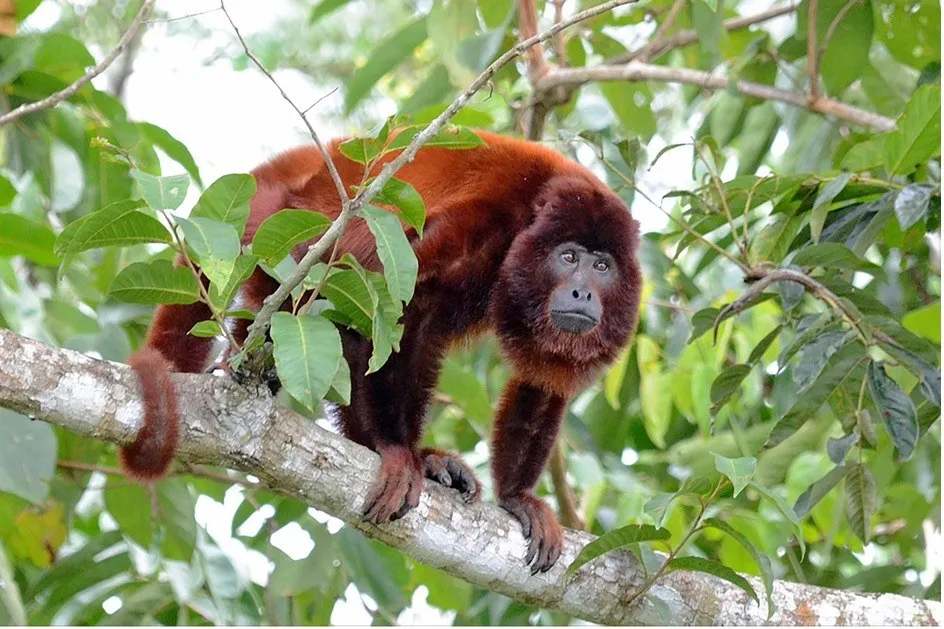
Alouatta matogrossensis, the other new species. Photo: Bruno Rennó, courtesy of the University of Salford.
Bridges over the roads
Howler monkeys eat mostly leaves and spread seeds through the forest. But many of their populations are small and isolated, and logging, fire and climate change are squeezing them. A. matogrossensis lives in one of the regions losing forest fastest anywhere in the world.
“This discovery comes at a critical time,” says Boubli, who hopes the study will help conservation groups identify the most vulnerable populations.
Some are already on it. The Reconecta Project, led by conservationist Fernanda Abra, links forest fragments so that tree-dwelling animals are not killed by traffic when they cross roads. Its cameras have caught a female of the new species crossing one of those bridges with her baby on her back.
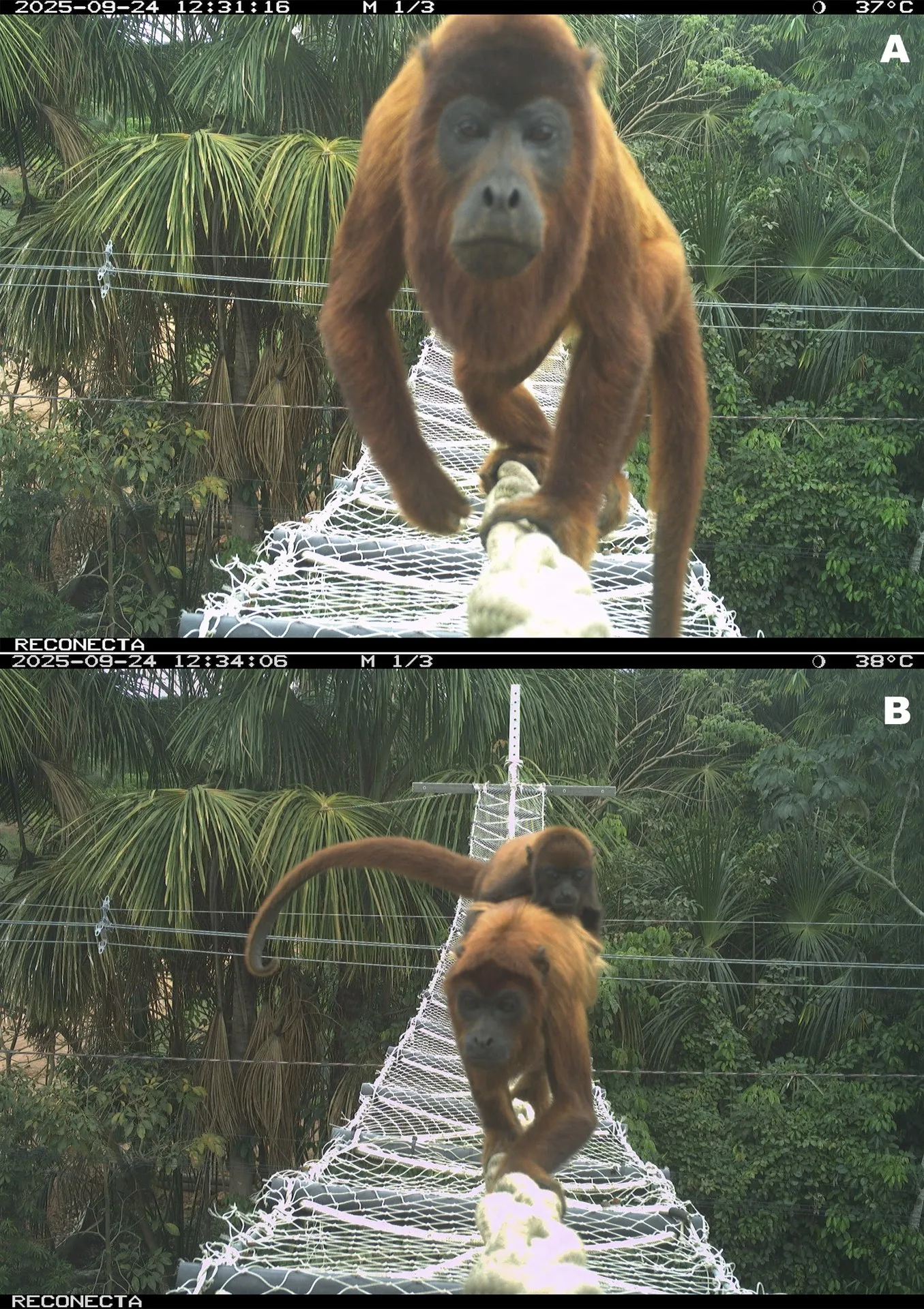
A female Alouatta matogrossensis carrying her baby crosses the artificial canopy bridge in Alta Floresta, Mato Grosso, Brazil. Photo © Reconecta Project / Smithsonian’s National Zoo & Conservation Biology Institute, courtesy of the University of Salford.
The next step is to assess their extinction risk, which has not yet been measured for either of the new species.