Galápagos is home to 524 kinds of bees, ants and wasps, six times more than previously listed
An inventory by the Charles Darwin Foundation, Ecuador's Escuela Superior Politécnica de Chimborazo and the National University of Colombia brings together 21,364 records and raises the islands' tally of bees, ants and wasps to 524 species and morphospecies; the most complete list, from 2017, had 84. Many have yet to be given a scientific name, and almost half of the named ones were introduced.
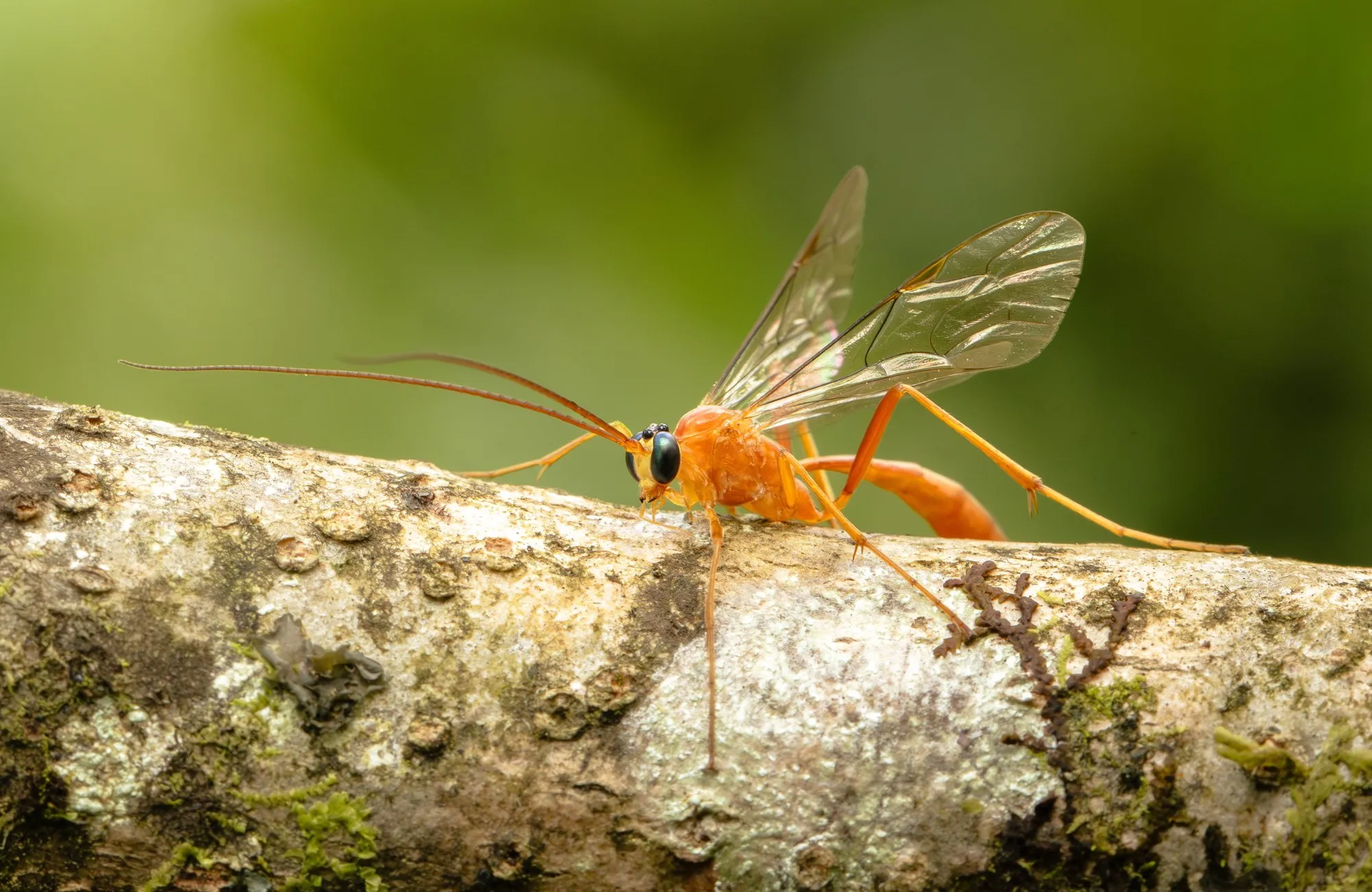
The smallest is half a millimetre long. The tiny wasps of the family Mymarommatidae are among the 524 species of bees, ants and wasps that an Ecuadorian and Colombian team has documented in the Galápagos Islands, in a study published in the journal ZooKeys.
In 1966, 31 species of this insect order, the Hymenoptera, were known on the islands. Henri W. Herrera and John Heraty’s 2017 list reached 84, and later studies took it to 111. The new inventory brings together 21,364 records, from a microwasp collected on Floreana in 1959 to sampling in 2025, according to the Ecuadorian newspaper El Comercio.
The caveat is in the number: of the 524, only 137 have a species name; the rest are morphospecies, clearly distinct but still awaiting identification. Of the named species, 44.5% were introduced and 30 are found nowhere else.
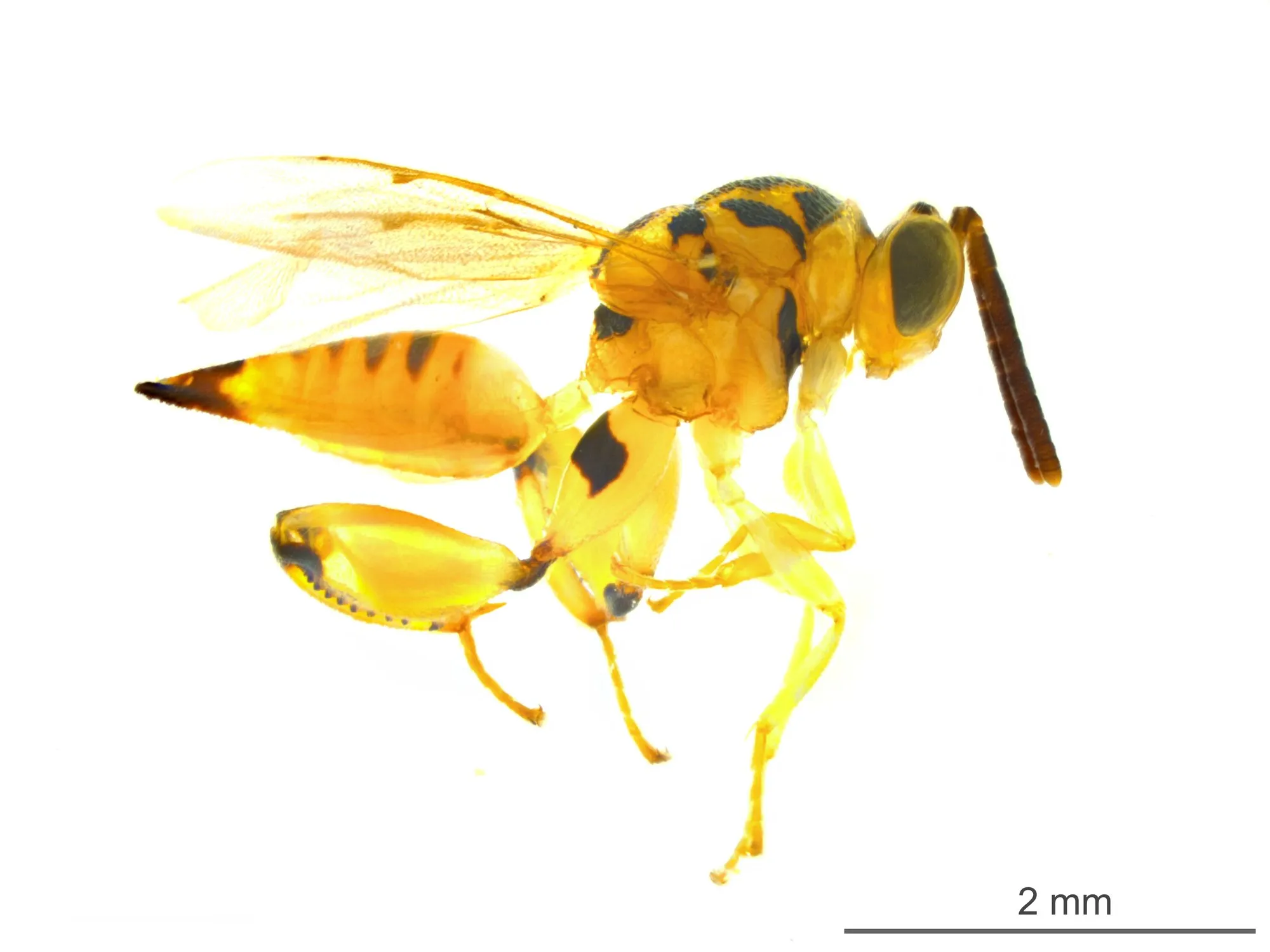
A Conura femorata microwasp under the stereomicroscope. Photo courtesy of the Charles Darwin Foundation: Patricio Picón Rentería / CDF.
Ten islands, eight days on each
Fieldwork took place in 2018, 2019 and 2021 on the ten largest islands. The main tool was the Malaise trap, a tent-like mesh that intercepts flying insects: of the 174 species recorded by a single method, 129 were caught in one.
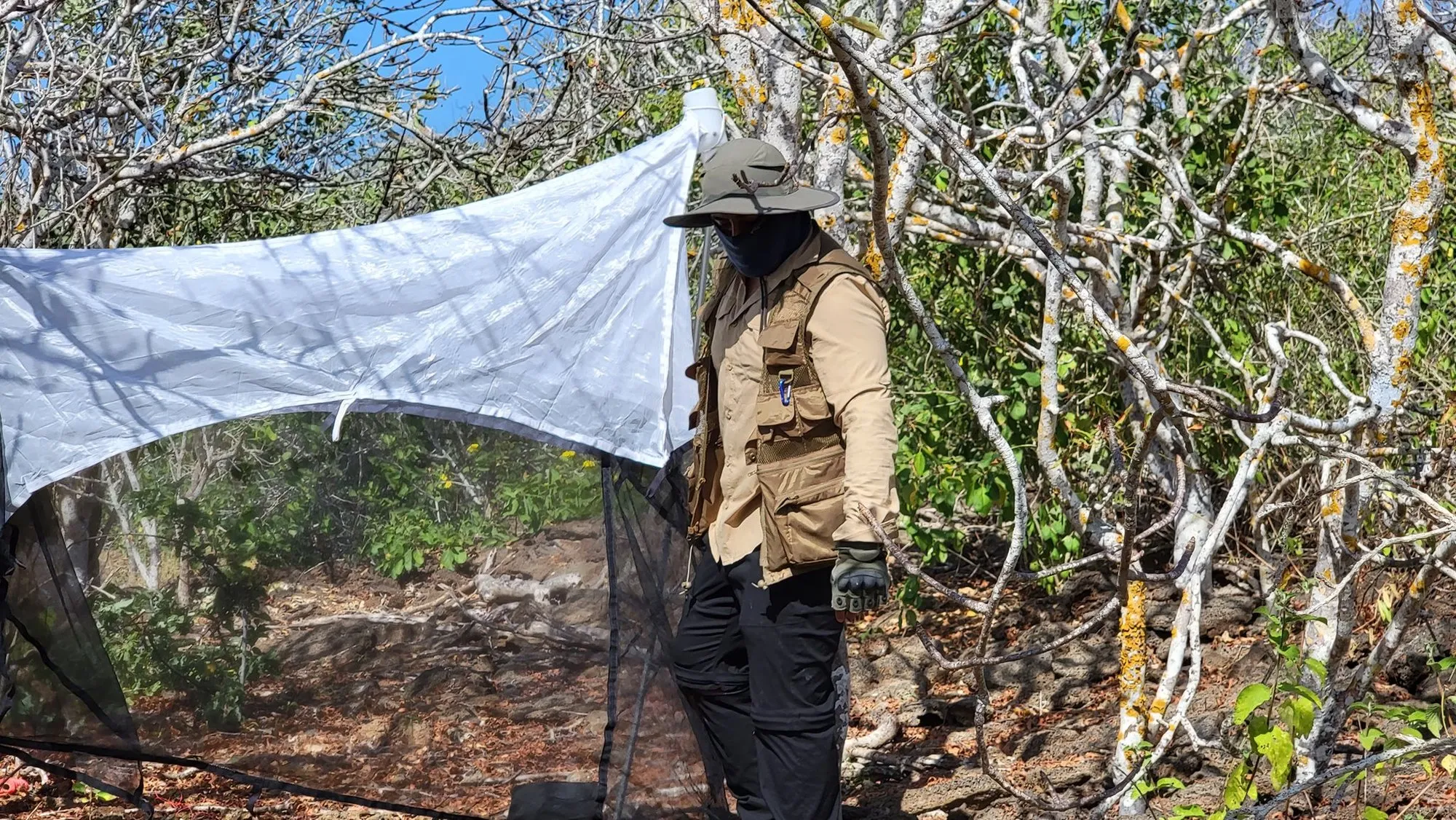
A Malaise trap on Genovesa Island. Photo courtesy of the Charles Darwin Foundation: José Avendaño.
The study records 20 species, 134 genera and 11 families in Galápagos for the first time. One was new to science: the microwasp Ablerus byroni, described in 2024 and found on Santa Cruz, Isabela and Santiago. Most are parasitoids, insects that keep other populations in check, crop pests included.
“We are not simply counting wasps”
The lead author is Ecuadorian entomologist Patricio Picón-Rentería, of the Charles Darwin Foundation, and the project is led by Herrera, of the Escuela Superior Politécnica de Chimborazo. “We are not simply counting wasps,” Picón-Rentería told El Comercio, pointing to their value as natural pest control. Fernandina, Pinta and Genovesa have no invasive ants; on the other islands, the team recommends monitoring and early detection.
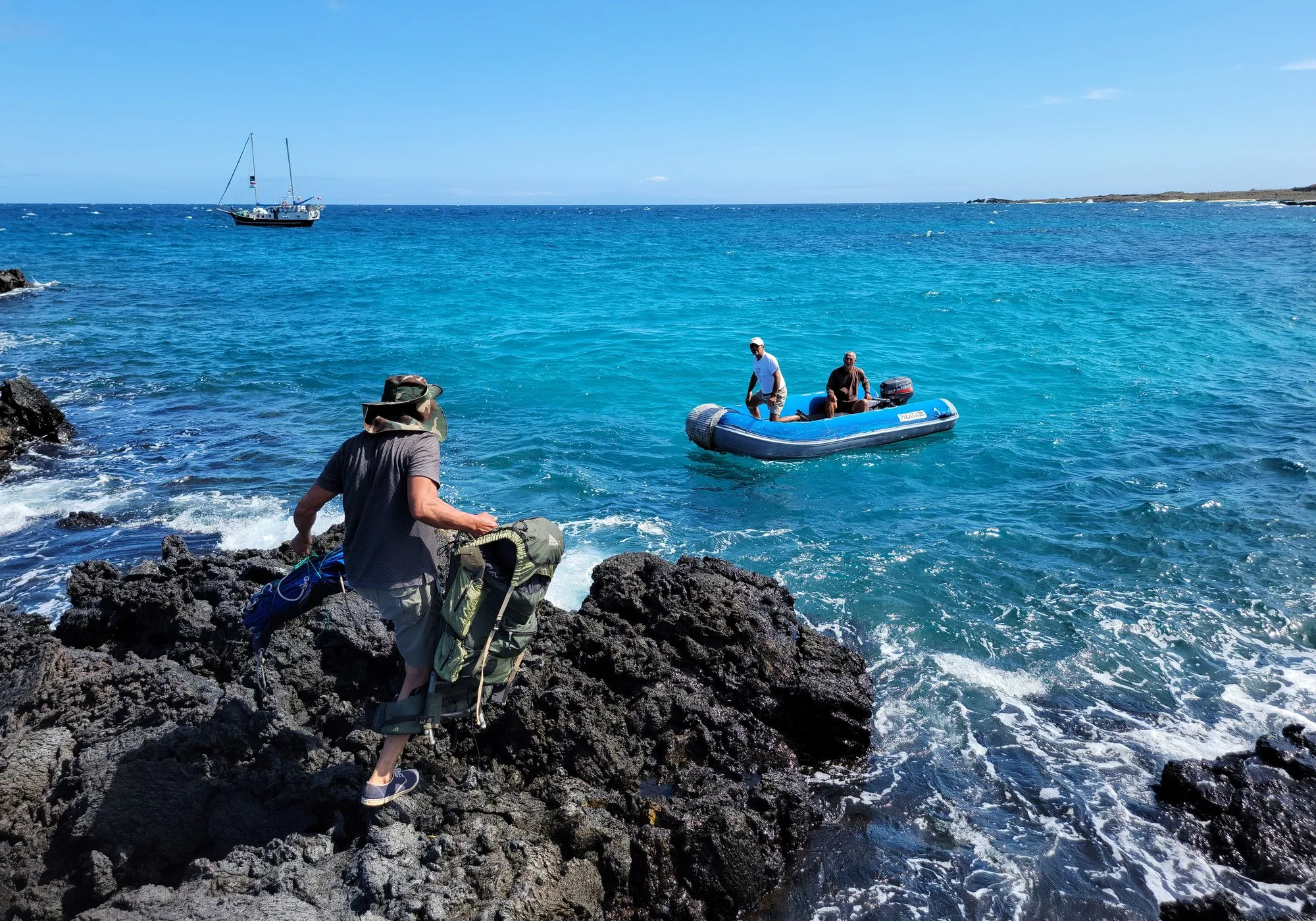
The team leaves Pinta Island for the next one. Photo courtesy of the Charles Darwin Foundation: Patricio Picón Rentería / CDF.
The data will be added to DataZone, the Foundation’s open biodiversity database.