Beavers return to the Loch Ness area after 500 years
A family of six beavers has been swimming in a lochan at Dundreggan, in the Loch Ness catchment, since 4 November. It is the first release of the Ness Beaver Project, through which Trees for Life and Beaver Trust plan to return at least 15 beaver families to the area over three years under a NatureScot licence. Beavers were last recorded beside the loch about 500 years ago, before hunting wiped them out in Scotland.
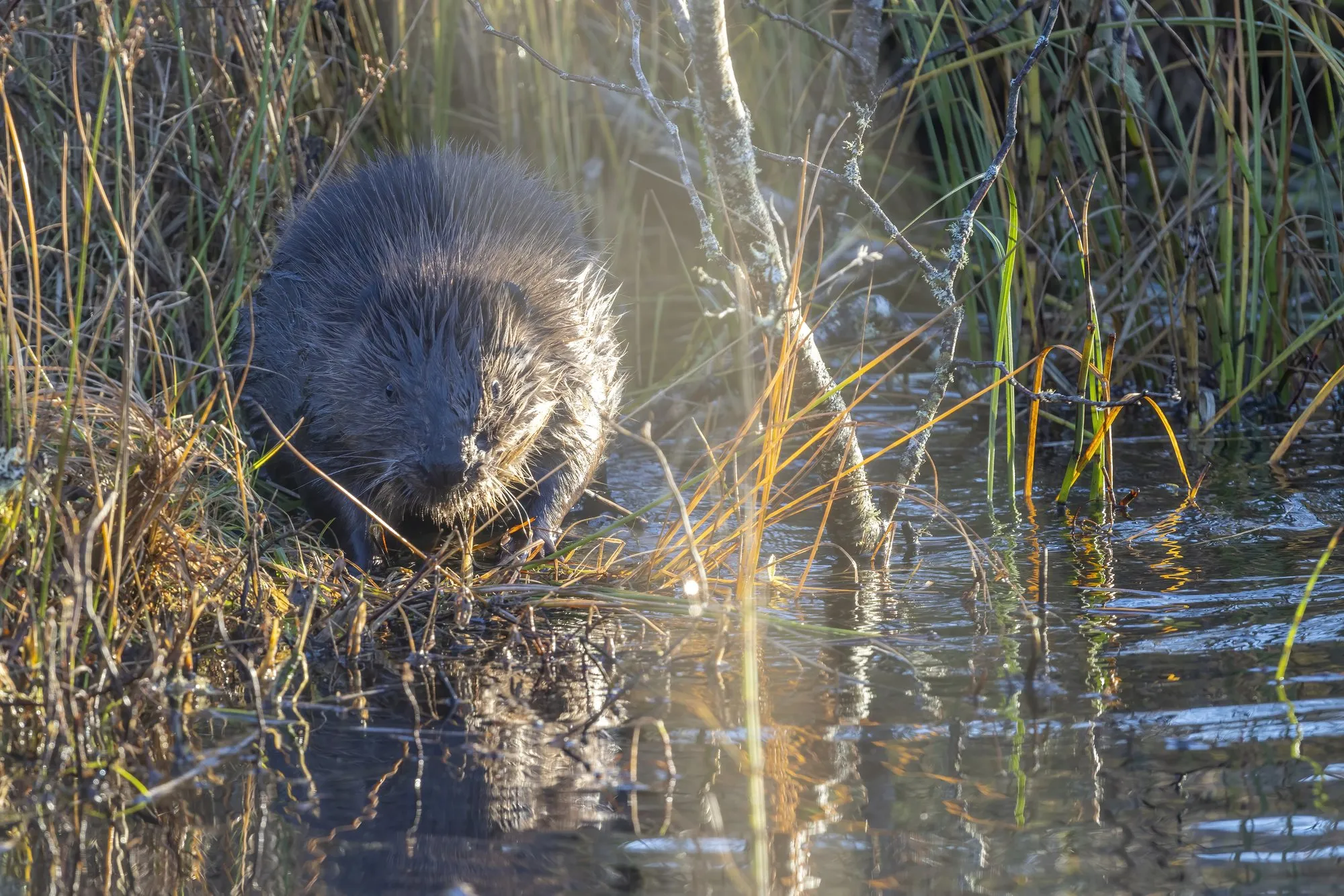
The adult female was the last to leave her crate. On 4 November, beside a small lochan at Dundreggan in Glenmoriston, in the Scottish Highlands, teams from Trees for Life, Beaver Trust and Five Sisters Zoo opened the crates of a family of six beavers. According to Trees for Life, beavers were last recorded beside Loch Ness about 500 years ago, before they were hunted to extinction in Scotland.
It is the first release of the Ness Beaver Project. NatureScot, Scotland’s nature agency, granted the licence on 30 October. The beavers were relocated from elsewhere in Scotland and had health checks at Five Sisters Zoo’s specialist holding facility before the release.
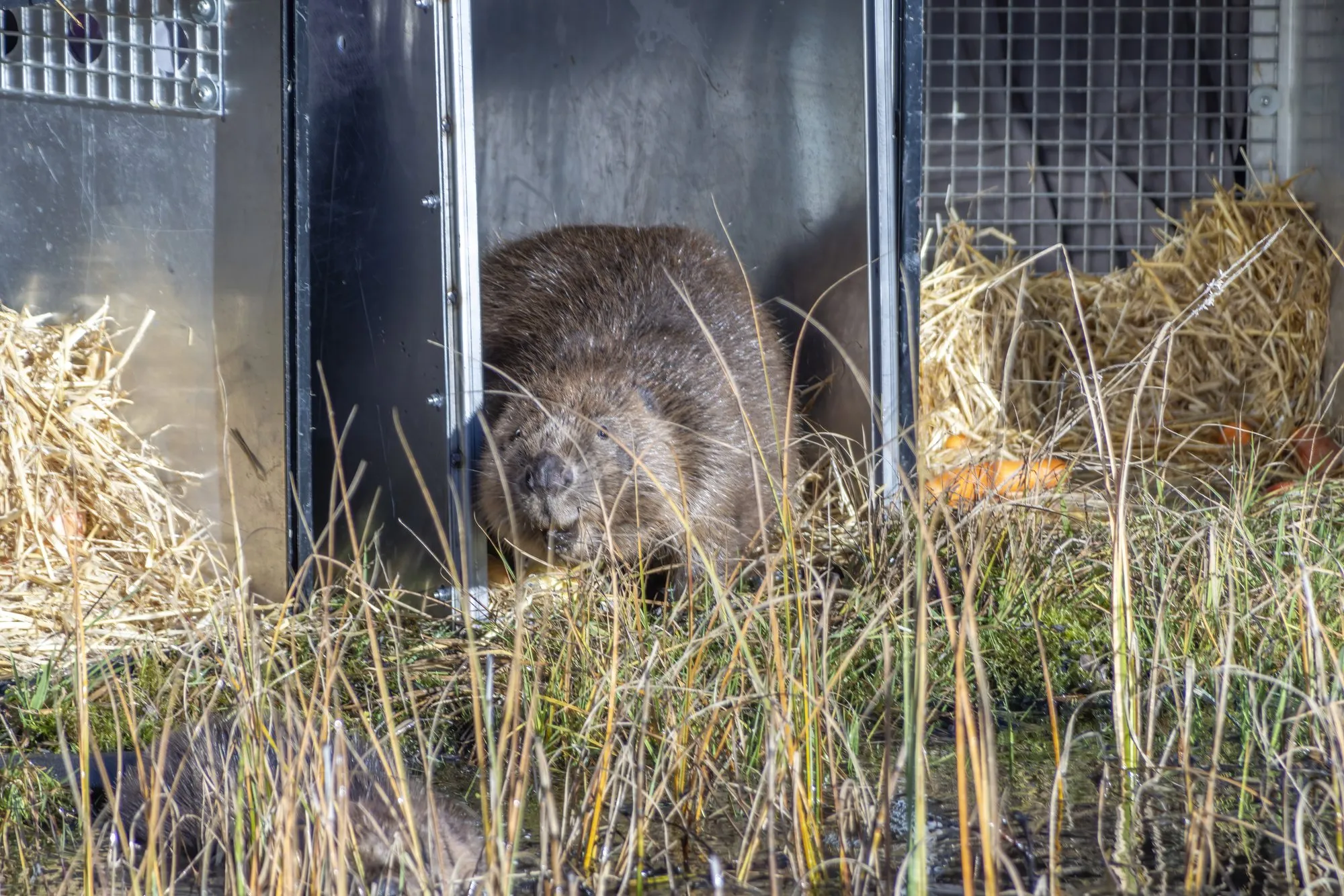 The adult female, the last of the family to leave her crate. Photo: © Beaver Trust.
Fifteen families in three years
Trees for Life and Beaver Trust plan to reintroduce at least 15 beaver family groups into lochs, lochans and rivers around Loch Ness over the next three years, so that populations can connect up across a large landscape of woodland and hundreds of kilometres of banks. Future release sites will be announced only after the beavers are in the water, so they can settle without disturbance.
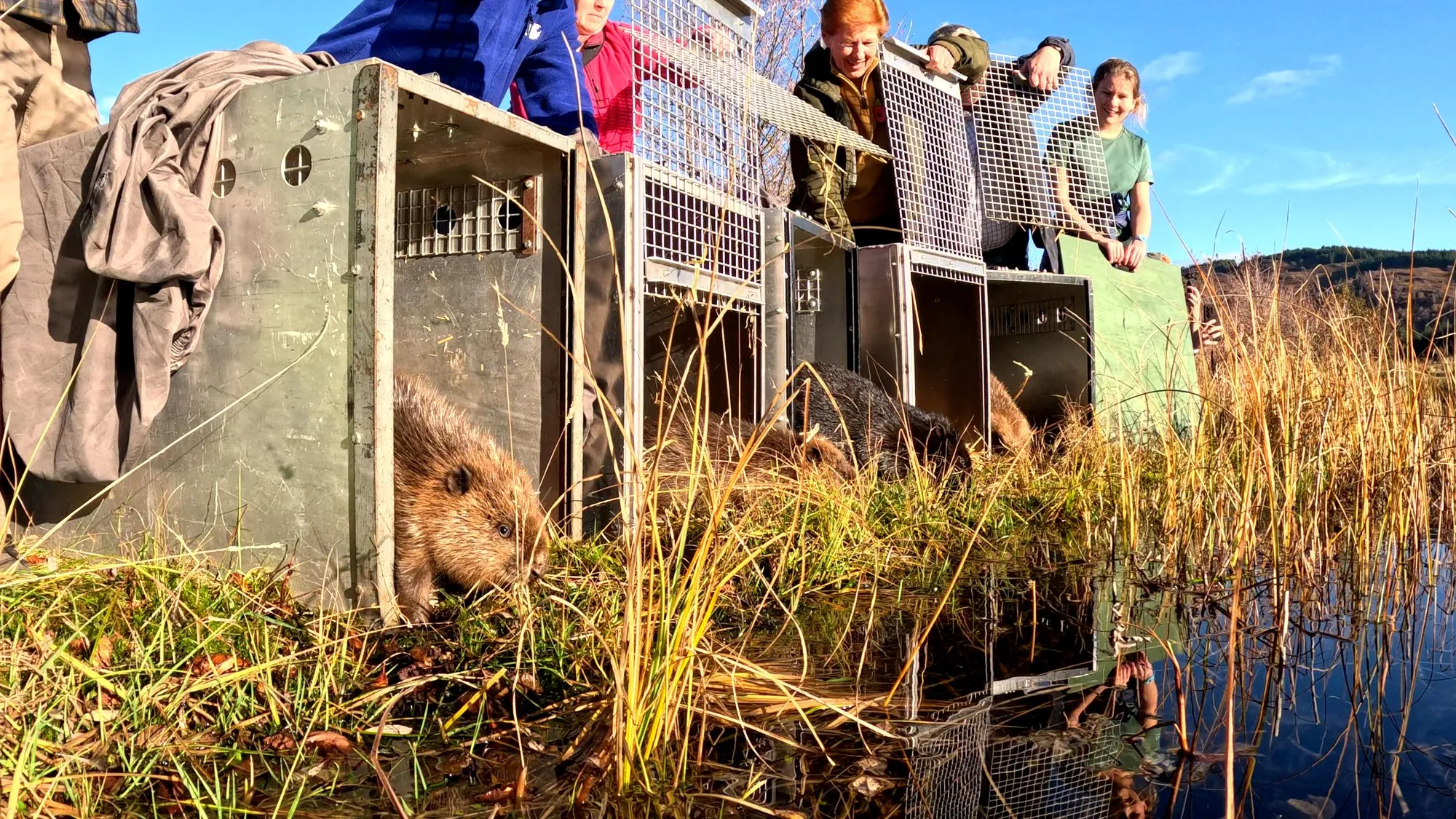 The beaver family leaves the crates for the Dundreggan lochan. Photo: © Beaver Trust.
“Hunted to extinction centuries ago, beavers are reclaiming their place in our rivers and wetlands,” said Alan McDonnell, head of nature restoration at Trees for Life. Their dams create pools and wetlands for frogs, dragonflies, birds and bats; on smaller streams they slow the flow, trap sediment and can reduce flooding downstream.
A group to handle conflicts
Not everyone is convinced: Farmers Weekly reported farming concerns when NatureScot approved the releases. According to Trees for Life, a monitoring and mitigation group will be set up, and a locally based beaver officer and Beaver Trust staff will support communities and land managers. “This project is an important step towards delivering Scotland’s National Beaver Strategy by expanding the population into suitable areas, with monitoring and practical support to help address any challenges along the way,” said Dr Roisin Campbell-Palmer, head of restoration at Beaver Trust.
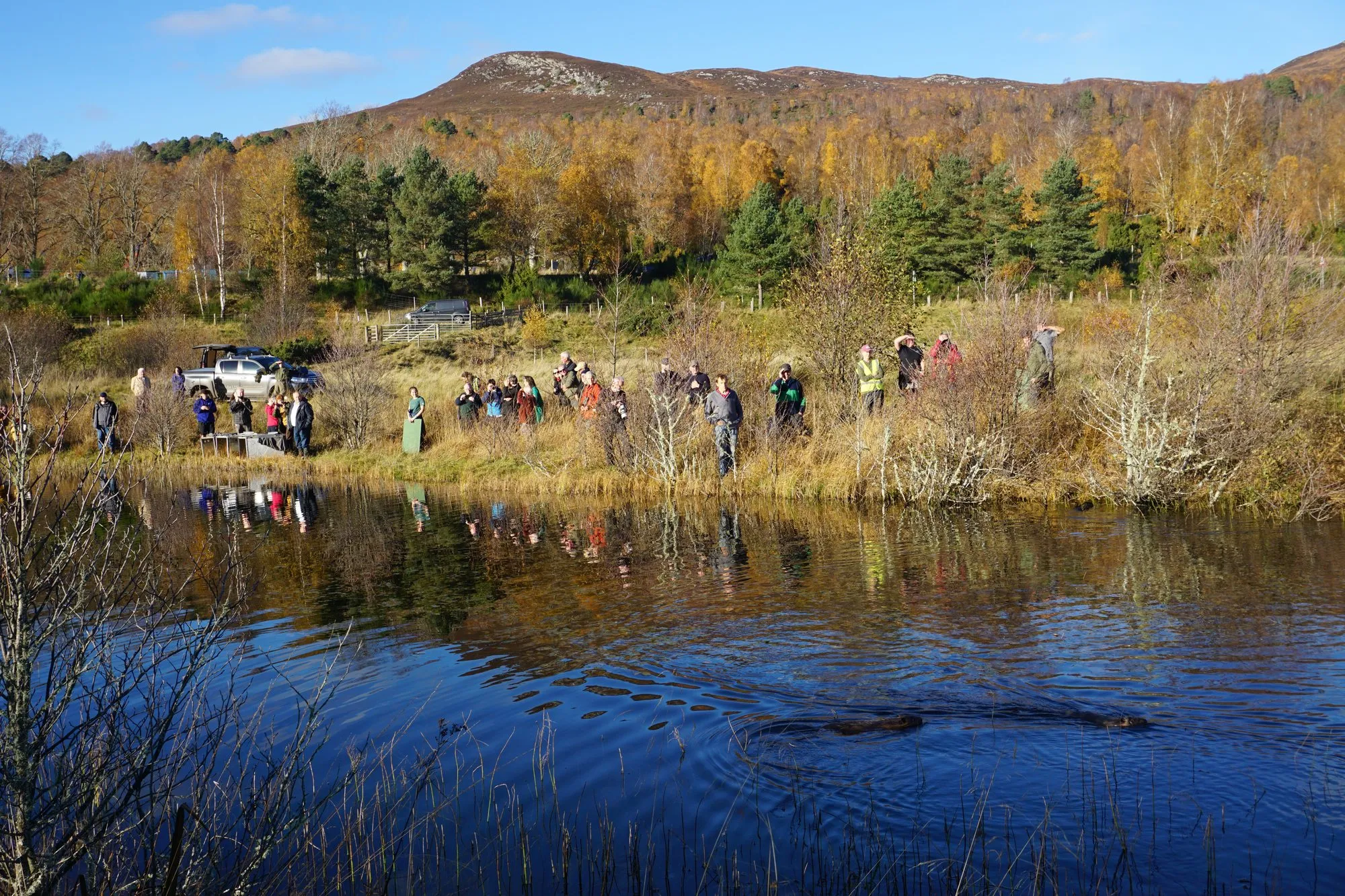 One of the beavers swims in the lochan as the team watches from the bank. Photo: Trees for Life.
Guided tours once they settle
Dundreggan is Trees for Life’s 10,000-acre rewilding estate and home to its Rewilding Centre. Once the animals have settled, the charity plans guided tours to spot beavers and the signs of their work in the landscape.
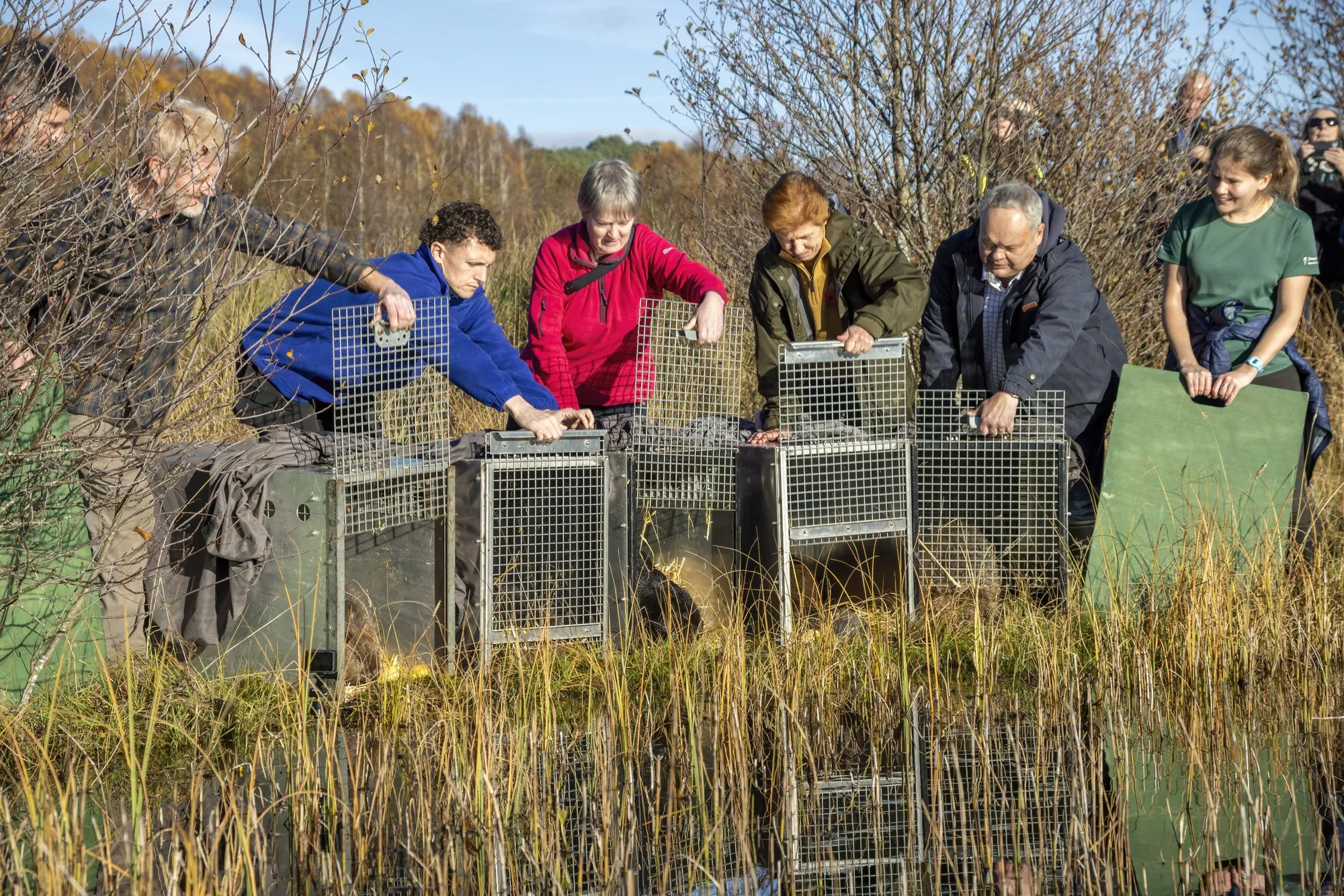 Guests and team members open the crates during the release. Photo: © Beaver Trust.
Why it’s good news
An animal that hunting wiped out in Scotland is back in a landscape it once knew, with an official licence, a three-year plan and support to help people and beavers live alongside each other.
Sources
- Trees for Life and Beaver Trust · Historic return of beavers to waters around Loch Ness (press release, 6 Nov 2026)
- Trees for Life · Ness Beaver Project
- Express & Star (PA) · Beavers to return to waters around Loch Ness 500 years after last sighting
- Farmers Weekly · Beaver releases approved for River Ness despite farming concerns