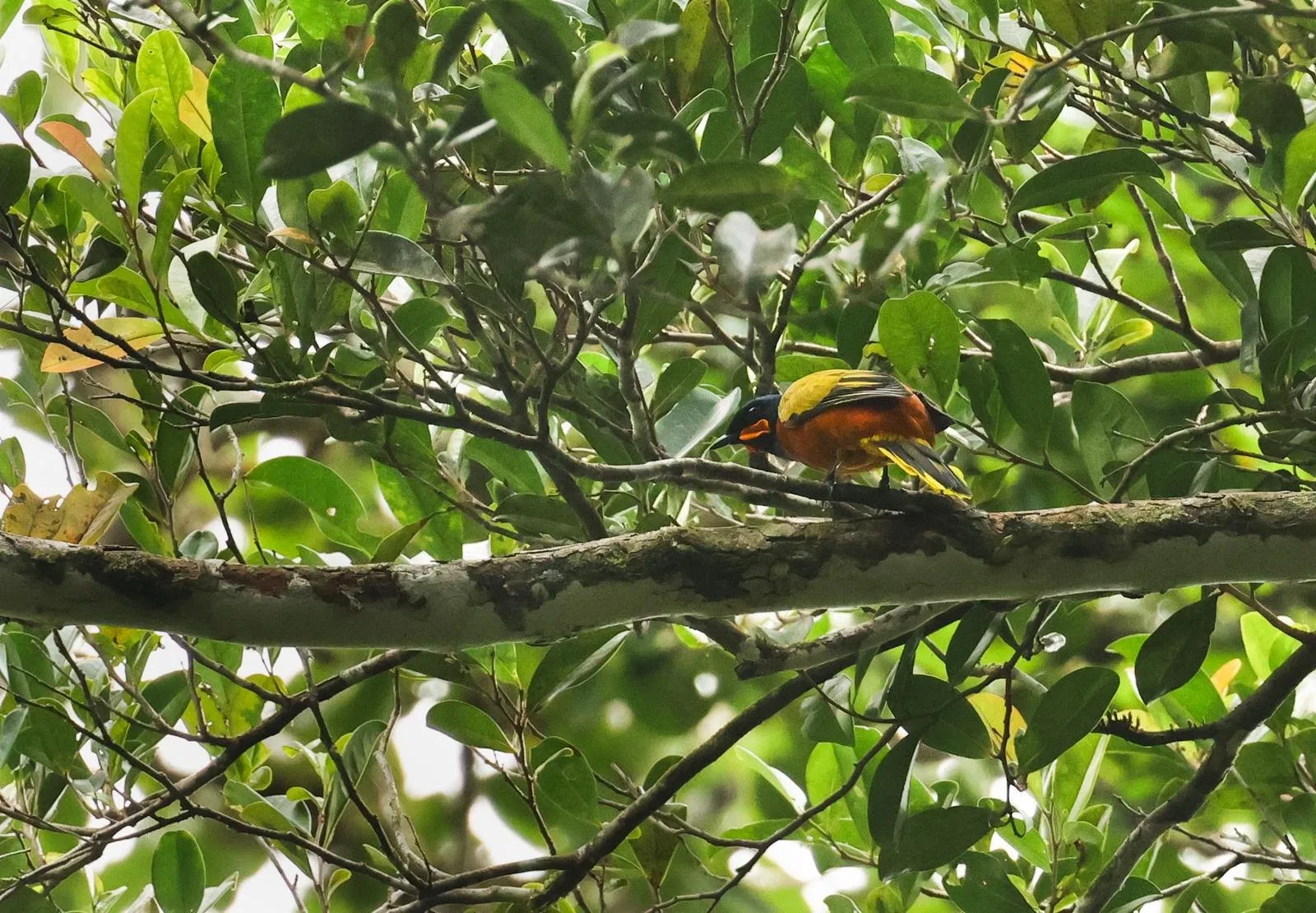
Silt, a 38-year-old right whale, has her sixth calf off Quebec
Researchers from the Mingan Island Cetacean Study photographed Silt off Anticosti Island, Quebec, on 25 September with a calf nobody had recorded. It is her sixth known calf. It is welcome news for a critically endangered species: the latest count put North Atlantic right whales at about 384 in 2024.
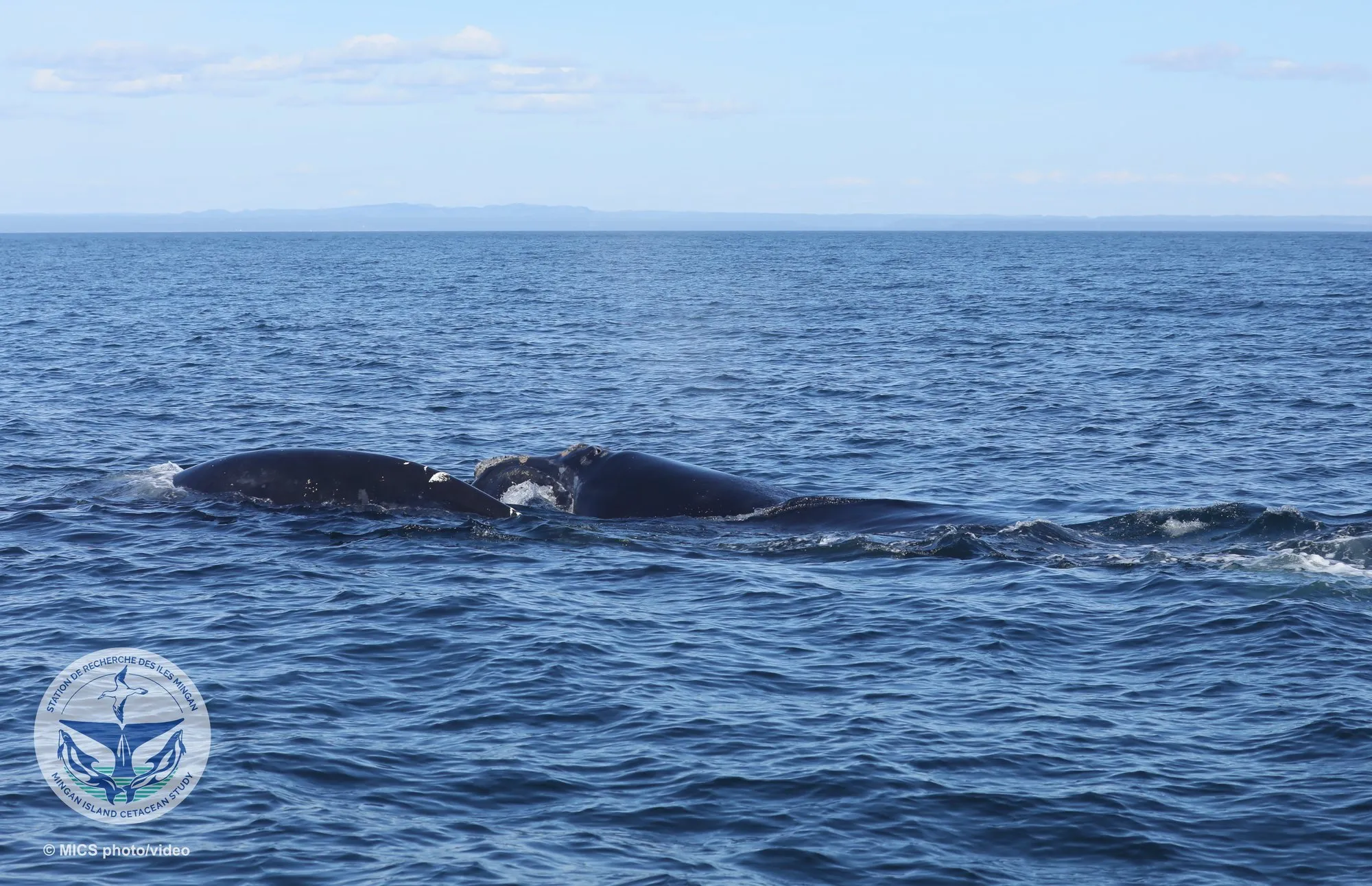
On 25 September, off Anticosti Island in Quebec’s Gulf of St Lawrence, the team from the Mingan Island Cetacean Study (MICS) photographed a North Atlantic right whale they knew well, Silt, swimming close beside a calf. Nobody had that calf on record.
The researchers sent the images to the New England Aquarium’s Anderson Cabot Center for Ocean Life, which keeps the catalogue of every identified right whale. “After weeks analyzing sighting data and comparing photos, the scientists determined that this was a new calf,” the aquarium said, as reported by CTV News. It is Silt’s sixth known calf.
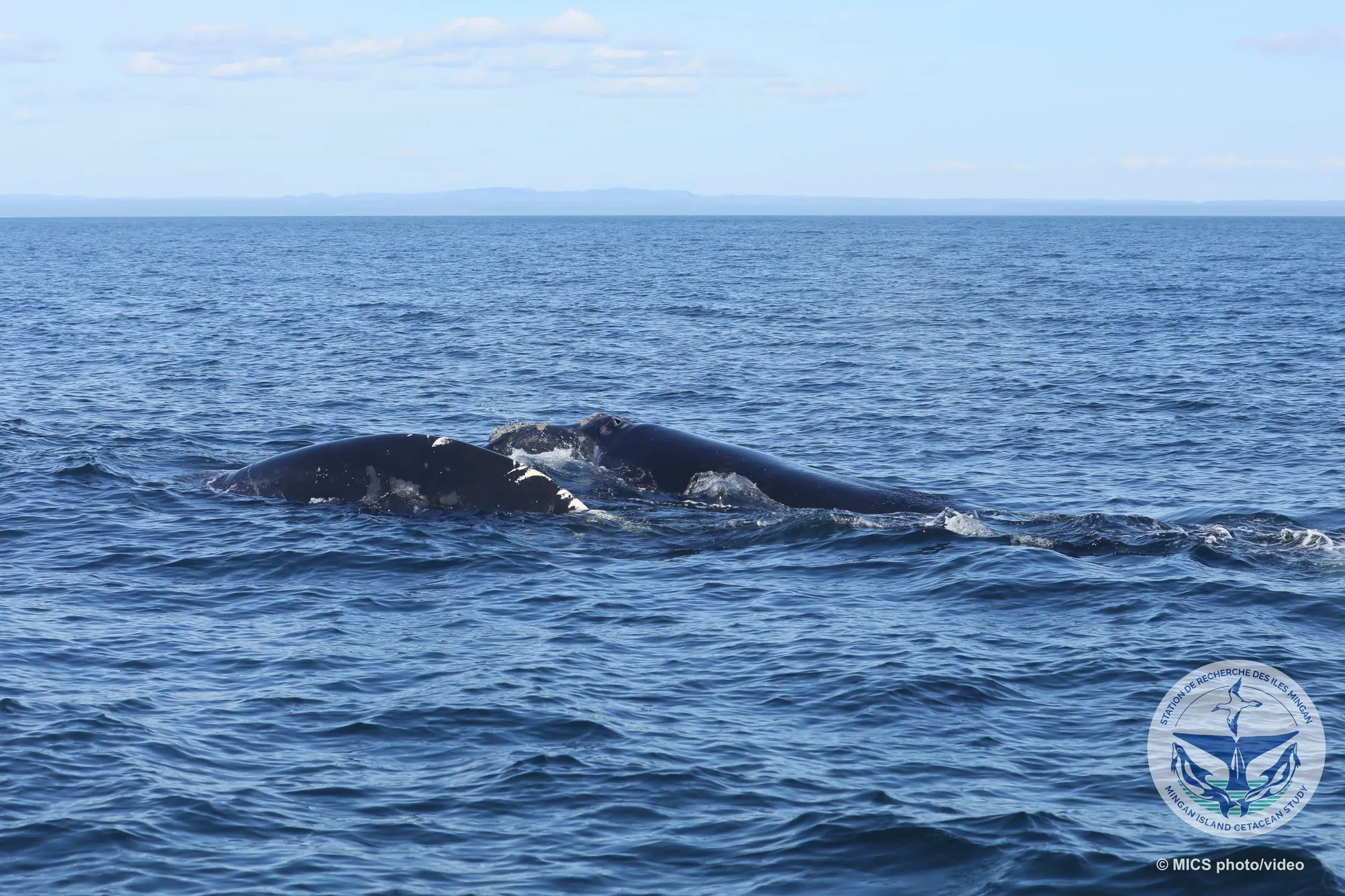
Silt and her calf off Anticosti. Photo: © MICS photo/video · Mingan Island Cetacean Study.
A calf the winter surveys missed
Scientists think the calf was born in the 2025-2026 calving season and slipped past the winter aerial surveys. Silt was seen briefly in the calving grounds off the south-east United States in February 2026 and may have given birth there. “This is an exciting discovery for us so late in the year,” said Amy Warren, a scientist at the Anderson Cabot Center.
Silt is at least 38 years old: she was first seen in 1988. She has survived at least five entanglements in fishing gear, which left scars on her head and tail. Not all her calves were as lucky: her first died after being struck by a boat, and another died entangled in a net in 2022. She now has three recorded grandchildren and a great-grandchild born this year.
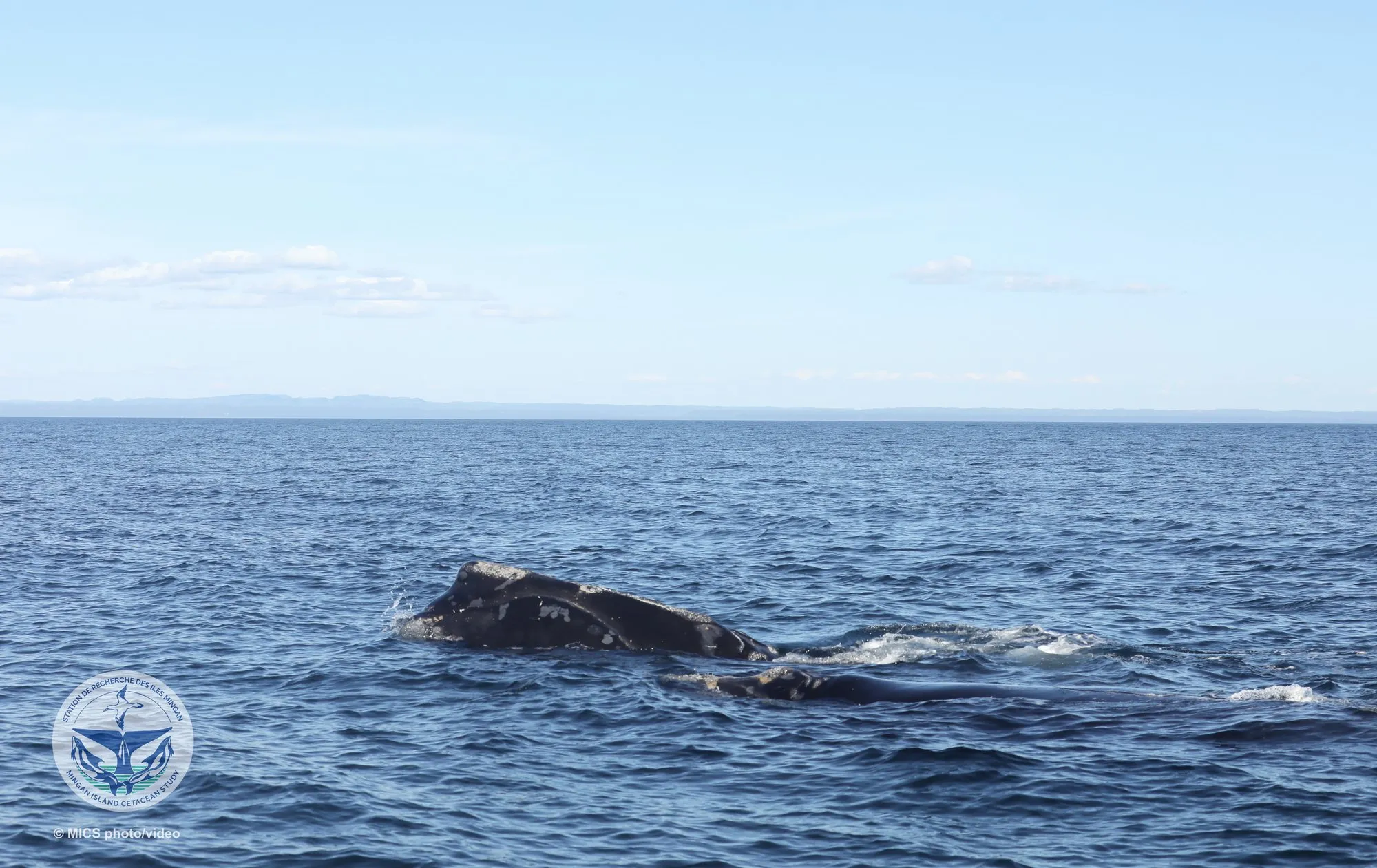
Mother and calf on the same day, 25 September. Photo: © MICS photo/video · Mingan Island Cetacean Study.
Few, but a few more
The North Atlantic right whale is critically endangered. In October 2025 the North Atlantic Right Whale Consortium estimated there were about 384 in 2024, up 2.1% on the year before. “It’s been kind of flat for a few years in terms of numbers, which is neither good nor bad,” Warren said. Ship strikes and fishing-gear entanglements remain the biggest threats.
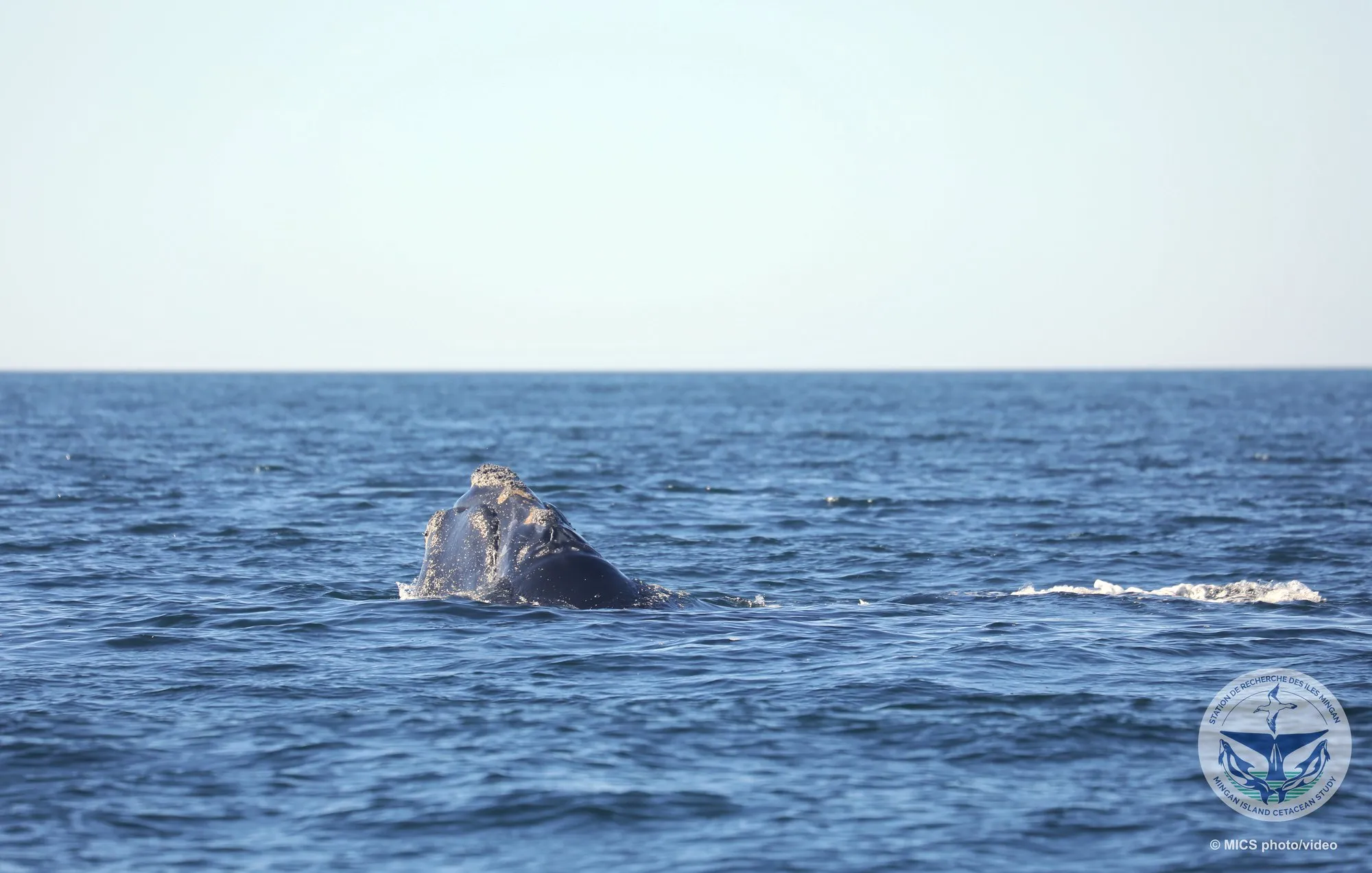
One of the whales lifts its head off Anticosti. Photo: © MICS photo/video · Mingan Island Cetacean Study.
The new calving season runs from mid-November to mid-April off the south-east US coast. It will show whether more calves like Silt’s arrive this year.