Antarctic blue whales have grown almost tenfold since whaling ended
A University of Washington study estimates there were 4,018 Antarctic blue whales in 2024, up from 418 after the last reported catch in 1973. The caveat: that is only 1.9% of pre-whaling numbers, the estimate has a wide range and the species is still critically endangered.
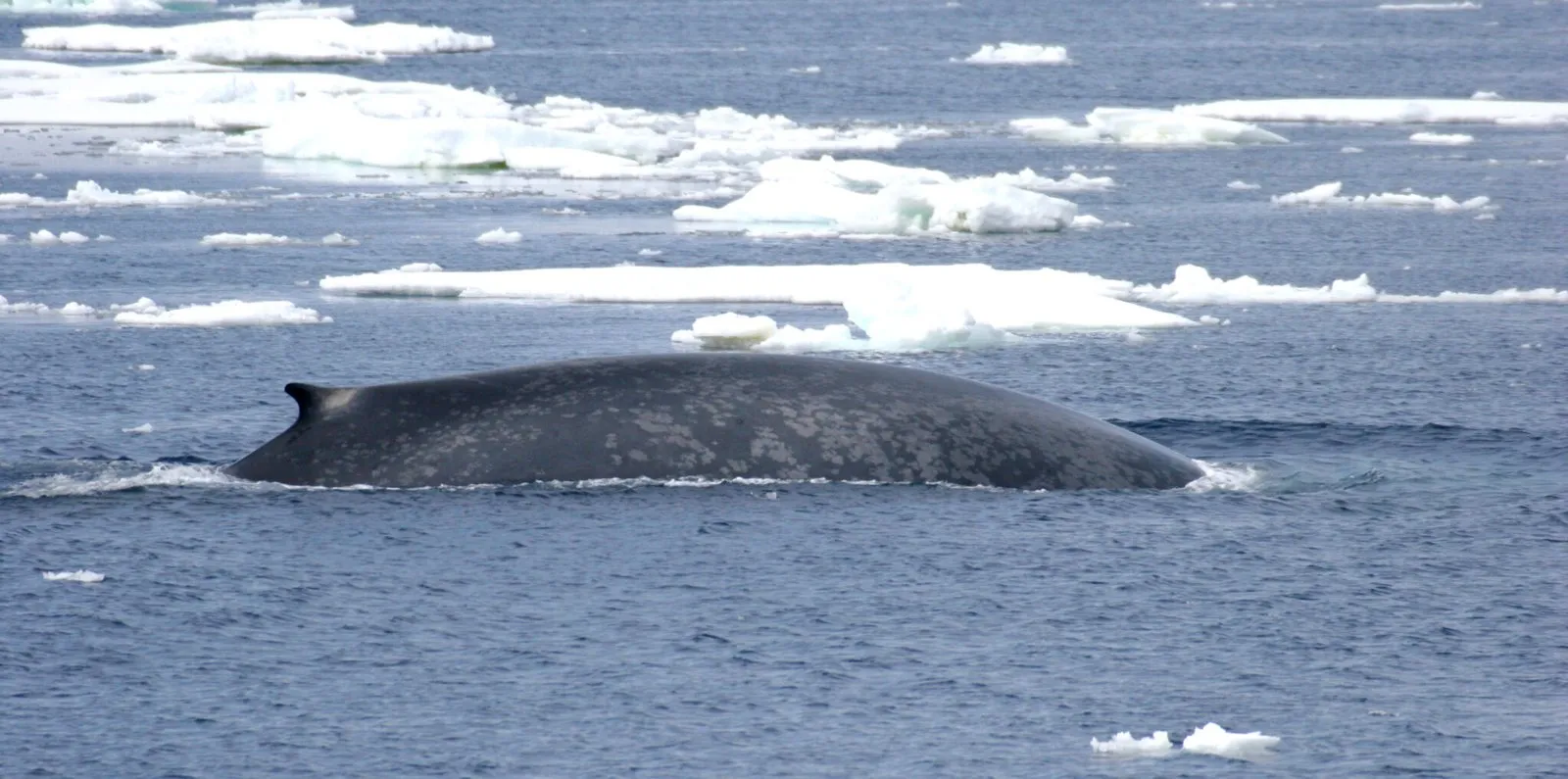
In 1973, when the last Antarctic blue whale catch was reported in the Southern Ocean, around 418 were left. Half a century later there are about 4,018, according to the first full population assessment in more than 20 years, published on 5 November in Endangered Species Research.
The study is led by Zoe Rand, a postdoctoral scholar at the University of Washington, with scientists from the US agency NOAA, the Australian Marine Mammal Centre, Japan’s Institute of Cetacean Research and the University of Pretoria. They estimate the population is growing by 4.5% a year.
From 0.2% to 1.9%
The Antarctic blue whale is the largest animal known to have lived: according to the University of Washington, one can weigh more than 400,000 pounds. That made it the main target of 20th-century commercial whaling. The International Whaling Commission banned hunting it in 1964, but Soviet fleets carried on illegally for another ten years.
Before whaling there were around 205,900, according to the study’s model. By 1973, 0.2% remained. Today it is 1.9%. “No whale was hunted quite to the extent that Antarctic blue whales were hunted,” Rand said.
Counting a whale that rarely surfaces
They can be seen from space, yet these whales spend little time at the surface, and counting them is expensive. The researchers combined historical catch records, ship surveys of the Southern Ocean between 1978 and 2004, and photo identification of individual whales in a single model.
The result is an estimate with a wide range: between 1,874 and 8,395 whales. The paper itself warns it will take more than a century for the population to return to pre-whaling levels. Females have a single calf every two to three years.
Engineers of the deep
Rand calls them “ecosystem engineers”: when they die, their bodies sink thousands of feet and feed whole communities on the seafloor, a process that cycles nutrients and is thought to lock away carbon.
The species is still listed as critically endangered by the IUCN. Rand wants more monitoring, for example with underwater microphones that record their songs: “Antarctica is a big place, and it’s not just one country’s ocean.”
Sources
- Endangered Species Research · Rand et al., Critically Endangered Antarctic blue whales are increasing but still far from pre-whaling levels (5-11-2026)
- UW News · As Antarctic blue whales advance along the road to recovery, continued oversight is key (5-11-2026)
- Zoe Rand (University of Washington) and Paula Olson (NOAA) · photo permission (email to the newsroom, 22-11-2026)