Amsterdam zoo hornbill eats on its own again with 3D-printed beak
A southern ground hornbill at ARTIS that had broken both halves of its beak was fitted on 30 September with two custom prostheses made in Utrecht. By the next day it was feeding itself. The vet team says it found no other case in the scientific literature with both upper and lower beak replaced; how long the parts will last is still unknown.
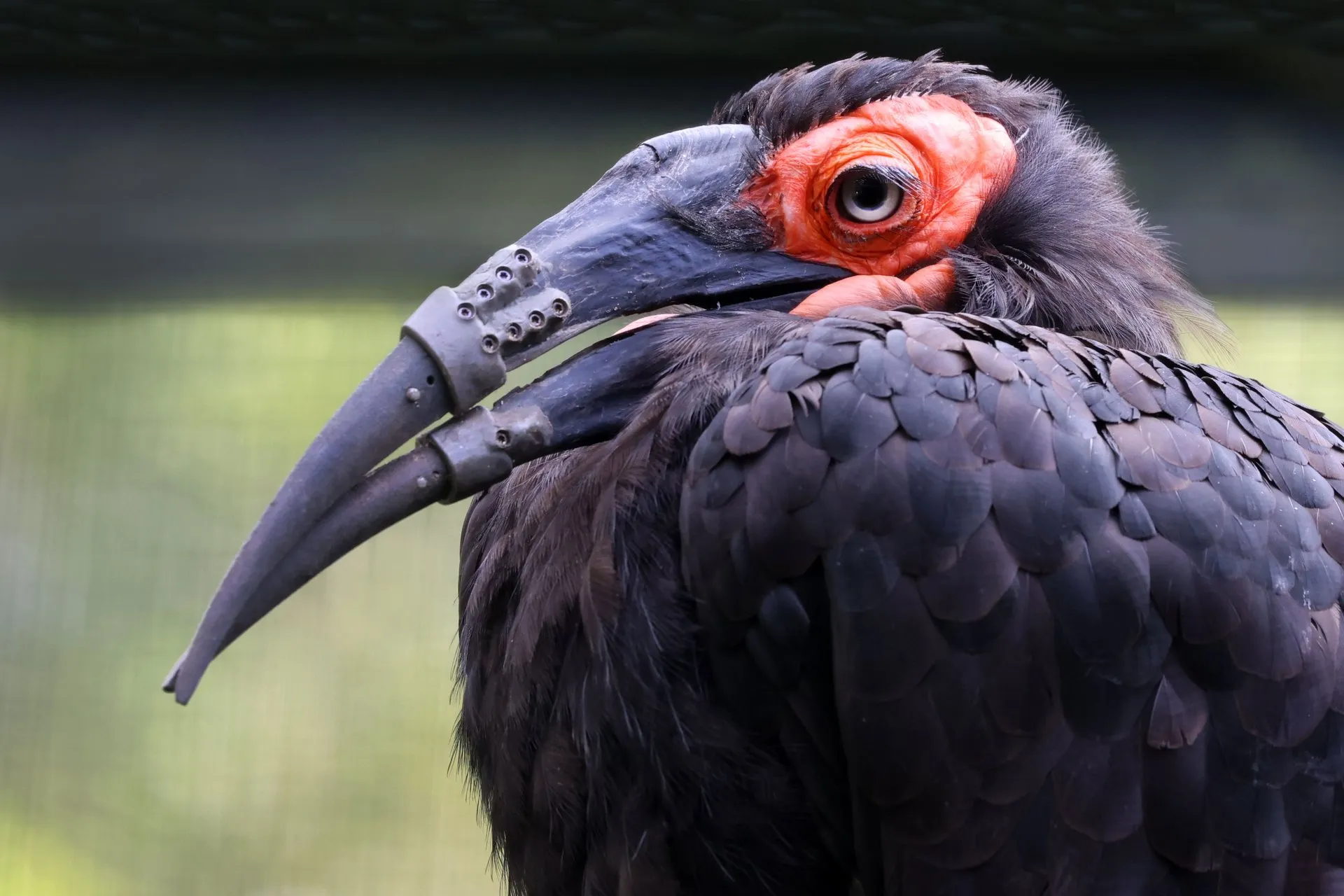
The morning after the operation, the hornbill picked a mouse up off the ground with its new beak. By that afternoon it was eating without help. For months it had lived with two stumps instead of a beak, after breaking both the upper and the lower half.
The bird is a young male southern ground hornbill at ARTIS, Amsterdam’s zoo. The African species is listed as vulnerable. On 30 September he was operated on at Utrecht University’s Faculty of Veterinary Medicine. According to ARTIS, as far as the scientific literature shows, this is the first time both halves of a bird’s beak have been replaced this way.
A beak copied from a scan
Vets CT-scanned the hornbill’s head, the stumps and the broken pieces of beak. From those images, the 3D Lab at UMC Utrecht designed two plastic parts almost identical to the original beak. They are attached to what is left of it with titanium parts and screws.
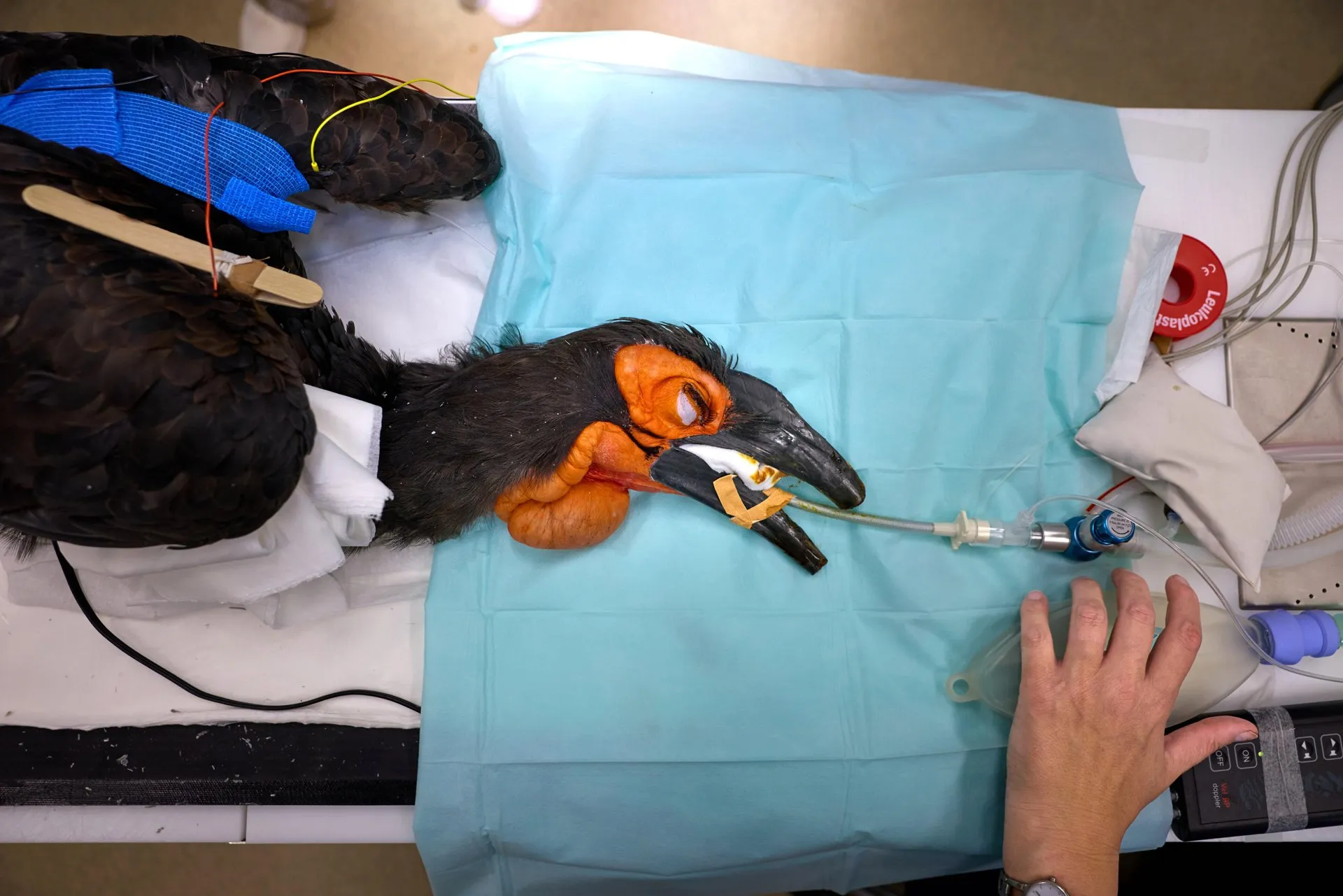
The hornbill under anaesthetic during the 30 September operation at Utrecht’s Faculty of Veterinary Medicine. Photo: ARTIS, Marcel Bakker.
The project was started by Martine van Zijll Langhout, head of ARTIS’s veterinary department. She said the bird has had to get used to the new shape and weight, and the long-term result is still being assessed.
Insects, feathers and family
With the stumps he could barely pick anything up. “He can pick up insects with his beak again, which he couldn’t do before, because he really had two little stumps,” his keeper, Brent Hoeve, told NH Nieuws. He has also gone back to grooming his own feathers and preening his partner and daughter.
In the wild, southern ground hornbills spend their days walking and foraging for insects, reptiles and small animals with that long, curved beak.
The ARTIS team will keep checking whether the prostheses hold up to daily use. If the technique works, Hoeve hopes it will help other birds with broken beaks: “Then a lot of birds can have a good life again.”