Weevil once thought extinct grows from 6 to 200-plus and returns to the wild in New Zealand
The Canterbury knobbled weevil, a critically endangered beetle thought extinct until 2004, has been bred in a lab from six individuals to more than 200. New Zealand's Department of Conservation and Te Rūnanga o Arowhenua have begun releasing them at the Ōtūwharekai/Ashburton Lakes. It is a trial: the bigger plan depends on how it goes.
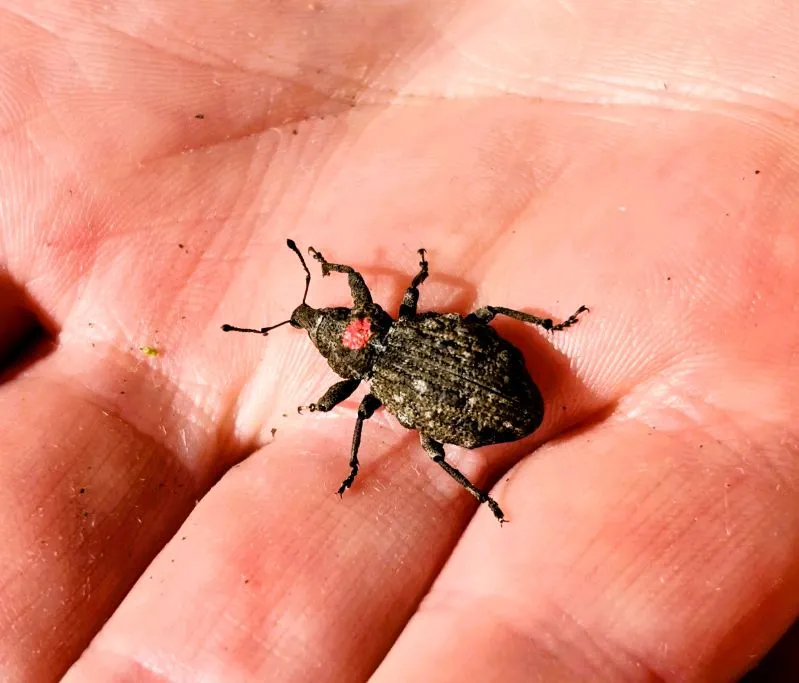
The Canterbury knobbled weevil is one of New Zealand’s rarest beetles. Its lineage is so old it is called a “living fossil”, and it was thought to be extinct until 2004, when a small population turned up at Burkes Pass, near Takapō/Tekapo. Late in 2024 another small group was found in Mid-Canterbury.
After that find, the Department of Conservation (DOC) and Te Rūnanga o Arowhenua decided to rear the beetles in captivity. They began with a handful in a specialist lab, working with weevil expert Barbara Barratt at the Bioeconomy Science Institute in Invermay. The colony started with six weevils and now has more than 200.
Carrot chunks in the lab
Keeping them alive in the lab was the first hurdle. “It was fairly experimental, feeding them all kinds of interesting things, including carrot chunks!” says DOC Senior Science Advisor Tara Murray. “They were easier to breed than we expected and quite hardy.”
A soft release among spear grass
The first weevils are now in the Ōtūwharekai/Ashburton Lakes area, a place of significance to Arowhenua. The team chose a site with taramea, or spear grass (Aciphylla), the spiky plants the weevils depend on, and covered the plants at first to protect them. The covers should come off after about a week if monitoring goes well. “The release has gone really well, it’s amazing seeing them scuttle down into the depths of the spear grass,” Murray says.
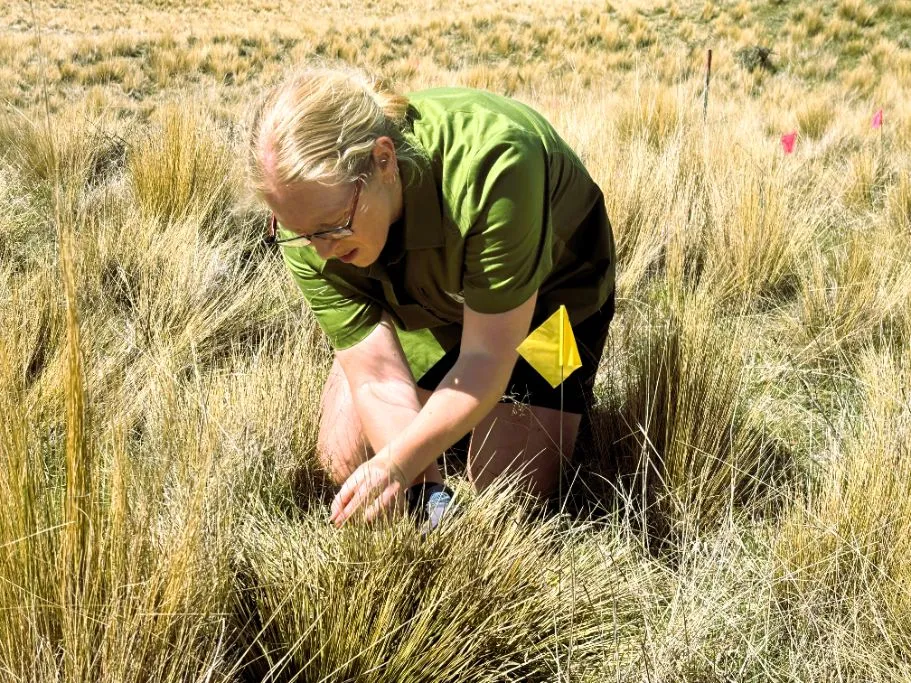
DOC’s Tara Murray places a weevil in spear grass during the release. Photo: Department of Conservation (DOC), New Zealand.
What comes next
The loss of spear grass from the landscape is a major reason for the weevil’s decline, and having the species in one place means a single fire could wipe it out. If the trial works, DOC and Arowhenua plan to collect more wild weevils to set up new populations elsewhere. Monitoring at Burkes Pass continues, and any weevils found there will go into the captive-rearing programme.