New UK dinosaur named after the quarry manager who never got to see it
London's Natural History Museum has described Paludohadros proudlovii, a relative of Iguanodon that lived in Surrey around 125 million years ago. Its bones were dug up in 2001 and spent 25 years in the museum's collections. It was a juvenile, and it is named after Will Proudlove, who ran the brickworks where it was found and died shortly before the excavation.
In 2001, dinosaur bones turned up in a clay pit at the Ewhurst brick and roof tile works in Surrey. They were donated to the Natural History Museum in London and stayed there. Twenty-five years later, the museum has confirmed they belong to a new species and a new genus: Paludohadros proudlovii.
The study, led by Ricardo Sacamoto, a PhD student at the museum and the University of São Paulo, is published in the Journal of Systematic Palaeontology. It is the first species he has named.
Baryonyx’s neighbour
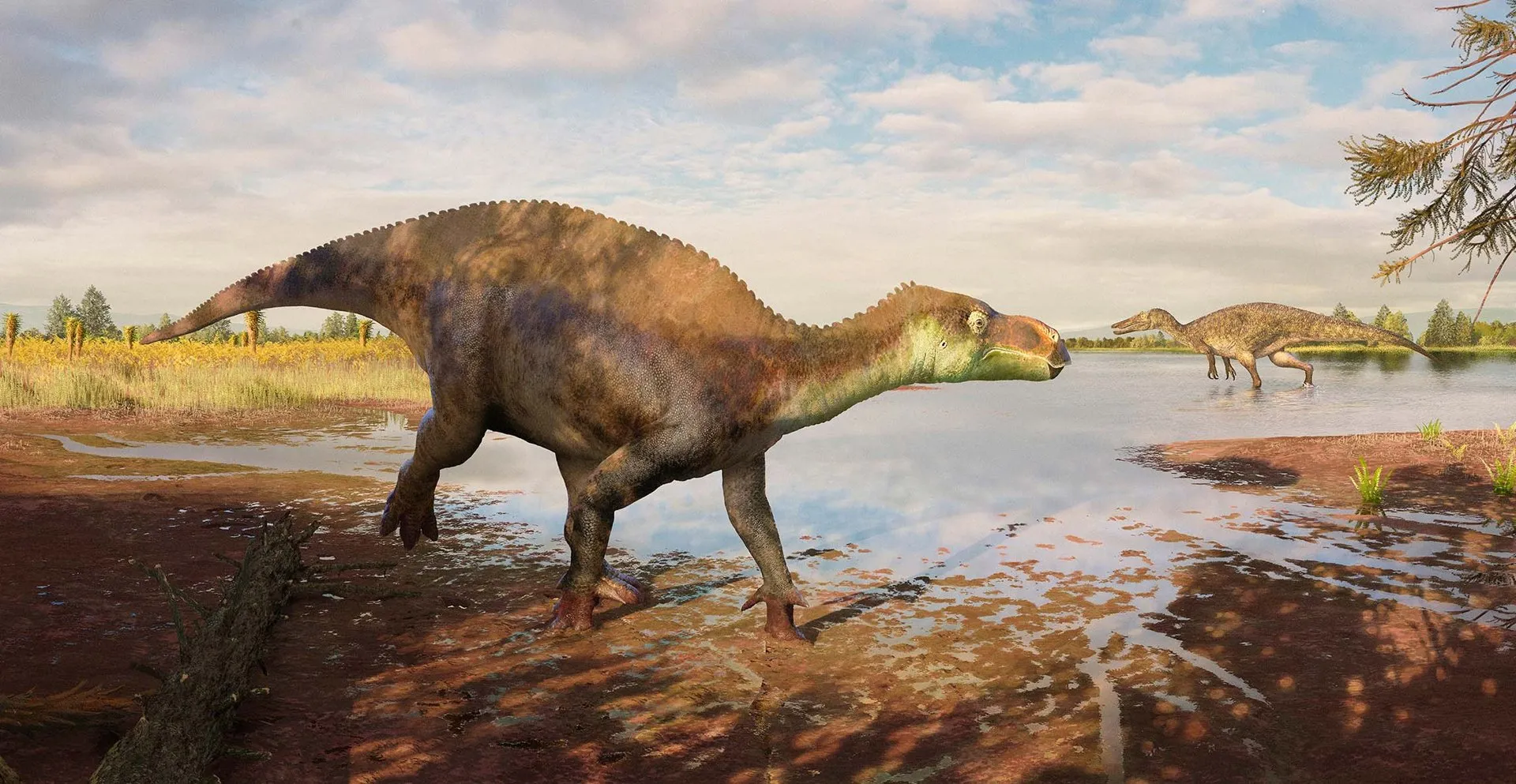
Paludohadros was a four-legged plant-eater related to Iguanodon, with the thumb spikes its group is known for. It lived around 125 million years ago, when southern England was a muddy wetland, which gave it its name: palus is Latin for “swamp”. It was about five metres long and weighed 1.5 to 2 tonnes, roughly the size of a rhino. Its bones were not fully developed, so it was a juvenile that might have grown twice as large.
It was found just 100 metres from where Baryonyx, a fish-eating carnivore, was discovered in 1983. “This dinosaur’s last meal also included a baby iguanodontian,” says senior author Professor Susannah Maidment. Which species that baby belonged to is not known.
Named after a devoted dad
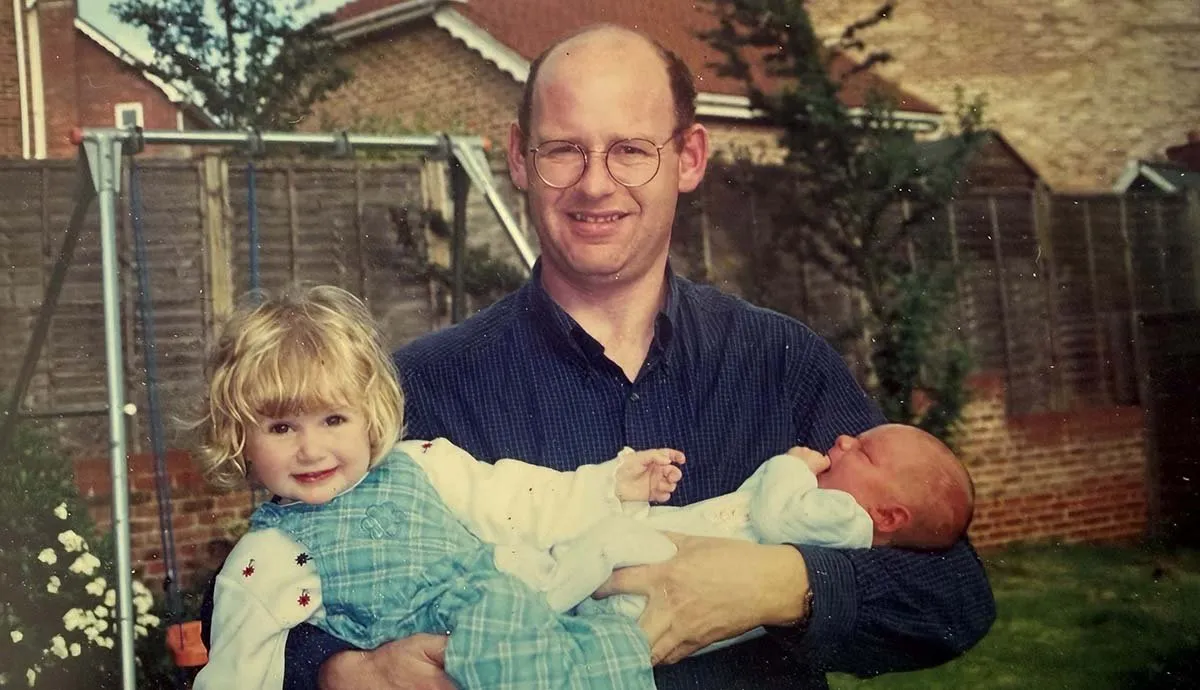
Will Proudlove with his children, Ellie and Matt. Photo: The Proudlove Family / Natural History Museum.
The species name honours Will Proudlove, who worked his way up at the Ewhurst works to become its manager. He died aged 35, shortly before the dinosaur was excavated. “Will always had an interest in dinosaur fossils,” says his widow, Rachael. “We’re absolutely overjoyed and honoured that Will’s name and legacy will live on in this dinosaur.”
More may be hiding in the drawers
Re-examining the collections, the team has already identified other Paludohadros fossils collected in the 1950s. Sacamoto will now work through the museum’s iguanodontian collections for his PhD, which could turn up more species nobody has recognised yet.